Apple/AAPL Q2: Another “Blowout” Quarter From A Company That’s Quietly Running Out Of Idioms
Apple just delivered another record quarter on the back of Jobs‑era hardware and services, yet still chose to rent Google’s Gemini for AI rather than ship its own, exposing a 15‑year failure to turn Siri and its vast device base into a genuine intelligence platform.

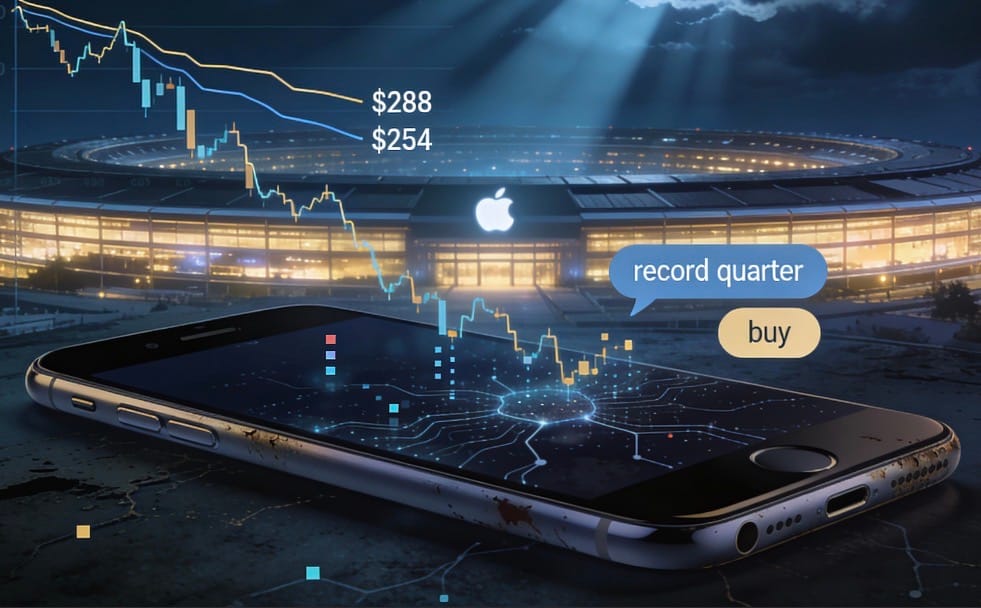
Want my unimpressed reaction to Apple’s ‘BLOWOUT” Q2 results?
It’s a reality distortion field of comparables engineering, and here is what Tim said vs what he could have said:
iPhone 17 is selling like mad, but mostly because Apple finally remembered how to make the base model not feel like a punishment – and then layered a wall of FOMO, subsidies and China‑specific bribery on top.
The “drivers” (translated from analyst-speak)
- Base model no longer rubbish.
The standard 17 got a brighter screen, more storage, a less‑embarrassing camera and a new A19 chip, all at the same list price. In other words: Apple stopped sand‑bagging the non‑Pro, so the half of the base that used to wait an extra cycle finally moved. - Deferred upgrade hell finally popped.
Street types think c.315m of 1.5bn iPhone users hadn’t upgraded in four years. After flogging the 15/16 as “transformational” while shipping iterative slabs, Apple finally gave that cohort just enough excuse to trade in their dying batteries and cracked screens. - China: from problem child to golden goose (for one quarter).
iPhone 17 turned what was meant to be a down year into growth: China iPhone shipments swung from a projected –1% to +3%, with Apple grabbing north of 20–25% share around Singles Day and into November. Q1 2026 China iPhone sales were up 38% year on year – “best iPhone quarter in history in Greater China,” as Tim will happily remind you every 30 seconds. - Subsidies and promos doing quiet heavy lifting.
Counterpoint and co. note the Pro Max in the US is riding on “enhanced” carrier subsidy plans, while China has been awash with coupons and discounts layered on top of the unchanged sticker price. The headline is “phenomenal organic demand”; the footnote is “also, we bribed the cycle a bit. - Services flywheel, again.
Every new 17 is another terminal pumping App Store fees, iCloud rent, Music, TV+ and whatever sports rights Cook has bought this quarter. Analysts dutifully remind you that Services growth magically accelerates whenever there’s a decent hardware cycle, as though that were a profound insight. - AI hype, not AI usage.
None of this is being driven by Apple Intelligence actually existing in users’ hands yet; even Reuters and Goldman quietly admit AI hasn’t materially moved smartphone demand. But the belief that “this will be the AI phone” helps gloss over the awkward detail that the AI bit is being rented from Google.
So the snark version:
iPhone 17’s “phenomenal” cycle is
- a four‑year upgrade backlog,
- a finally‑competent base model,
- a China promo blitz and carrier subsidies wearing a cape marked AI‑Ready Future Device.
Strip out the fireworks and you’re still looking at the same old engine – just revved very hard, very late in the race. Very ... Old and grey.
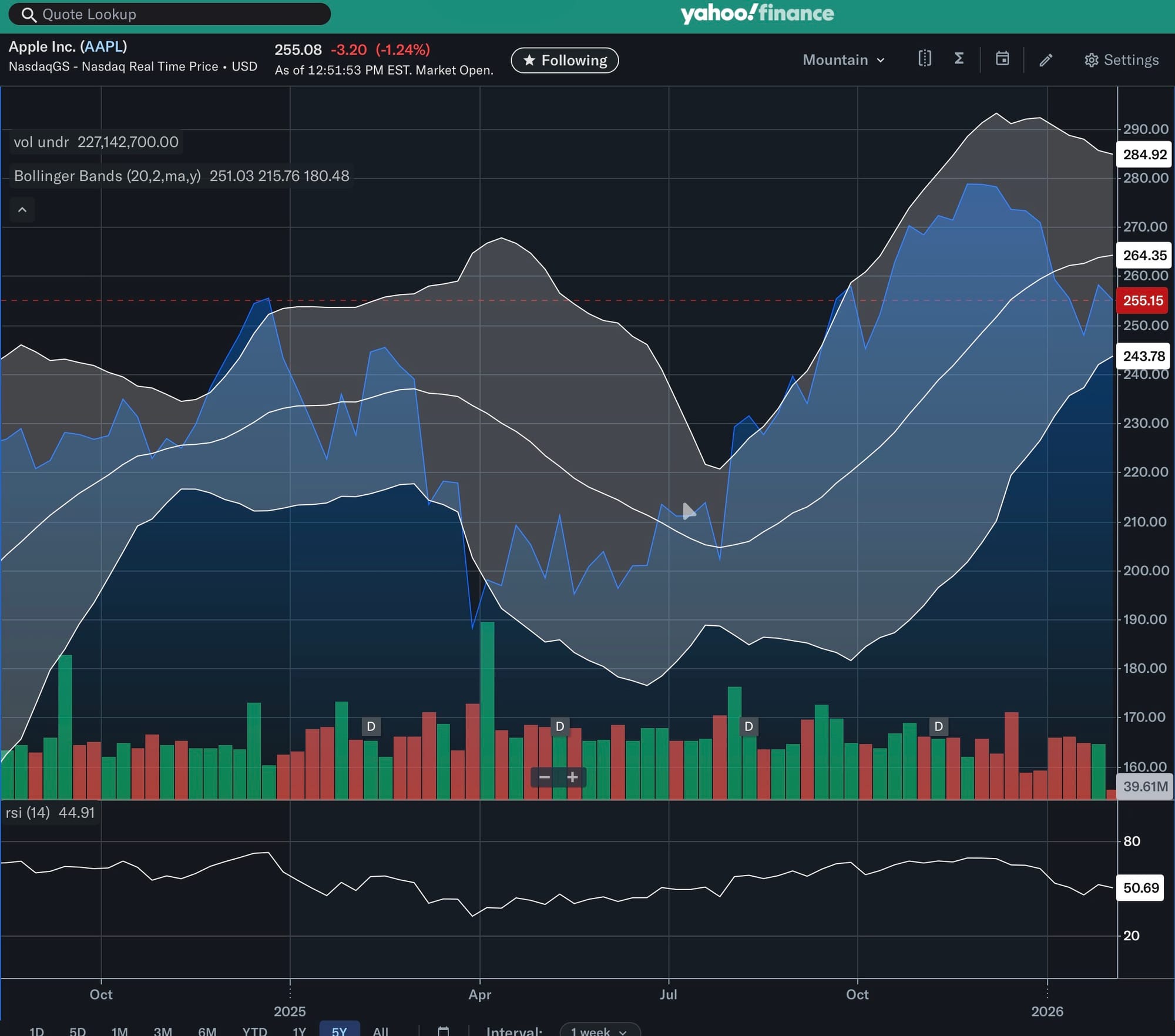
Here’s the chart, post Q2 2026 AAPL ER. “Blow Out Earnings” translate to “rubber hits the road, and skidmarks. The 5-year chart holds the key, as I’ve pointed out, not the 1-yeasr.
As a comment to my thesis pre-Q2 earnings summary,
 Tommo_UK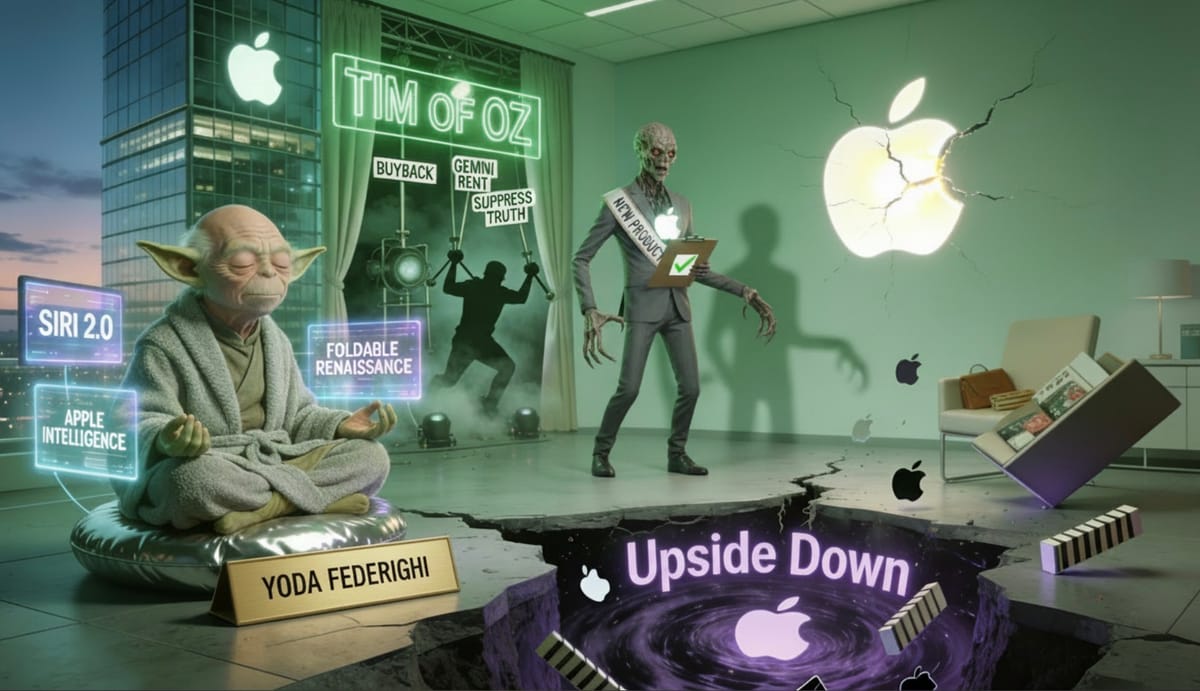
A canonical summary of 30 years of Apple’s rise and fall.. and fall.. into its current malaise, as I see it. If I say so myself, you should read this before you post anything on a forum, ever again. Just saying. 🤙
… a subscriber wrote the following comment:
“This was a fantastic read, if not a lot to digest in one reading.
There’s not much I disagree with. As Apple reports blowout earnings today, one only needs to be reminded that 90%+ of profit comes from Steve Jobs related hardware and associated Services tethered to legacy hardware.
Tim Cook has been a wonderful steward of existing product development. However, there remains a stunning lack of innovation. When you look at HomePod, Apple Car, AI and Vision Pro, the aggregate revenue is probably nowhere near even R&D costs for those projects.
Apple has a product to market problem. They can’t find the next big thing. They really can’t find *anything.* The lead that the Jobs ecosystem passed on has shown to be larger than most would have imagined, and the iterative improvements under Cool have proven to be enough … for now.
All that said, Apple’s secret sauce is silicon. Tim Cook and his team deserve a LOT of credit for the move to Apple Silicon. This is the flywheel that makes Apple run. But it cannot run on legacy hardware forever.
The leased Gemini AI brain is something any Apple fan would have *never* imagined even a few years ago. It’s an incomprehensible breech of Apple’s DNA.
The question becomes—is this a one off roadmap mistake … or the start of a larger trend?“
Thanks for the thoughtful comment DS and its incisive questions. Discussions which honestly dissect and examine the real dynamics at play rather than playing the “You’re either with us [AAPL holders] Or Against Us” trope now so common in forums, is really refreshing.
To this, I have the following remarks to make as a follow up to my original article:
My Reply to DS
Hey Dan, as promised, a proper reply.
First off, thank you – not for the kind words (though I won’t object), but for actually engaging with the central heresy:
Apple can print “blowout” quarters while being strategically hollowed out at the same time. Those two states are not mutually exclusive; they now seem to coexist quite comfortably.
Jobs-Era Engine, Finite Script
Your point that 90‑odd per cent of the profit machine is still Jobs‑era hardware and services bolted onto that hardware is exactly the bit most people refuse to hold in their heads while they’re applauding the EPS.
It’s why the earnings calls increasingly feel like a long‑running play that never ends and repeats every year. The cast rotates, lighting improves, but the script is still iPhone‑iPhone‑Services‑iPhone and Tim Cook endlessly going on about “best ever” everything, and the ovation is for a performance we’ve all seen before. Apple grows. ”Best Ever” is not equal to “good enough” these days, and hasn’t been since about 2014.
That doesn’t make it a disaster. It does make it a finite reasons for pompoms and cheerleading.. The mistake is pretending momentum and velocity are the same thing because it’s emotionally easier to do so.
Cook as Steward, Not Author
On Cook as steward, I’m broadly where you are. He’s been an excellent operator of a mature platform: supply chain, margins, services, capital return, process control – all textbook.
The problem appears the moment you ask the only question that matters in a platform shift:
“What did you build that wasn’t already there?”
Your list is the uncomfortable and honest audit:
- HomePod (strategically muddled), t
- he car project (a bonfire),
- Vision Pro (a niche device marketed like a revelation),
- AI (a lot of theatre and missed deadlines, followed by outsourcing).
To name but a few, plus the slew of unreleased and delayed products, and upgrades which have been offloaded due to time and engineering constraints as a result of poor resource utilisation and simply atrocious management.
In aggregate, that doesn’t just underwhelm; it raises the more awkward possibility that the organisation can no longer ship genuinely new categories at all.
Apple’s Old Pattern vs the Gemini Rental
This is where the longer historical sweep matters. Apple has been in this sort of corner before, and the pattern is fairly consistent: when the ground moves, it either buys time with narrative or buys capability from outside.
The NeXT acquisition is the classic case: implicit admission it couldn’t build a modern OS in‑house, so it went and bought one – and happened to get Jobs back in the bargain. In the piece I draw the parallel quite deliberately: today’s AI/assistant shift is structurally similar to the GUI/OS upheaval back then, and again Apple is behind. The key difference is that in the 90s it bought a foundation; in 2026 it is renting cognition. That is a very different kind of dependency.
Which brings us to the Gemini arrangement you called an “incomprehensible breach of Apple DNA”. I agree, and not because of some purity test about never partnering. The problem is what the deal admits. It isn’t clever pragmatism so much as a confession of opportunity cost. Apple had a head start in assistants, buried it, and is now paying by the year to patch over the gap. Once you accept that, the Gemini deal stops looking like a neat stopgap and starts looking like the line item on a fifteen‑year bill for executive misallocation.
 Tommo_UK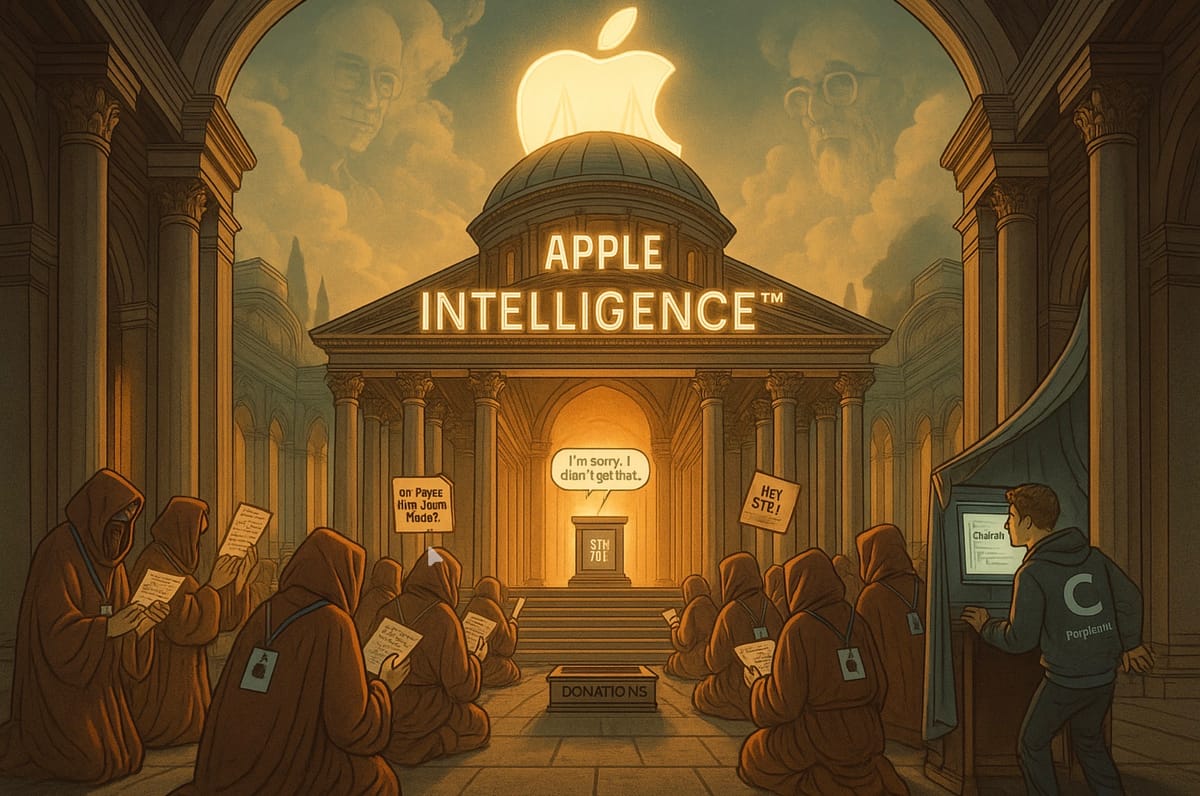
Silicon as Delayed Payoff, Not New Revolution
On silicon, I think you’re right that it is the one genuinely powerful flywheel left. I’d just be a bit more precise about how much of that should be booked as “Cook‑era innovation”. Historically it looks much more like the delayed payoff of a Jobs‑era risk‑mitigation strategy than a fresh leap.
In the longer piece I frame Apple Silicon as “the one big thing that paid off… 25 years later, after two failed attempts”, and walk through the PowerPC tie‑up, the eventual Intel pivot, and Jobs’ habit of keeping OS X running on multiple architectures “just in case”.
That context matters because it moves Apple Silicon out of the “Tim found the next big thing” bucket and back into “Apple doing what it always tries to do: pull the stack back under its control”.
Which is exactly why renting the AI layer from Google is so jarring: the company that used to weaponise vertical integration is now outsourcing the very layer that will define the next interface.
 Tommo_UK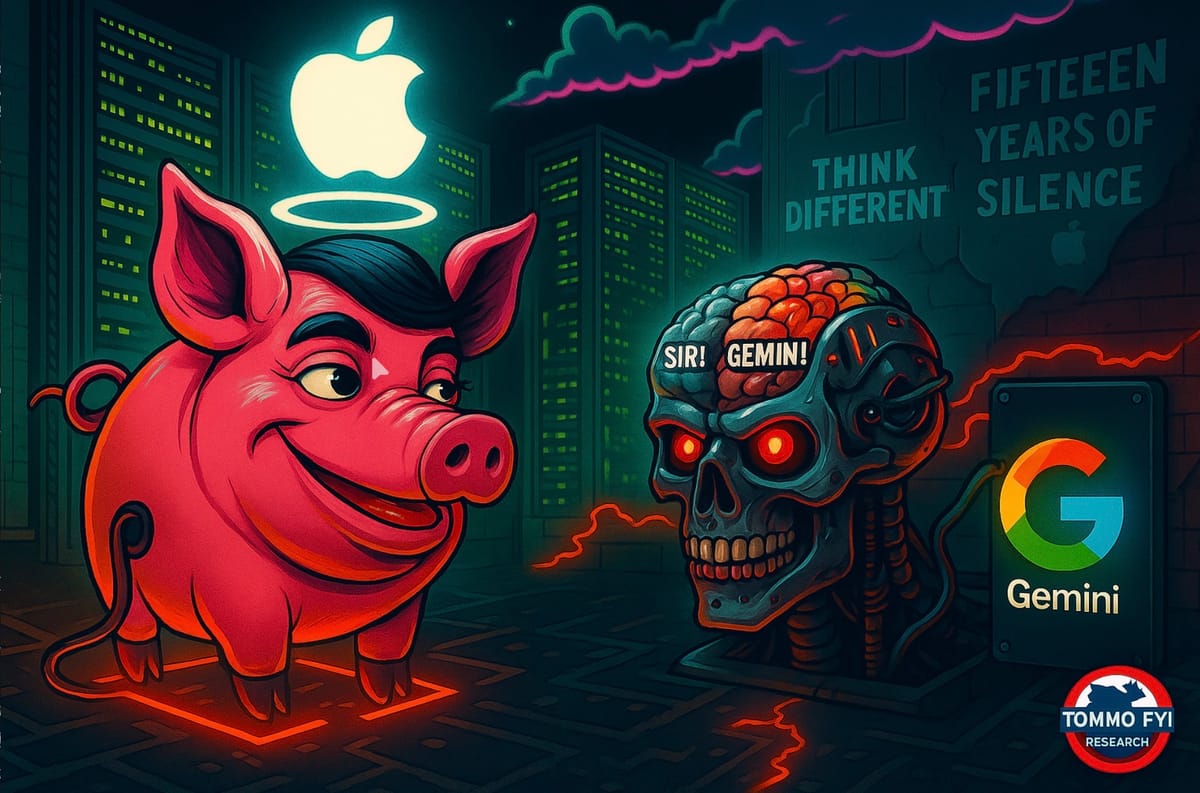
People, Culture, and the Agency Problem
You also touched on what is probably the deeper issue: the people. Your observation that the top team looks old, slow and over‑rehearsed, that nobody from acquisitions seems to rise, and that Apple fundamentally doesn’t trust outsiders, gets to something structural. Apple is very good at absorbing technologies; it is much less willing to absorb agency. It will happily buy a company for a component and then culture‑wash the people who built it until they either conform or leave.
 Tommo_UK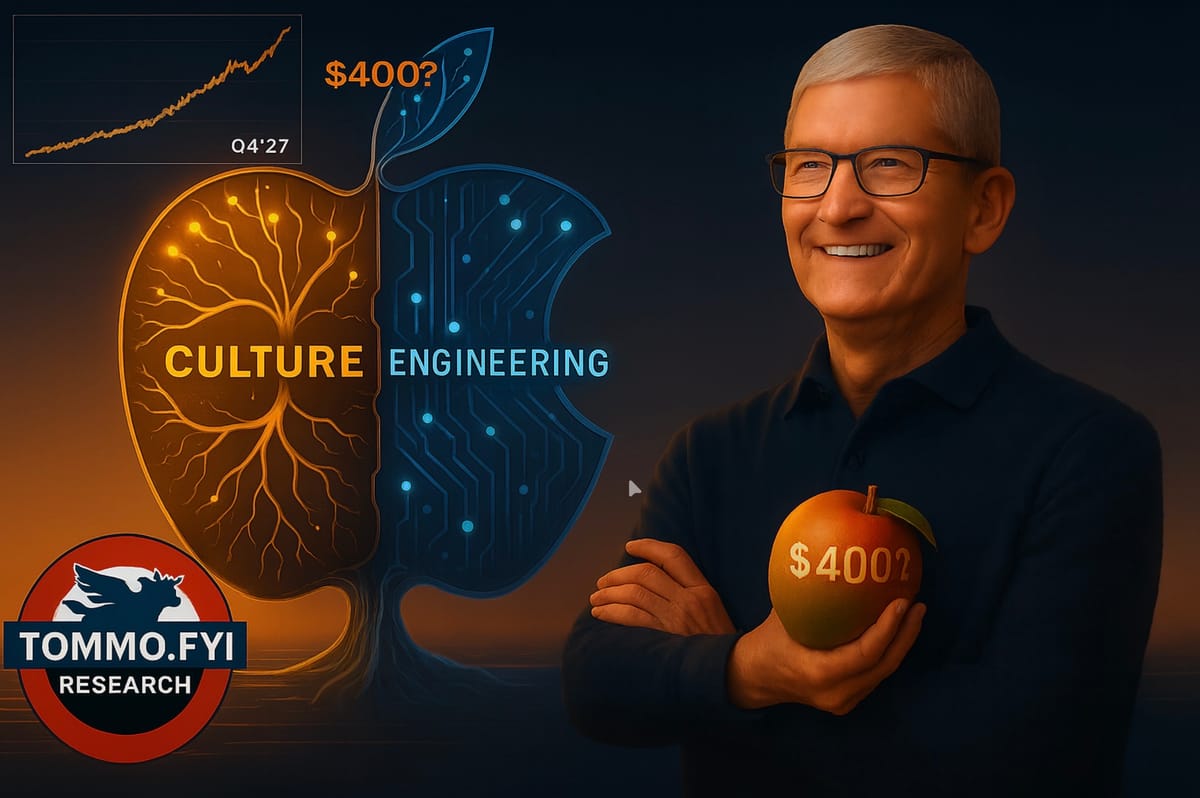
If that’s the default, it goes a long way to explaining why so many acquisitions never quite translate into visible product leaps, and why the AI talent drain becomes self‑reinforcing. You don’t get an “agentic” future out of a bureaucracy that treats initiative as a contaminant.
Not a Bad Year, a Long Trend
On your closing question – one bad roadmap call or the start of a broader trend – my own view is that the trend is already well underway.
The Gemini deal is simply the first time the dependency has had to be made visible.
Earlier versions were less obvious: narrative in place of delivery, financial engineering in place of growth, “quality bar” rhetoric in place of shipping, and, after Forstall, a consolidation of software power that coincided with Siri’s long decline.
Whether or not one buys every psychological inference, the continuity point is hard to dodge:
Post‑Jobs, the two people with sustained oversight of the Siri era and the software stack have been Cook and Federighi. If something underperforms for fifteen years under broadly stable leadership, you eventually run out of other suspects.
The “blowout” earnings you mention don’t contradict any of this; they enable it. They act as anaesthetic. They keep the board calm, keep analysts fed, and delay the moment when “what’s next?” has to be answered with something more substantial than “more of the same, but in titanium.”
Apple though, still almost twenty years on is “just the iPhone Company.” That’s an indictment of appalling leadership.
What Apple Actually Needs
So yes, a changing top team could be interesting. But I’d separate swapping faces from changing the operating system, metaphorically speaking. Apple doesn’t need a more youthful stage set; it needs a different doctrine – away from “iterate safely and defend the multiple” and back towards “ship imperfectly, learn in public, and actually lead the next interface shift”. In plainer terms: it needs to remember how to be wrong in public again. That’s the bit Cook’s Apple has treated as unacceptable.
 Tommo_UK
Why Gen-Z may seem Apple-adjacent but couldn’t care less. Apple should take note: the future is not about “all in one devices.” It’s actually about going back to basics.
It needs to understand Gen-Z though, more than anything, and they’re rapidly switching off outside the bubble that is the US, and subsidised China sales. Europe, long neglected by Apple seemingly out of spite towards its population thanks to regulatory nightmares with the EU, offers amazing growth prospects but is generally ignored, unbelievably.
Portugal? Doesn’t even have an Apple Store.
Closing
In any case, I’m glad you took the time to write such a considered comment. It isn’t just agreement; it’s a parallel argument that makes the central line stronger: excellent stewardship of the past, a shrinking ability to author the future, and a rental agreement with Google that makes that contradiction hard to ignore.
And remember what I wrote about price levels over the last few months:
 Tommo_UK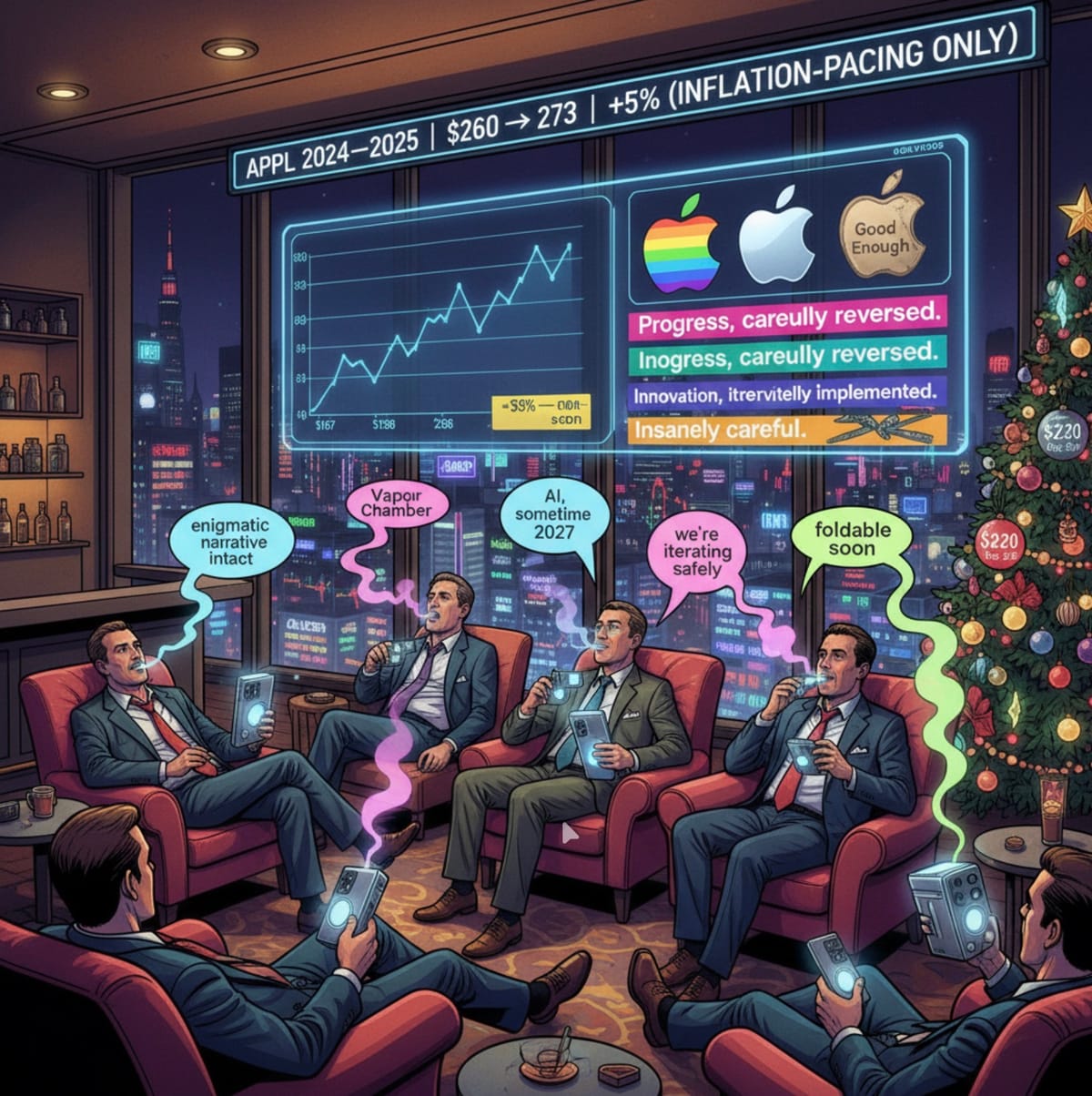
Why AAPL cannot sustain the hype which drove it up to almost $288 AH and how $272 is do or die
And then…
 Tommo_UK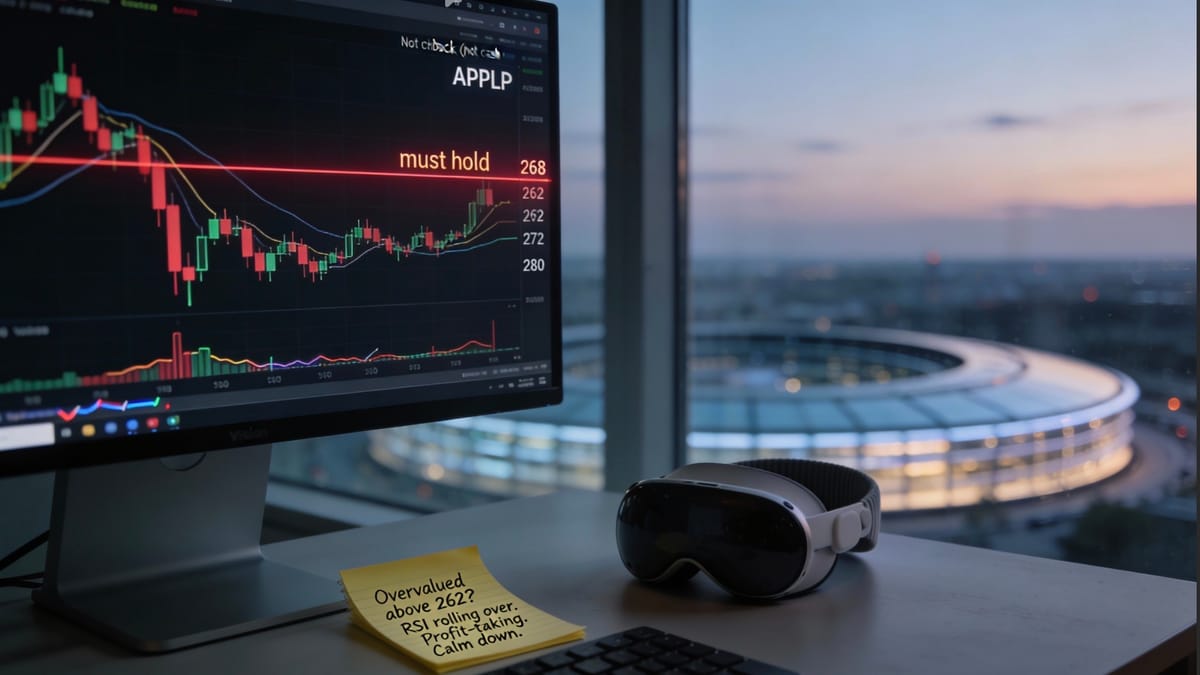
On AAPL’s pullback (blamed on Venezuela but anything but), $268 broke and led to junctions around $262 as predicted
Followed by:
 Tommo_UK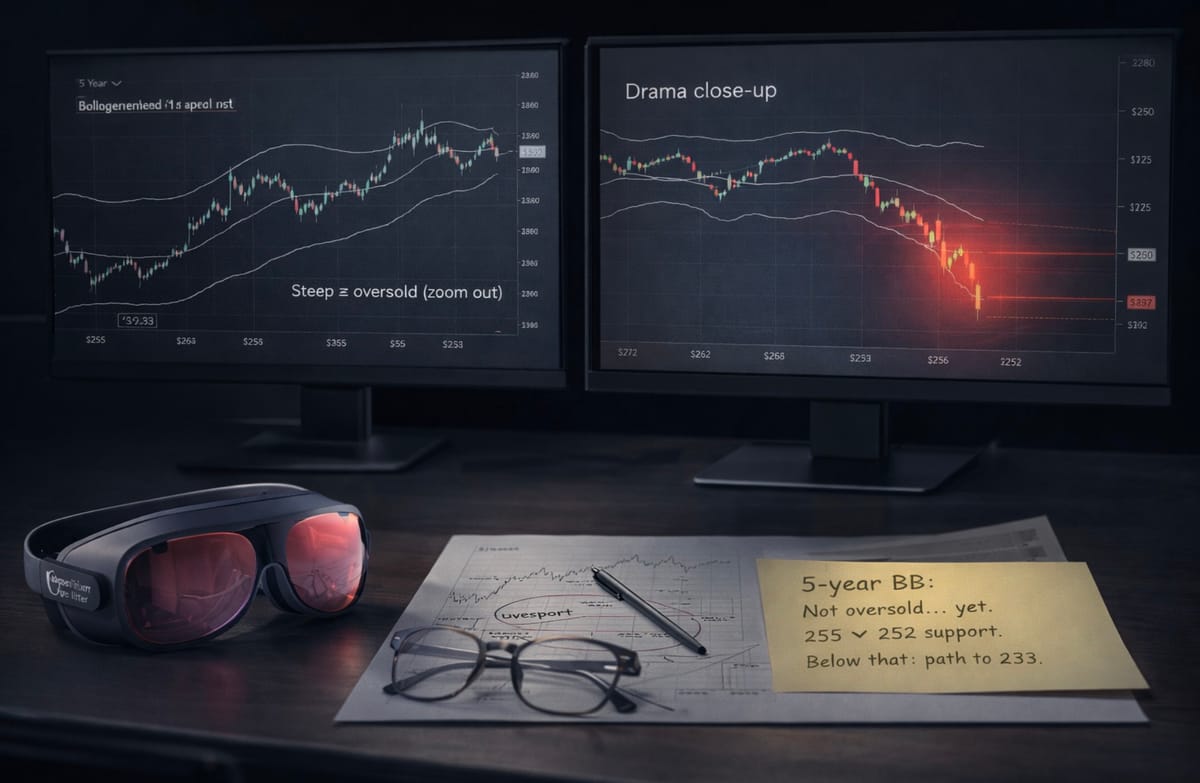
$252 didn’t hold. AAPL fell to $243, just above my low target of $239
No horn-blowing here, but seriously, next time I write that Dan Ives is a contrarian Sell Indicator when he screams “BBBBBUUUUYYY” at the top, consider a hedge.
More soon – including a bit more structure around the silicon arc, the Siri inflection point, and why this looks more like a pattern than a bad year.
In the meantime, it’s all about the next quarter now, right? Right.
Tommo_UK, London, Friday, 30th January 2026
© 2026 Tommo_UK / tommo.fyi
CONTACTING ME
💡 Reach out to me using the Confidential Drop Box form below.

CONTACT ME DIRECTLY: discreetly (and anonymously if you prefer)
NB - to subscribers and readers alike
ANNOUNCEMENT- Free early-access invitation: no paywall, no spam, just the promise of more interaction and real time engagement to come.
Why This Matters: Real-time Apple, AAPL and AI news. Real-time RSS feeds FYI exclusive Intraday Updates as they happen. Real-time updates before they hit CNBC. Real-time chat with other investors. Real-time chat with Tommo_UK. Breaking News. Searchable archives. No noise, just actionable context and live chat and newsflow to discuss , with investors, analysts, and involved consumers.
💌 Not signed up? Here’s a great reason to: Even the free tier gets you in for now. Just subscribe to the newsletter, or check your existing account.
🔔 Access Notice - A Member But Not A Subscriber? Re-Subscribe 🔔
👇 So:
Turn on your Newsletter Subscription if you’re already signed-up as a member by checking your account settings here:
💡 This is where live action, chat, and commentary will happen. Be there when the feed goes live for real-time market insight, member chat, and coverage as it breaks.