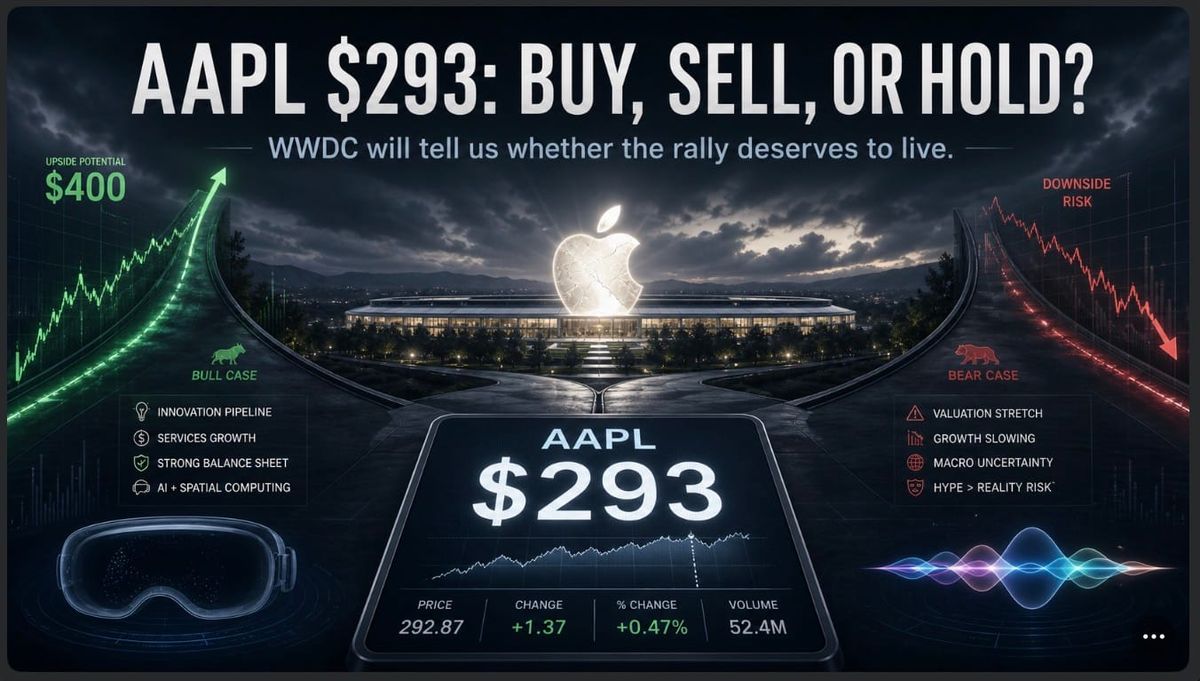
Apple Can Save VisionOS, But Not By Renting Intelligence From Google. Is AAPL a Buy, Sell, or Hold at $293?
Before the US bell Monday 11th May 2026, this argues against both panic and euphoria. Dan Ives lit the fuse on Friday yelling “$400”, WWDC holds the match, but Apple still has to prove Siri, AI and spatial computing belong to one owned architecture. Near $300, the call is… <read on!>

Summary for lazy or time pressed readers:
Apple’s latest Vision Pro argument, staged through the Gurman-versus-Horace commentariat theatre, misses the larger strategic point.
- Gurman is broadly right about Apple’s Vision hardware reorganisation.
- Horace is right that VisionOS still matters.
But both views only become useful when held together:
Apple Vision Pro may have failed as a commercial product, while VisionOS may still be one of Apple’s most important long-term platforms.
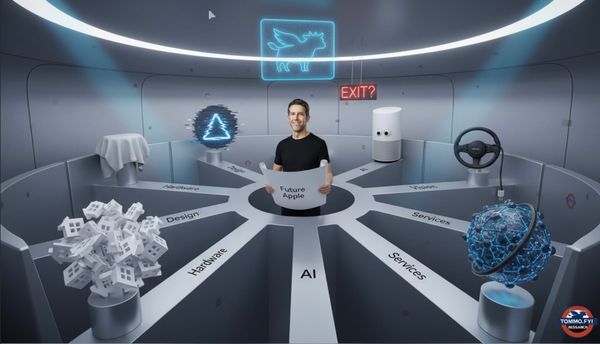
The problem is that VisionOS cannot matter without intelligence. Spatial computing needs context, agency, voice, memory and intent. Without those, it remains a beautiful interface waiting for a reason to exist.
That is why Apple’s reliance on Google Gemini is not just a pragmatic Siri fix. It is a warning.
In 1996, Apple refused to rent its future operating system and instead bought NeXT, bringing Steve Jobs and NeXTSTEP back into the company.
Thirty years later, Apple risks doing the opposite at the AI layer: preserving the hardware theatre while renting the intelligence layer that may define the next generation of computing.
The market, helped along by Dan Ives’ latest $400 call, may be happy to bid AAPL toward $300 before WWDC.
But price action is not proof of execution.
Until Apple shows that Siri, VisionOS, AI and future wearables are part of a coherent owned architecture, not another collection of impressive demos and borrowed brains, investors should resist both panic and euphoria.
My take before the bell is at the end of this piece, but here’s a longer-form summary:
Do not chase, do not short the WWDC run-up, and do not confuse a Friday squeeze with a strategic answer. VisionOS can still be saved. But Apple has to give it a brain, a use case, and a price normal people can live with. It also needs to show it has remembered how to ship product again, especially in software, and no amount of WWDC promises or betas will convince people until they’re fully functional, after the promises and disasters following WWDC ‘24 and ‘25.
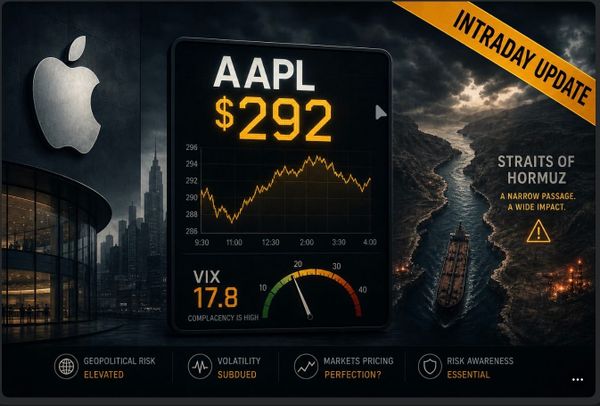
And here’s the one month chart. AAPL is quite extended and overbought short term, so there may be volatility ahead.
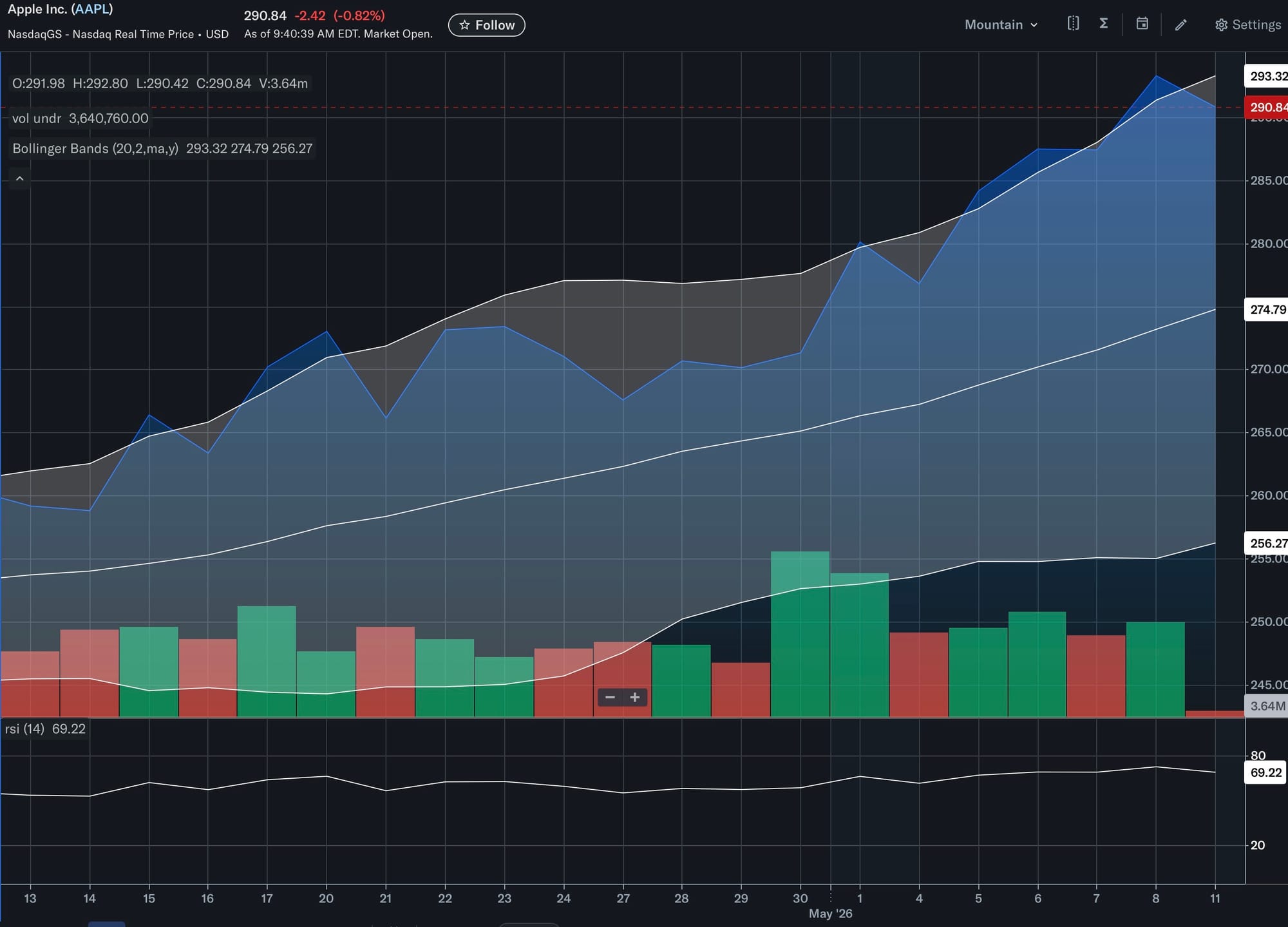
Onto the long form rambling part to peruse - my positioning recommendation is at the close.
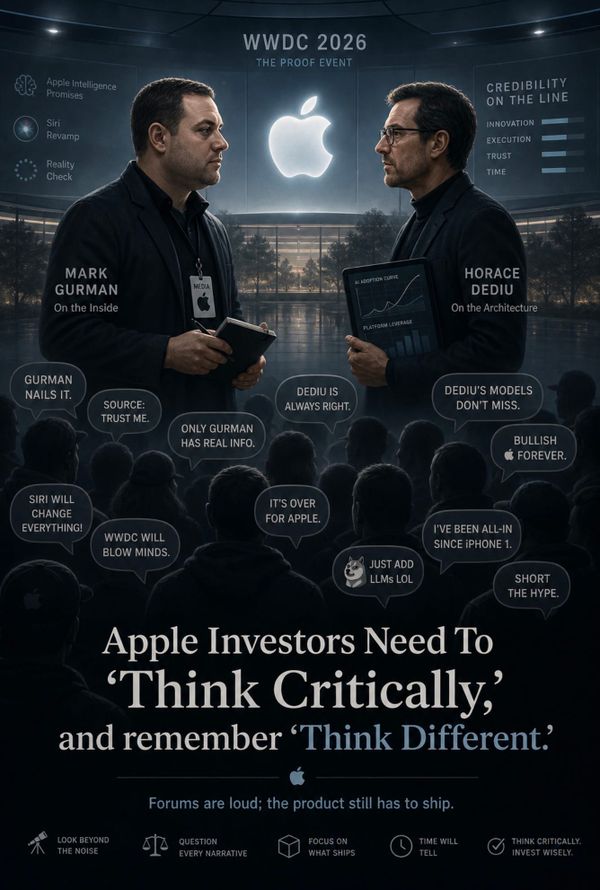
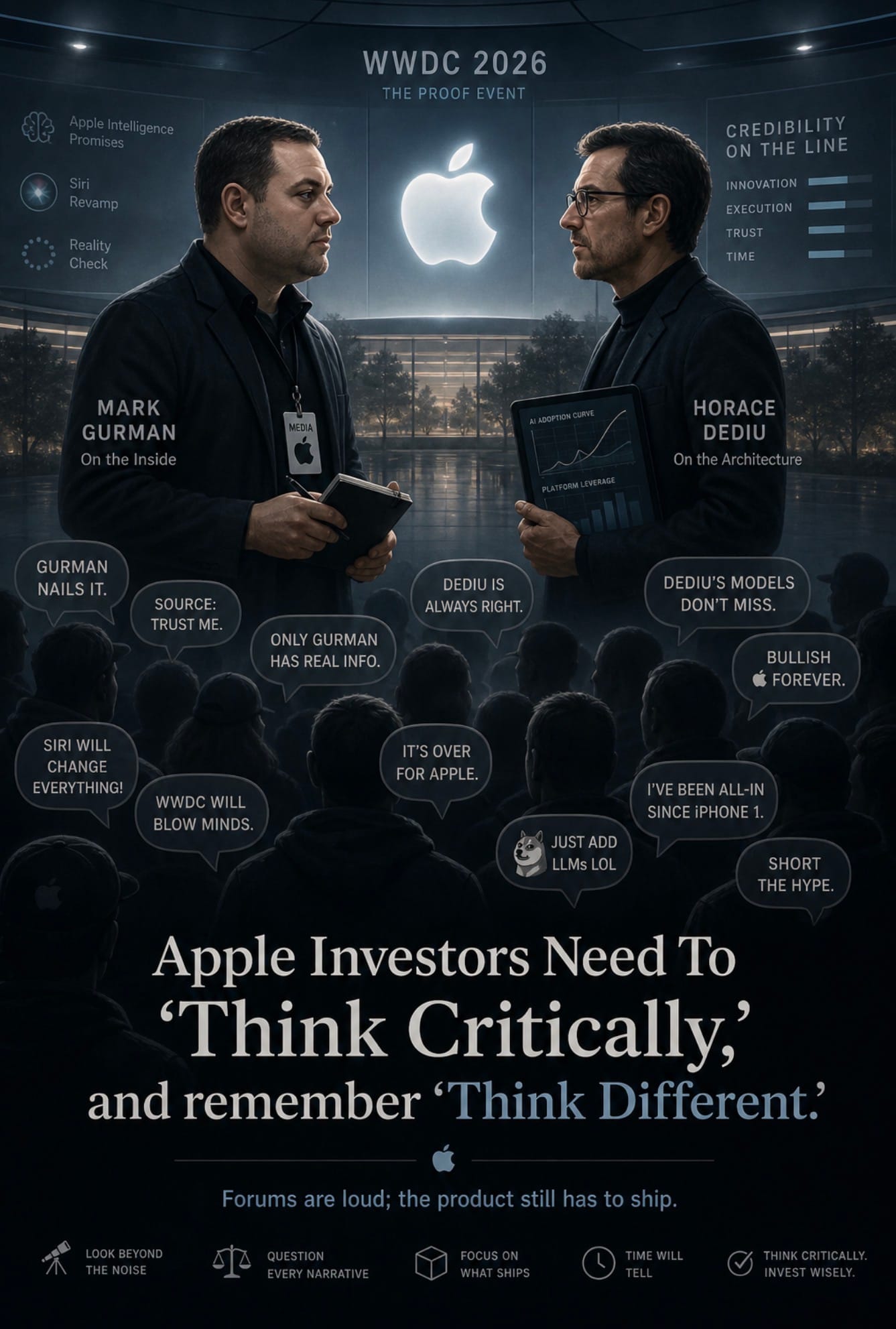
Yesterday I published a piece about the conflicting views of veteran commentators Mark Gurman and Horace Dediu, on the Apple Vision Pro.
 Tommo_UK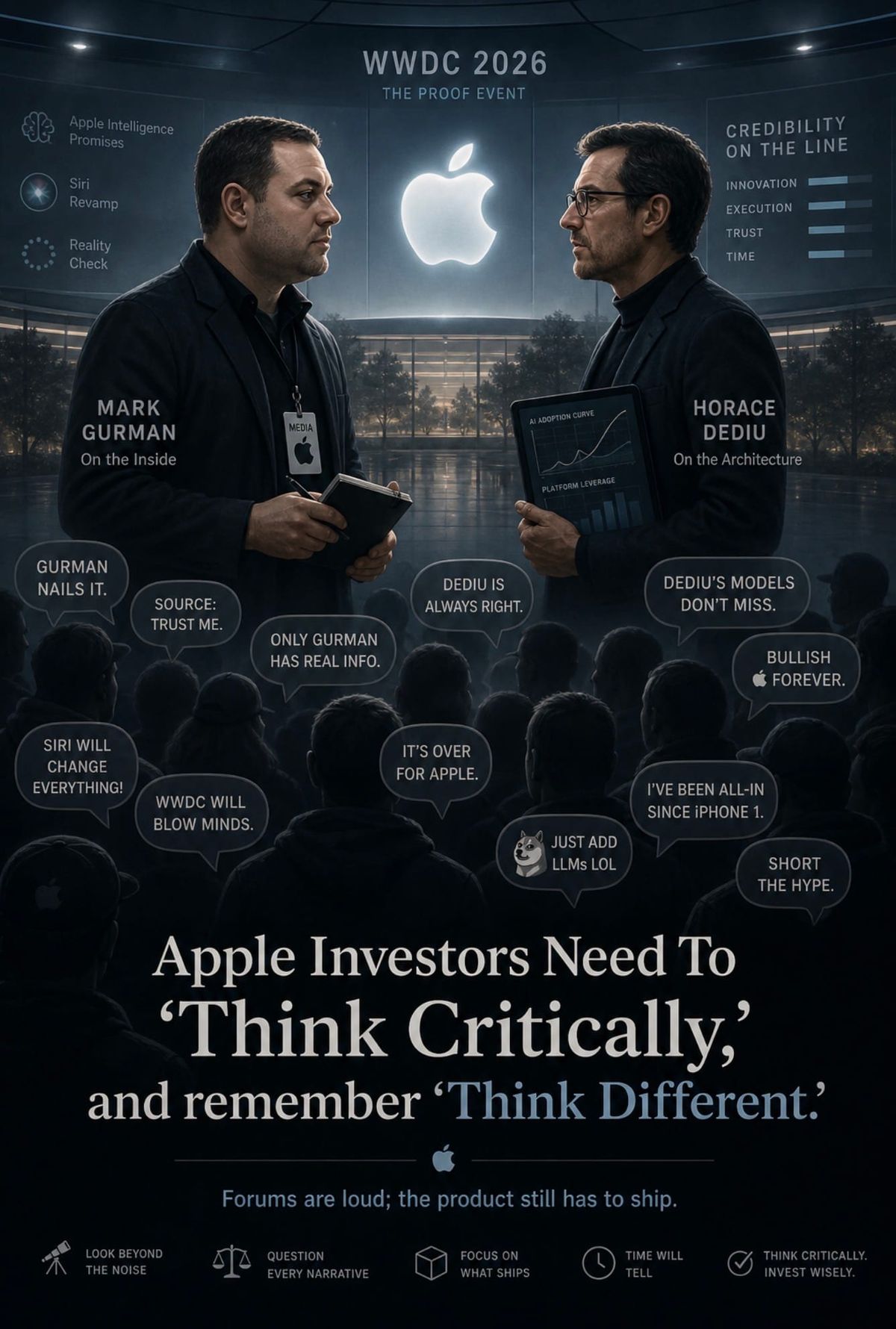
Why Dediu and Gurman are both right and wrong concurrently, and how this years; Apple releases will be a bit like the concept of Schrodingers Cat: neither alive nor dead, until we look in the box as WWDC unfolds in real time, when it does.
Today, Contributing reader Alessandro commented on my article last night, about the face-off between Mark Gurman and Horace Dediu, cunningly staged by www.ped30.com.
Alessandro said:
”Two contradicting but genuine visions held contemporarily together – why shouldn't this make sense? It seems also some 'over the rainbow' are starting to see this as a make or break moment.
I feel more confident than before about the recent developments at Apple. But I'm not willing to lose a healthy dose of realism.”
Philip Elmer-DeWitt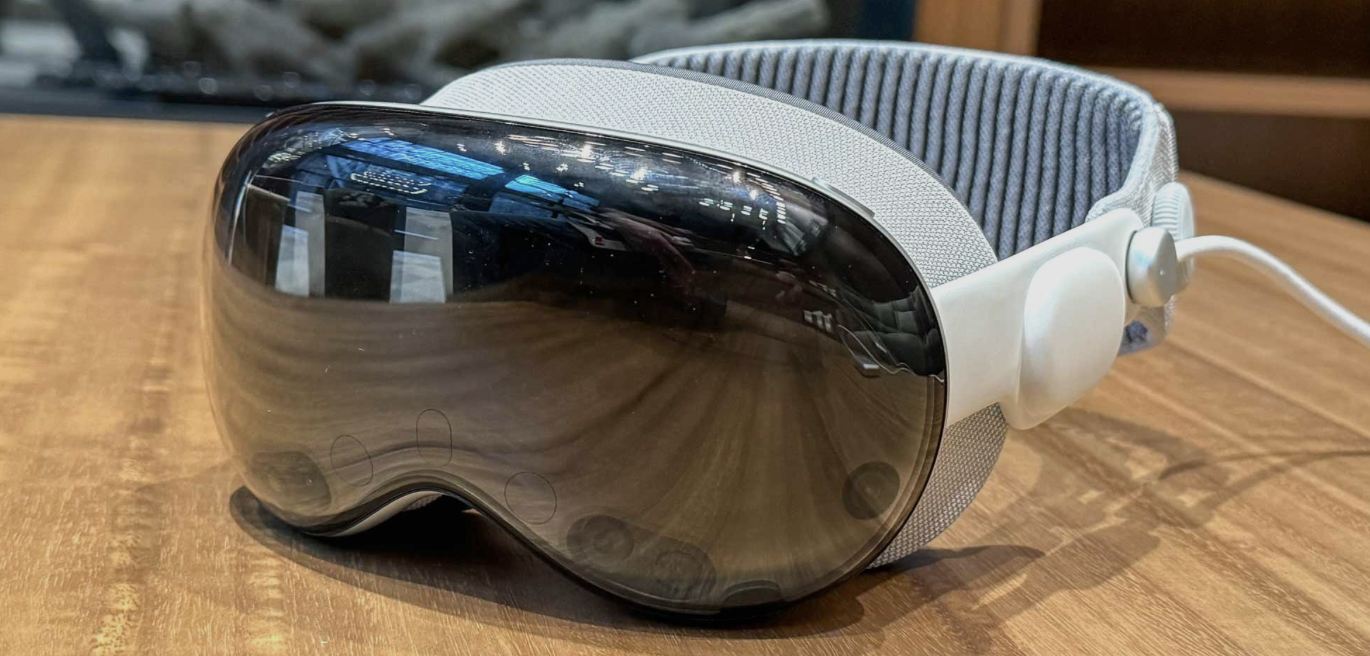
PED over at Apple 3.0 had some mischievous fun at Mark Gurman’s expense. However, he didn’t drill down to the truth, albeit the take was rather amusing ($ paywall)
Alessandro has a point but he’s touching on a deeper truth:
Gurman and Horace can both be partly right about Vision Pro, while both missing the larger problem. VisionOS may still be salvageable. But not if Apple rents the intelligence layer that makes it useful.
Yes indeed, it is possible - as I often present myself - to hold two contradicting but genuine views in one holistic perspective of a scenario. In this case of the AVP debacle, probably one of the most divisive products (for the Apple blogosphere - the rest of the world couldn’t care less - in years.
Dan had a more one sided view - check out his full comment in yesterdays article, but here’s a snippet:
“There is no Apple Intelligence—never has been. It’s a project still stuck in park. My iPhone still cannot autocorrect “Rim Cook” to Tim Cook when I fat finger, even if the context exists within both that text and the general conversation. Anyway, that’s a poor example, perhaps, but the scores of defections, failed launches and changes in leadership have also proven as much. The latest team overhaul is meant to provide the *illusion* that the drivetrain, which is Google’s Gemini, is something Apple created. It’s not.”
He went on to rather damningly conclude:
Ternus has his work cut out. I like his chances. He’s in a unique position to have seen the burning innovative desires of Jobs, but also the calm stewardship of Tim Cook. He’s going to need to channel Jobs and do something Tim Cook could not do, and that’s skate to where the puck is going and hire/promote the next team of DISRUPTIVE innovators. He will *also* have to channel Tim Cook and balance geopolitics and owning a mature company with sharp turns and innovative leaps. And the latter half is what Tim Cook couldn’t do.
Here’s a mini-article in response. Thanks Allesandro and Dan, for triggering some more thinking as we approach WWDC 2026.
1) GURMAN & HORACE: A Face off.
Both right, in their own ways, both wrong, in other ways, both useful to divine the truth which lies somewhere in between. Gurman is absolutely correct about the reorganisation of the Vision team since 2024 and it is disingenuous of Horace to claim otherwise simply by relying on job advertising and the continuation of VisionOS and a piece of 3 year old redundant hardware to run it on being still around, ostensibly anyway, to ensure there’s a platform to continue developing VisionOS on.
I don’t usually agree with Mark Gurman, but this time he really is correct.
Whether an immersive device like the AVP makes another appearance in Apple’s third attempt to gain traction with such a product is neither here nor there.
As things stand; the technology has now progressed so far on from when the AVP design was effectively put to bed about 4 years ago to green-light production, its probably likely a pair of great AR glasses can achieve 90% of the experience, at a fraction of the price and supply chain problems (and absurdity of walking around with a brick strapped to your head). It could probably be assembled in the US too given its relative simplicity compared to the AVP - which would be another feather for Tim Cook to wave next time he sees Donald Trump.
Gurman has his sources and rumours. Sometimes they’re just plain wrong or misleading.
Horace produces lovely charts which often look like archaeological digs laid bare and extrapolates years-long forecasts from the. This usually involves pinning his entire thesis on services growth, his favourite go-to narrative (we all have our pet talking points, Horace is no exception).
Sometimes he’s just premature, or by his emphasis on them, misleading in their detail to the real dangers facing Apple thanks to its witless focus on the wrong product at the wrong time over the last few years.
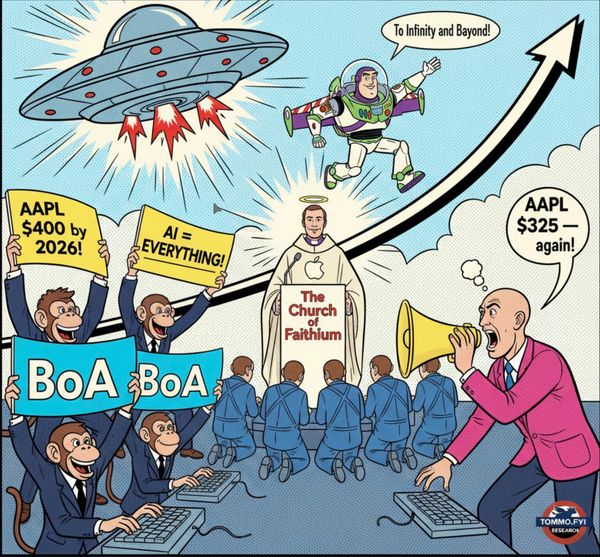
Horace justifies seeing Apple’s macro mistakes by painting graphs showing growth to infinity and beyond using a method of redefining the Holy Trinity as being made up of Services Growth+installed User Base+ Margins as if Apple’s model was a religion.
Both Gurman and Dediu are skilled, both myopic in their own ways, both great food fodder for gossip and regurgitation of theories and hopes for forum dwellers.
PED’s take was mischievously delightful, lighting a fire under Gurman by weaponising the rumour flow and pinning Horace as the guy who supplied the gas for it and exposing the real story, which his “my take” sadly didn’t really touch on:
That the VisionsOS project (far more important than any one piece of hardware) stands at a crossroads right now:
To either seek relevance or lose support forever from developers who couldn’t care less about the prospects any more and have been gaslit into supporting it for almost 4 years in dev terms, with zero return (apart from some absolutely amazing use cases in niche medical and CAD design systems).
2) THE PARADOX OF VisionOS and AI
Apple needs a consumer product for vOS and now - if the company return to the “vision” for vision it originally had which was - without question - AR first and then VR. First conceptualised as far back as 2015, delayed in 2018, interrupted by COVID in 2020 and finally getting the go ahead by Cook in 2021 with ex-honcho Dan Riccio heading up the new department, who seemed to go rogue and focused all the Rebaks efforts, seemingly unsupervised by the board properly, until it was too late to backtrack. Stories about a board split about what to doo are real, and the schism and bad blood its reveal internally caused was toxic to Apple’s management. By the time this happened, in 2023 when the real product was revealed internally instead of working mule demos of individual features it was too late to backtrack. Cool was reportedly shocked at the Hobson’s Choice presented to him - VR or nothing at $4000 and opted to go ahead, but he is on record prior to 2020 as indicating the trajectory of Apple’s wearables as being AR first, and VR as a conceptual follow up. Riccio offensively hijacked this agenda for his own reasons, and the rest is history. Riccio was sacked on October 2024 for his sins, and the AVP stuck not dead, but “resting” even while VisionOS - the Crown Jewels of the project, remained on life support and kept up to date for future harware. AVP was dead on arrival though. Apple just had to have something, anything to justify its efforts, pacify developers who had committed to it, and have a platform to continue to demonstrate the relevance of VisionOS for the future. Which is why it’s been unjust support for 3 years.
VisionOS should at this very moment have something to offer the world, available right now preferably in the form of summer-appropriate AR sunglasses, in a commercial sweep of the market just as Meta are flopping badly with their product due to performance and privacy concerns.
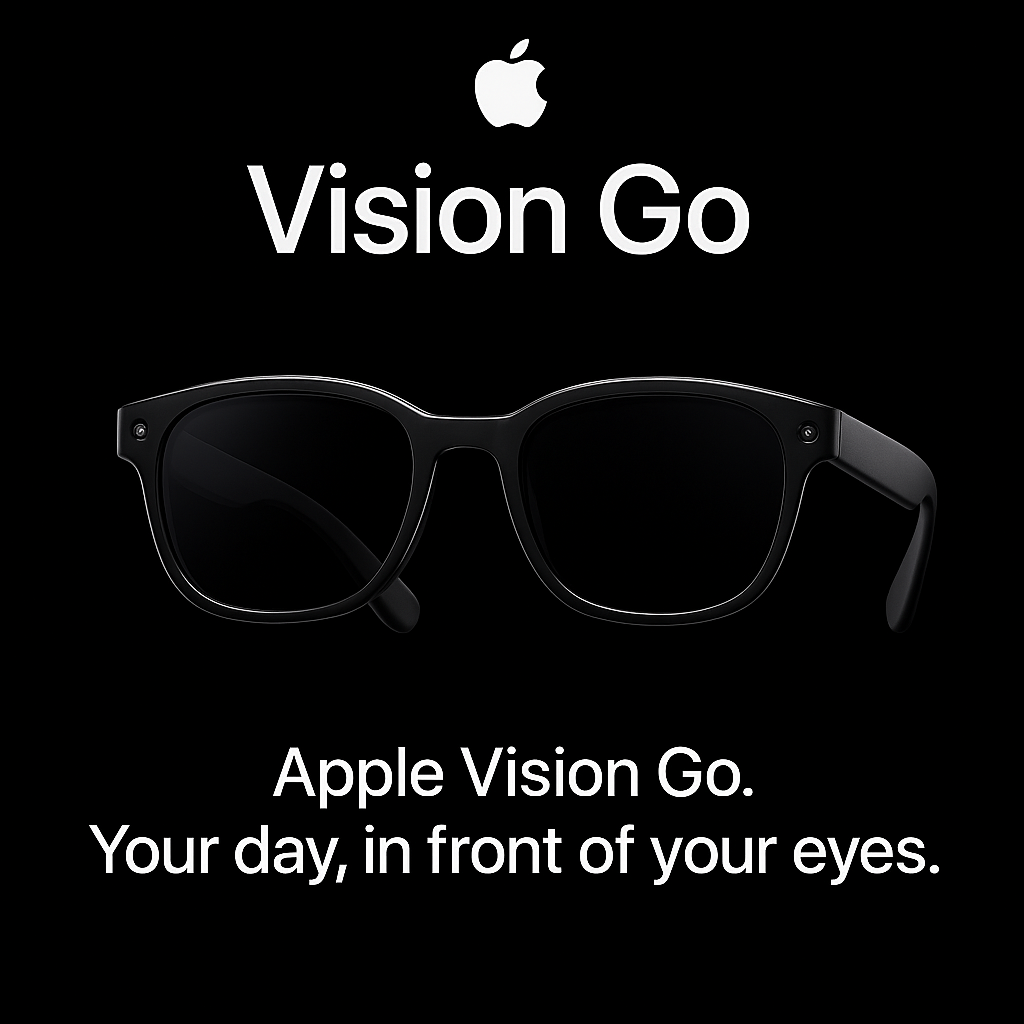
If Apple does AR right, they could clean up on the AR wearables market and trigger a rush for them similar to what it did with the iPod and the MP3 player market back in 2001-2005.
Locking the market into vOS and its hardware products while - hopefully following Steve Jobs example - ensuring compatibility across other systems to gain more than a foothold, but market dominance across all platforms.
iPod+ iTunes for Windows shows the power of deploying a cross-platform solution for leverage instead of remaining safely but iteratively within the Walled Garden.
If they focus on another tech showcase and persist on $4000 (or even $2000) products just to fit their upcoming F1 in immersive experience into their plans, they’re missing the main party trick for the sake of IT for its own sake.
They would fail to address the commercial reality and enormous opportunity to capture the market a second time round, and leave the door open for the masses of competitive products quickly appearing almost-montly,
The time for showcasing technology is over.
- It failed.
- The time for mass market consumer access at an affordable price is NOW.
I’ve been consistent in this view and whilst on a commercial basis I called the AVP a dud before it launched, I have been full of praise for Vision OS and its potential.
The problem is, Apple have done nothing with it because they’ve been so preoccupied with their last major leap and flop - Artificial intelligence and Siri.
Without those, products like AR and VR glasses, and all the other spatial-awareness and human centred activity products meant to help you seamlessly merge a digital overlay of your life in your analogue world, fail.
I wrote about the possibilities extensively in my SenseOS concept last June 2025.
Tommo_UK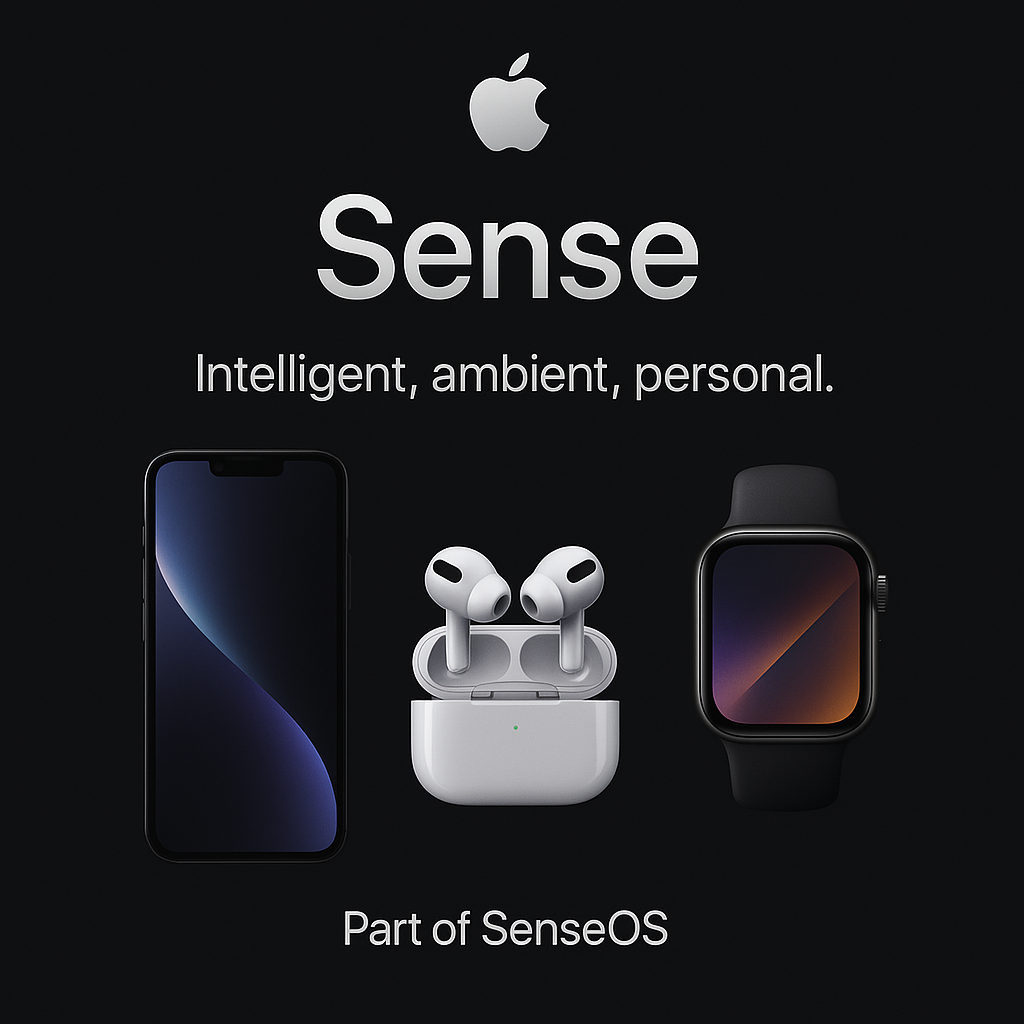
SenseOS - the agentic OS Apple should have and could have had running years ago.
Which is why, I am so sorry to see Apple still falling back on renting the brains and means for empowering this future success, on Google’s Gemini - and anybody else’s’ LLM and agentic structure other than their own.
3) THE DANGER OF NOT OWNING THE STACK AND WHY APPLE’S DECISION TO RENT ITS AGENTIC OS CAPABILITIES FROM GOOGLE FLIES IN THE FACE OF REASON AND ITS OWN HISTORY
This is the real strategic issue. Apple doesn’t own the intelligence layer, just some of the plumbing,
When your future relies on an operating system, you don’t go and rent it from someone else.
You’d have thought Apple would have learned that from 1996 when it decided not to sell out to Sun, not to buy in a skinned version of Windows NT, but instead risk 140% of its annual income to buy NeXT and NextSTEP with Steve Jobs attached for a whole new proprietary OS which Steve Jobs proudly stated would “see Apple succeed for the next decade,”
I wrote about this in a very long opus a few months back. If you’re an investor and can’t be bothered with a 30 minute read exploring why Apple in 2026 resembles Microsoft in 2005 (even down to a Windows Vista/Apple Liquid Glass error of UI design) then you should probably rethink your ability to invest sensibly, as opposed to blindly. No rudeness intended, but “do your own research” carries weight because it’s a truism.
Tommo_UK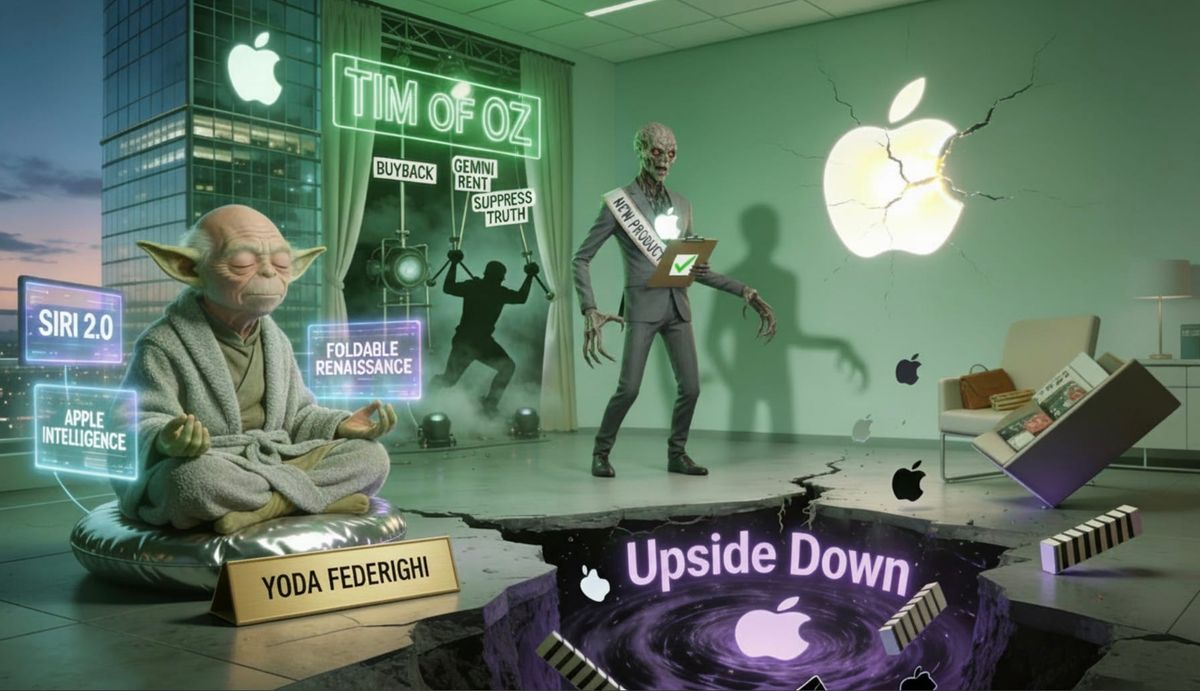
How Apple sacrificed its legacy and turned into a dysfunctional version of Microsoft from circa 2005.
I’d bet even Jobs would be amazed at OSX surviving not a decade, but now three decades, and that demonstrates the power of not just owning the stack, but the vital importance of owning the base layer of your company’s products’ core OS around which all of its offerings are now built - with OSX at their core.
Does Apple really want to rely on Google or anyone else for its future over the next 30 years?
I sincerely hope not. That would be like Rolls Royce having engine problems, and temporarily shoving in a Chevy engine, hoping nobody would really notice and care because its “under the hood” and then assuming it’s the answer for the forever after. The horror of it.
Well, that’s what Apple didn’t do in 1996, and exactly what they are doing in 2026. Sad.
PCC and FMF and acronyms aside, Apple has failed dismally to build out the basic software and OS infrastructure it needed years ago to launch the products it wanted to release last year - including VisionOS and home automation products, all of which were relying on a working Siri - work on which was effectively axed in 2018 when the last real attempt to do so in Project Blackbird was abandoned after Apple's management decided nobody would want to chat or talk or use voice command with their device.
Hubris, right? The cast of this dirty story including Cook, Federighi, Ternus and the now departed first-dude-from-Google to oversea AI, John Giannandrea gave it a thumbs down and insisted on dumbing down Siri to an on-device agent just as the rest of the world was beginning to build LLMs you could talk to.
Now we have the second-dude-from-Google talking his place, hired in 2025 to replace Giannandrea, to integrate Google’s Gemini into Apple’s OS stack, He’s a big believer in AI and LLMs - because he’s the guy who built the modern version of Gemini, You couldn’t make this up, but sadly, Google - a bit like The Borg from Star Trek - are slowly assimilating Apple even while seemingly being a benign solution to Apple‘a software engineering failures.
This responsibility ultimately, ironically rested with three people - the same three running Apple now: Tim Cook, Craig Federighi, and … John Ternus.
So whilst it’s the pragmatic approach and an unavoidable one - now - to have to hitch its fortunes to Google not for just a feature (like maps) but for the underpinning of the very OS and products it hopes to launch now and in the future, it is a disastrous outcome considering the price it has had to pay:
the loss of 100% agency over its AI core OS.
And stands in 180 degree opposite contrast to the “bite the bullet and just do it” approach Apple and Gil Amelio (for all his sins) took 30 years ago in 1996 during the OS9 -> OSX transition. Which it achieved it in house, its own way and managed to outperform all competitors, in the face of enormous competition and adversity at the time, for a forever-after benefit and wide moat.
Siri and WWDC
I’m sure AI and Siri will be launched with great fanfare and the Street will love it, because it still doesn’t understand Apple or why people are so loyal to it.
- It’s all a margins game for the Street - keep those, and they couldn’t care less. Casual users will love a working Siri, non-functional since about 2013 when the lobotomy happened.
- Many won’t care what’s under the hood.
- But those who matter, really will care and will see the danger in the homogenisation approach Apple are taking, reducing the differentiators between its approach to AI and Siri and that of its competitors, because as I warned last July if Apple didn’t make a move to conquer AI and embed it immediately, everyone else would
And Apple would end up hosting everyone else’s AI solutions on its platform where they’ll gradually pull users away from Apple’s dominance over its own platform as the user base fragments to using different AI solutions to run their lives.
Perplexity Computer is already doing this as of last week in its latest macOS app update.
Gemini is already being embedded in macOS and iOS. OpenAI is cosying up to Apple too, which is rumoured to be adding “extensions” so users can choose which AI, does <whatever Apple allows them to do> their agentic work for them. Perplexity Computer is already offering this, right now.
I wrote a year ago why Apple should have acquired Perplexity. Apple could have been doing, in July 2025, what they’re still unable to deliver now in 2026, and leapt ahead of its AI competition, Instead, it’s playing catch up after losing years.
Tommo_UK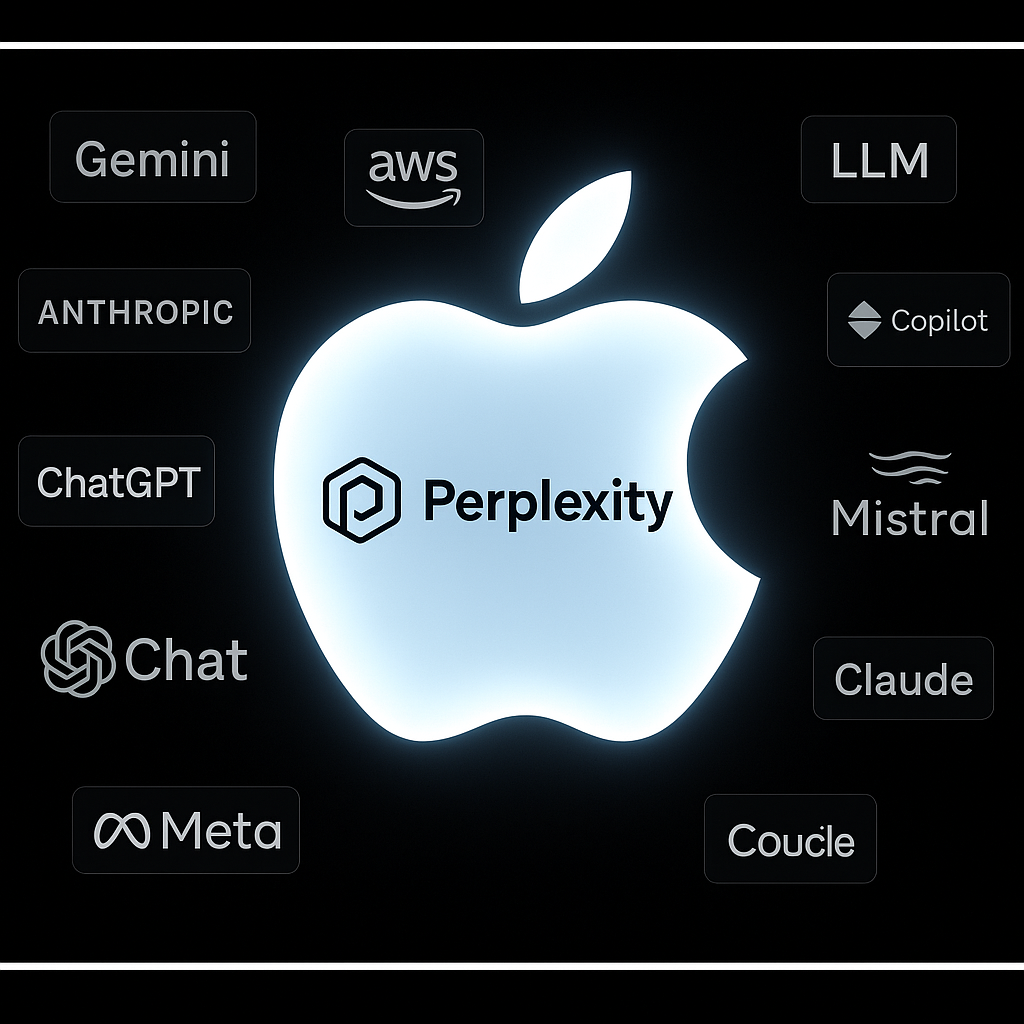
I broke news of a possible Perplexity deal and why it mattered, in June 2025
But those of us who know better, and the decisions which were made in the past contrasted to those Apple was forced to make against its will in the present, know what an utter white flag of defeat and surrendering of technological prowess this 2 year fissure has exposed, and the incompetence and complacency going to the heart of Apple’s management.
“Hurrah for the longs,” may you all live long and prosper,
But until Apple learns a lesson in humility instead of projecting hubris and listens to its customers again instead of segmenting its product lines to squeeze ever-higher margins and subscriptions out of them in preference to delivering great products which aren’t hobbled in some way to force purchasers into pathways they aren’t 100% happy with, we’ll continue to see car crash after car crash.
3) Advice to Ternus: “GIVE PEOPLE WHAT THEY WANT NOT WHAT YOU THINK THEY WANT.”
Steve Jobs may have been able to pull of the trick of delivering products to people they never knew they wanted but just had to have it the moment he unveiled it in “One More Thing,” but Apple under Cook and Ternus can’t. They don’t have the intuitive understanding Steve Jobs did, and they have been taking their market for granted. Getting it right on the third or fourth release is not acceptable for a company like Apple which doubted on a sense of exceptionalism very questionable in its current behaviour.
The MacBook Neo as an example is an attempt to break out of this narrowing strait, but as readers will now, I don’t think it is a well-conceived product, and the price is gaslighting in the extreme given how much more the product has been priced at overseas. It’s a comfort blanket, not a step into the future. In fact if anything it’s a step backwards given the manner in which it has been unnecessary hobbled - not for costs’ sake but to segment it artificially.
Give me an iPhone Nano (please… don’t call it a “neo” - so cringe).
I want a second phone, with the same phone number as my main iPhone, and I’d be a buyer of a “phablet” like my existing Pro Max knowing I can also just swipe my tiny iPhone nano for easy portability and the same number synced to it like an Apple Watch to head out of the door without having a brick in my pocket. Or a foldable iPad. It wouldn’t”t need a camera array more suited to a film production but would have a great battery life and a cut down version of iOS running on a cheaper processor - but when you’re out in a bar, dining, or at a meeting (or maybe a date) I think I’m not alone at feeling weighed down by carrying my iPhone Pro Max (or even a Pro these days they’re so large).
Sometimes, smaller is better. Just look at the success of the iPod Touch and the iPod nano (which Motorola famously commented on saying “what a stupid idea - who needs 1000 songs in their pocket. It’ll never sell!”)
And I’m still not interested in a foldable iPad that doubles up as a phone.
People who want to look bling, rich and show off will gravitate towards these (along with the tech fetish media) in the same way people with taste who increasingly enjoy discretion and fewer ostentatious displays of wealth will shy away from them.
This was a product for the pre-COVID era where bling still ruled and the notion of a device doing everything, for everyone, ruled. In 2026, a $3000 foldable is a “Vulgari” product. With the fold - or whatever it’s ultimately named - it seems Apple is making the same mistake as the AVP and the iPhone Air: assuming that their “ultra” vision of their offering will somehow also resonate with consumers in the face of price, design compromises, and lack of broad appeal beyond the early adopters - as happened with the AVP and iPhone Air..
I believe the fold is a fallacy. But then it hasn’t even been launched yet, so let’s see. The odds of it being competitively priced though, based on Apple’s pricing policy, are small. The odds of it making a material difference to Apple’s smartphone growth given its likely price-point might be equally small.
And for heaven’s sake, I hope they finally address the aging design paradigm of the Watch.
REDUX: IN SUMMARY OF GURMAN vs HORACE:
Back to the point, Gurman is right on the timeline, but too absolutist on what it may mean for VR. Horace is wrong about the reorganisation within Apple and why it was done - Gurman is factually correct,
Between them, there’s a truth very visible and representative of the dichotomy within Apple: paralysis, confusion and an inability to to draw up a roadmap it can stick to.
4) CAN TURNAROUND TURNUS LIVE UP TO HOPES, OR WILL HE DO A TACO LIKE TRUMP?
If Teflon Ternus (so named because he’s admitted he dropped the ball on key product decisions but 15 years later has emerged as the new CEO promising to put all his own mistakes right), can get rid of the grease and start a new tasty fry-up as Head Chef, he’ll single handedly refresh Apple by that approach alone.
At the moment though, all I hear are “continuity conversations” about the same old stories and ambitions.
The same ones I’ve heard Cook whine on about for a decade.
Can Ternus be his own man, with his old boss now elevated above him as “executive chairman” while he tries to be an independent CEO - knowing behind him are the same team and individuals responsible for Apple’s woes for the last 6 years?
Time will tell, but I don’t think wild announcements at WWDC 2026 will show us that truth. We’ll have to see until they actually start shipping, And a “HomePad with a robot arm with a screen attached” might sound “cute” but most people will think it as creepy as a pair of AirPods with cameras in them, whatever “privacy guarantees are built in.”
5) WHAT THIS MEANS FOR AAPL and INVESTORS, and TRADERS NOW, 11th May 2026, and for WWDC in JUNE
Meanwhile considering this jump to $293 was predicated on Dan Ives and his own ETF coming out and screaming “BUY to $400” on Friday May 8th, ie the previous trading day to this article on Monday 11th May, I won’t put much faith in any move, up or down, this close to WWDC.
For once though, neither would I sell the run-up.
The floor may be in short-term for now, the event is looming, and nobody is going to load up going into it or unload now, until there’s more clarity.
So I wouldn’t be surprised at a slow drift upwards to WWDC, as short positions are closed and options are rolled forward.
Apple will likely broadly move with the market now and wobble or stand up straight in direct correlation with whatever TACO or NACHO move we see from Trump in the Straits of Hormuz between now and then.
6) INVESTMENT SUMMARY
In other words, this isn’t a trading environment I would buy or sell in now because at almost $300 on no new products due until after WWDC (which people seem to forget is a developer conference, not a mass product release show) and an upcoming squeeze on gross margins coming thanks to
- RAM prices,
- inflation,
- the lack of rate cuts,
- and much of the world outside of the US teetering on recession thanks to the impact of the Iran war,
… Apple could stand to see slower sales and GMs than investors have become used to.
But the Street won’t price that risk in for now, because the Amits, Ives and BoA of this world are taking turns to stoke up AAPL to make sure the S&P500 continues its boom upwards.
So in the past at peaks like this, when I’ve correctly called each top a SELL and looking for a 15-20% correction I’ve been invariably right.
This time I’d just do nothing.
6) MY TAKE: HOLD.
This time, were I in, I’d probably just sit on my hands and wait out WWDC and the week-long trading gyrations we always see afterwards, no matter whether there is a $20 move up or down between now and then. There’s nothing to take an investment cue off right now, so it’s hand sitting time unless you‘ve got a margin call to cover your shorts between now and thirty minutes time, when the US markets open on Monday morning, 11th May 2026.
With a caveat and for the same reasons I’ve suggested it before: Risk management
Take a VIX position.
It’s sunk to 18 again after peaking at 30 just a few weeks ago. AAPL is at nosebleed levels, complacency is high, and the Straits of Hormuz are still seeing America and Iran firing missiles at one another.
VIX protection against volatility might be the most sensible thing you could buy here, in case things go tits-up in the Middle East or Trump does something stupid. Here’s what I wrote about AAPL and the VIX last year, which on a leap in the VIX from 16 to 30 and AAPL tumbling from $283 to $243, made for a pretty good paired trade and a profitable one.
Tommo_UK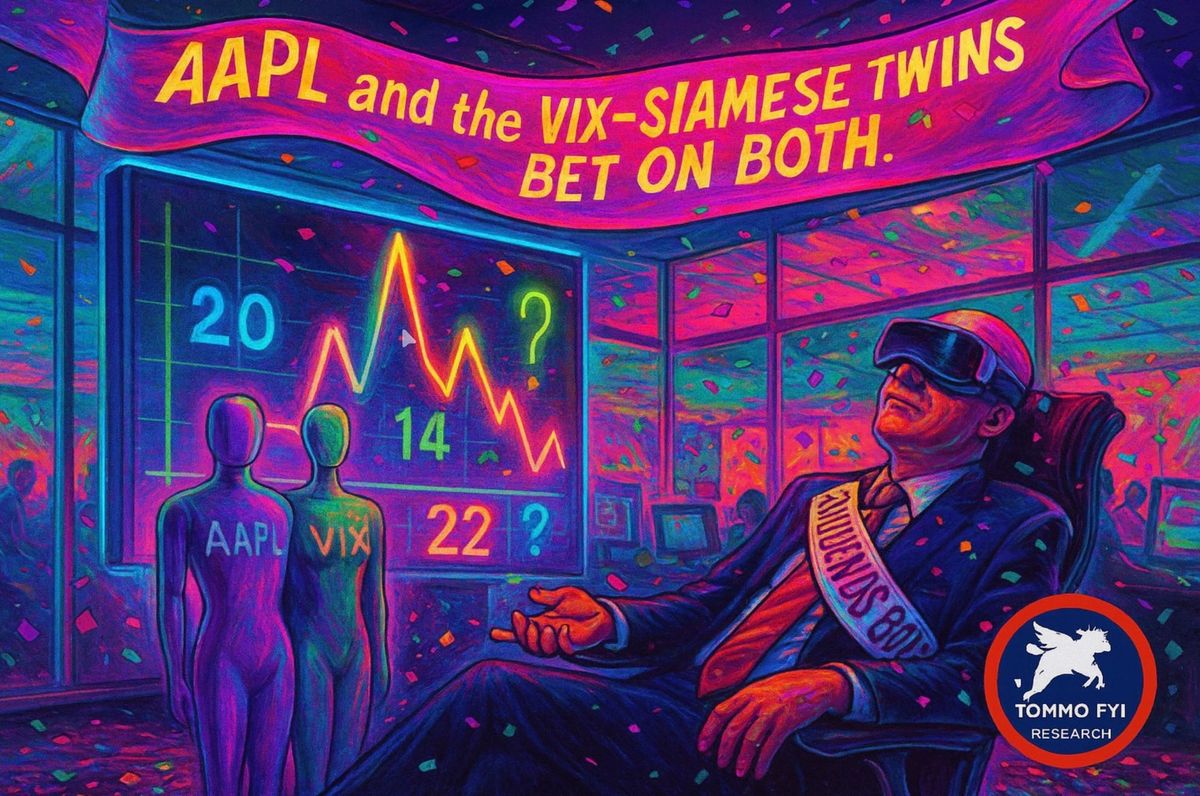
From November - why you should always use protection, even if AAPL has been your faithful partner for 25 years or more.
$20 up or down from here is par for the course.
There is no investable information out there now, so sit tight and enjoy the ride - but as a caveat “this is not investment advice and if your options straddles twist your nether regions into bankruptcy, don‘t blame me.”
May the Farce be with you.
And to John Ternus I have one message to repeat from my article last night. Big KISS. Or:
“KEEP IT SIMPLE, STUPID.”
Tommo_UK, London, Monday, 11th May 2026, 14:15 hrs
© 2026 Tommo_UK / tommo.fyi
Subscribe for free by accepting early Founder Member access to this tier — and early beta access the moment it goes live.
CONTACTING ME
💡 Reach out to me using the Confidential Drop Box form below.

CONTACT ME DIRECTLY: discreetly (and anonymously if you prefer