Apple’s Journey from 2024 to 2026 Looms Large with WWDC Ahead. Is AAPL Faith Now A Product Or An Outcome? How OpenAI Became Heresy, And Gemini Became Gospel
OpenAI helped Apple avoid AI obliteration in 2024. Now in 2026 Gemini is being cast as salvation, OpenAI as villain, and AAPL at $300 as proof before WWDC has even happened. This is Apple’s Colosseum: faith, fear, forums, and the strange theatre of the moat shrinking even as markets cheer.

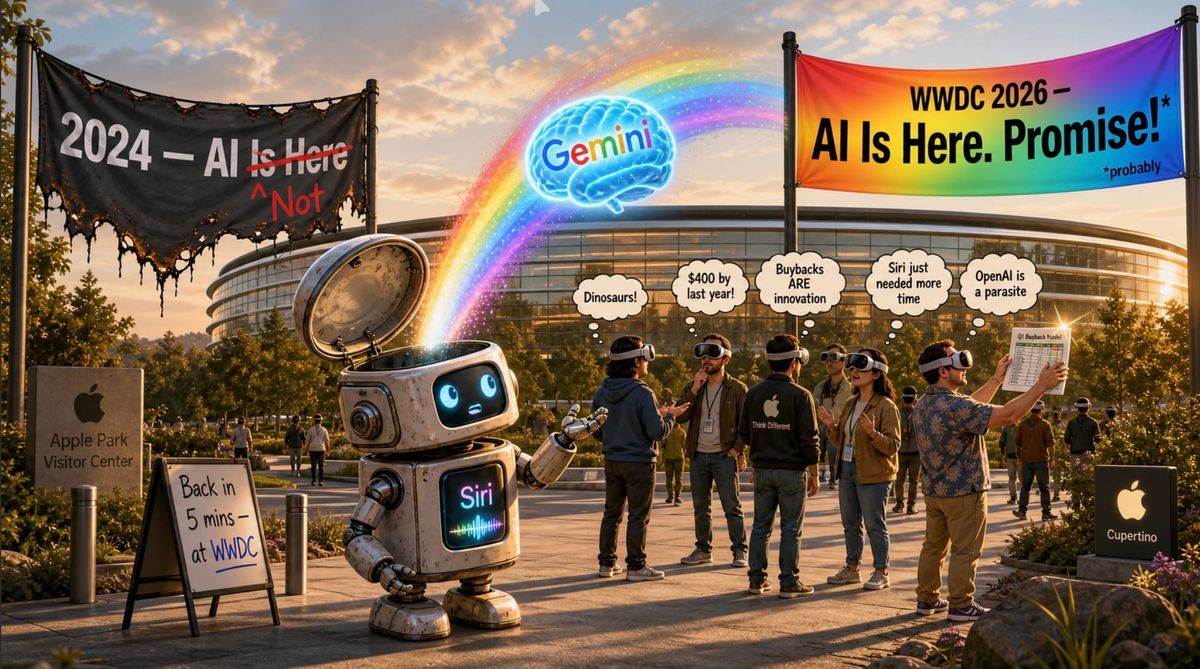
The Apple Colosseum: OpenAI, Gemini, and the Cognitive Dissonance of the AAPL Faithful
Why I’m writing this now
Between June 2024 and May 2026, Apple borrowed OpenAI’s credibility, delayed its own Siri, signed a multi-year deal to rent Google’s brain, and watched its best AI talent walk out the door.
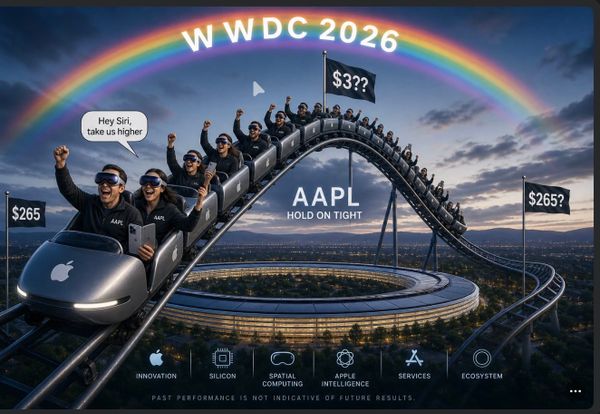
This week AAPL just crossed $300 and WWDC is just weeks away.
Across the Apple blogs and AAPL forums, the reaction has followed a familiar script: every failure reframed as patience, every partner recast as parasite the moment they become inconvenient.
This is a forensic account of what actually happened over the last two years, both inside Apple, and inside the conversations about Apple - and why the commentary around it tells you almost as much as the facts do.
Today’s news cycle had the slightly clammy feel of a relationship counsellor being asked to supervise a knife fight in an Apple Store.
Courtesy of Mark Gurman’s Bloomberg reporting, then carried and sharpened by Reuters and the Financial Times on 14 May 2026, the love/hate relationship between Apple and OpenAI suddenly looked less like a strategic partnership and more like a divorce battle in the making.
Mark Gurman, “Gossip Queen” without peer, wrote about this:
 Mark Gurman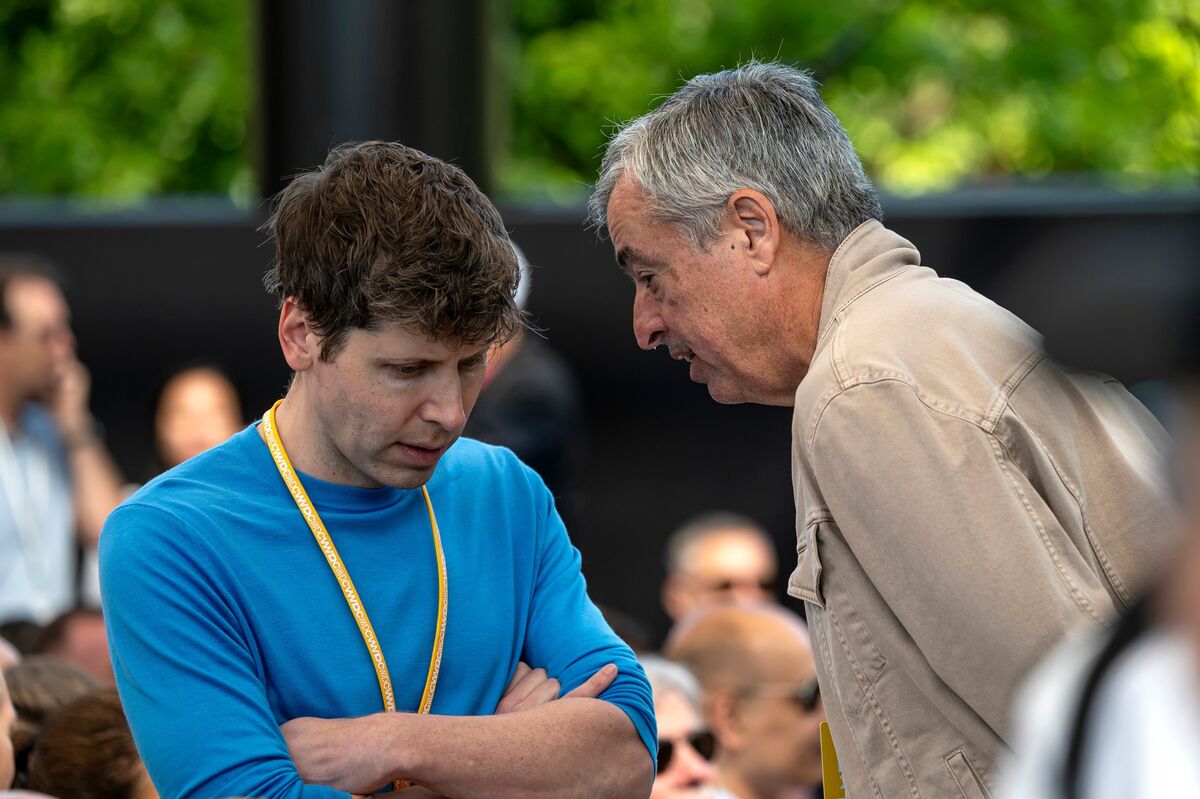
Gossipy Gurman Reaches Deep Inside To Surface Frigging In The Rigging Between Sam Altman’s outfit and Cook’s Apple.
OpenAI, once useful enough to stand beside Apple Intelligence while Siri searched for its shoes, is now reportedly unhappy that Apple has failed to make an honest effort to support the partnership, failed to drive the subscription upside OpenAI expected, and is now edging towards Gemini and a menu of selectable models while pretending this was all terribly calm and inevitable.
Reading the forum responses, the analyst notes, and the usual congratulatory pipe-smoking from those quietly upgrading their Apple price targets on hopium news, I felt the old twitch return. WWDC is still three weeks out. Apple has so far delivered a leadership reshuffle, a cheap laptop, and a lot, a lot, of promises stacked on layers of opaqueness offering about as much transparency as Alice Through the Liquid Glass, with apologies to Lewis Carroll, and possibly to whoever in Cupertino thought “Liquid Glass” sounded less like a UI glaze applied to unfinished plumbing.
So this is my attempt to pull the thread properly:
What is really going on between Apple and OpenAI, what came before it, what might come after it, and why the reaction across Apple blogs and AAPL forums tells us almost as much as the reporting itself. The story is not merely OpenAI’s disappointment, Gemini’s rise, or Jony Ive’s white-room hardware sequel. It is the ecosystem immune response. Apple uses a partner, the partner complains, the partner becomes a threat, and suddenly the faithful discover principles they did not appear to hold when Cupertino was doing the hiring, buying, borrowing, bending, and backfilling.
Related Tommo.fyi context for this article:
 Tommo_UK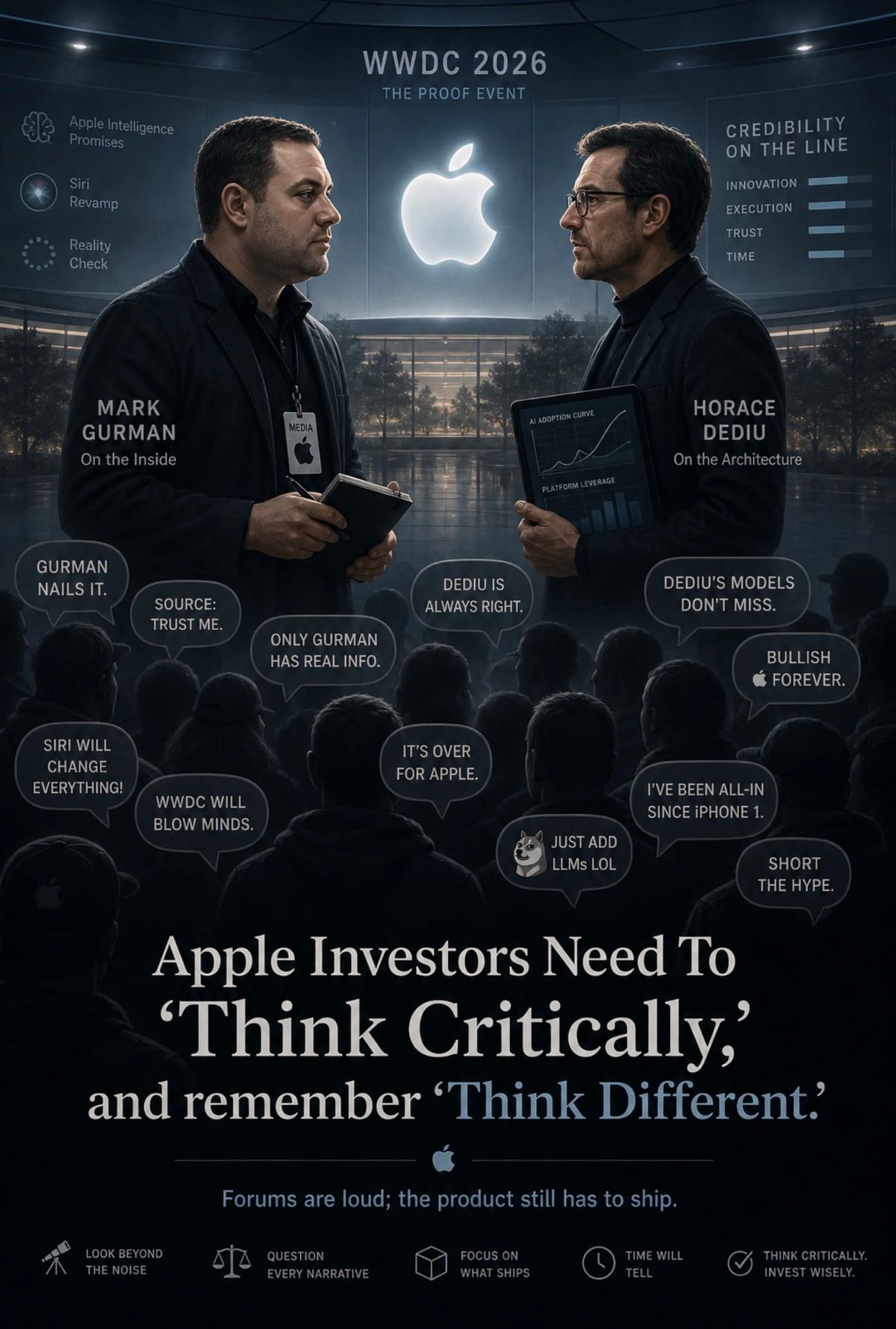
Published May 2026
And I asked whether AAPL was a BUY SELL or HOLD
 Tommo_UK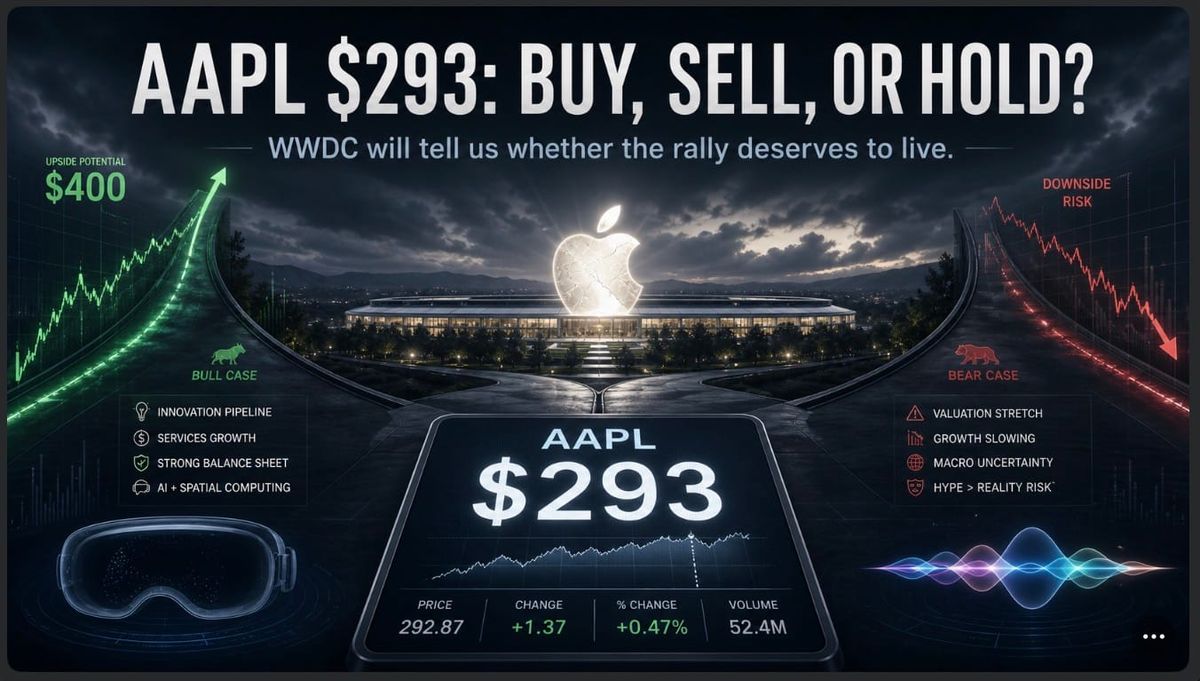
Published May 2026
Followed by a look at the upcoming WWDC movements, and a deep retrospective about the Sad Saga of Siri
 Tommo_UK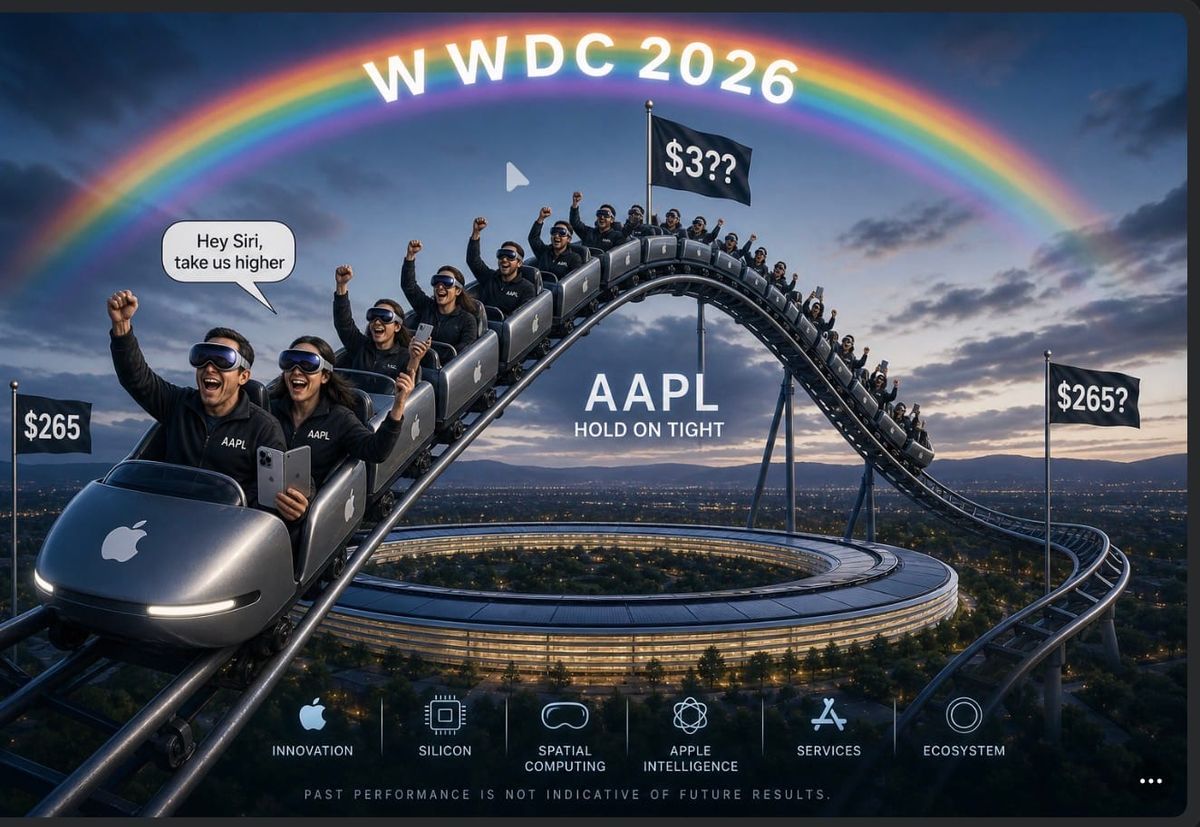
Published May 2026
The Colosseum Opens
The sound Apple makes when reality scrapes its chair
There is a particular sound the Apple commentariat makes when reality starts scraping its chair across the floor.
It arrives first as a polite cough from the back of the chapel, followed by a spreadsheet being unfolded with unnecessary reverence, then someone explaining that the smoke pouring from the vestry is probably a privacy feature, while a third reminds the congregation that if everyone sits very still, says “installed base” three times, and waits for WWDC, the smell of burning timbers will resolve itself into gross-margin expansion.
I read these places because, maddening though they are, they remain useful in the way a barometer is useful before a storm, especially if the barometer remembers buying Apple under Amelio, has strong opinions about Max Pain, and believes every threatening cloud is merely a bullish formation waiting to be monetised.
The Apple blogs and AAPL forums have become a kind of Colosseum in which every new threat to Apple is dragged into the sand, dressed up as either enemy combatant or misunderstood ally, and processed through the same ritual machinery: if it helps Apple, it was always part of the plan; if it hurts Apple, it must be evil, overhyped, legally doomed, commercially clueless, or probably run by people who do not understand the genius of Cupertino.
Every threatening cloud is merely a bullish formation waiting to be monetised.
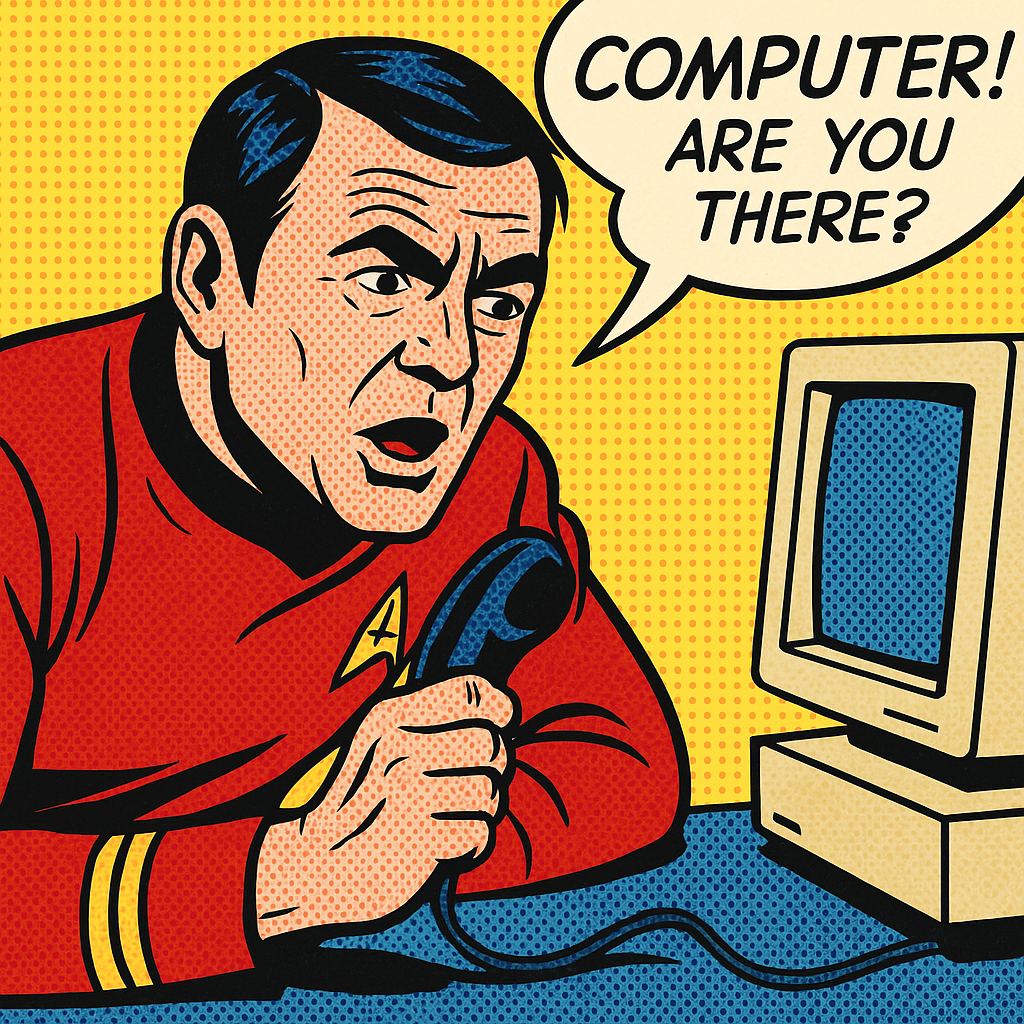
If you’d like to read the rest of this article, free of charge but for providing your email, just press the button and select the free tier option. You’ll receive articles direct to your inbox. Don’t worry, you can turn off this feature later, if you don’t want notification.
Related Tommo.fyi context:
 Tommo_UK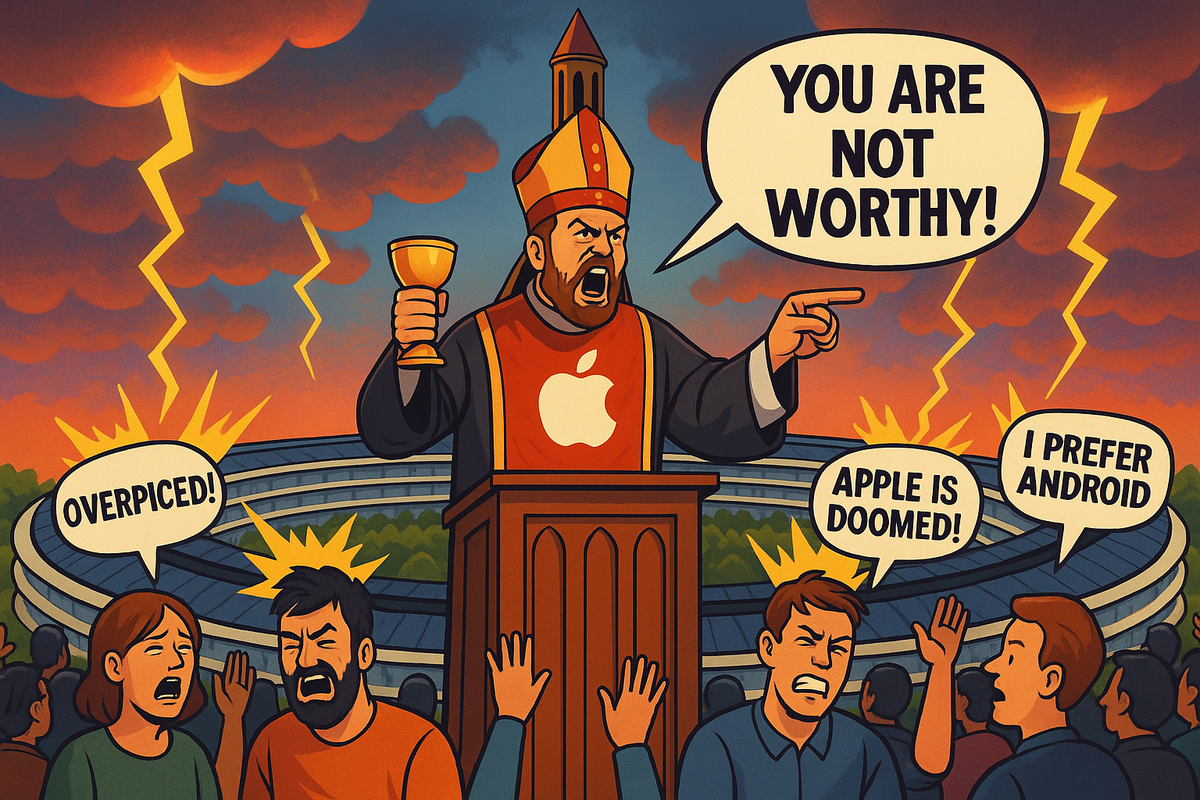
When Forums Go Wrong: How dissenters are chased out of church by preachers with flaming torches and a pompous sense of indignity. You know who you are
Along with
 Tommo_UK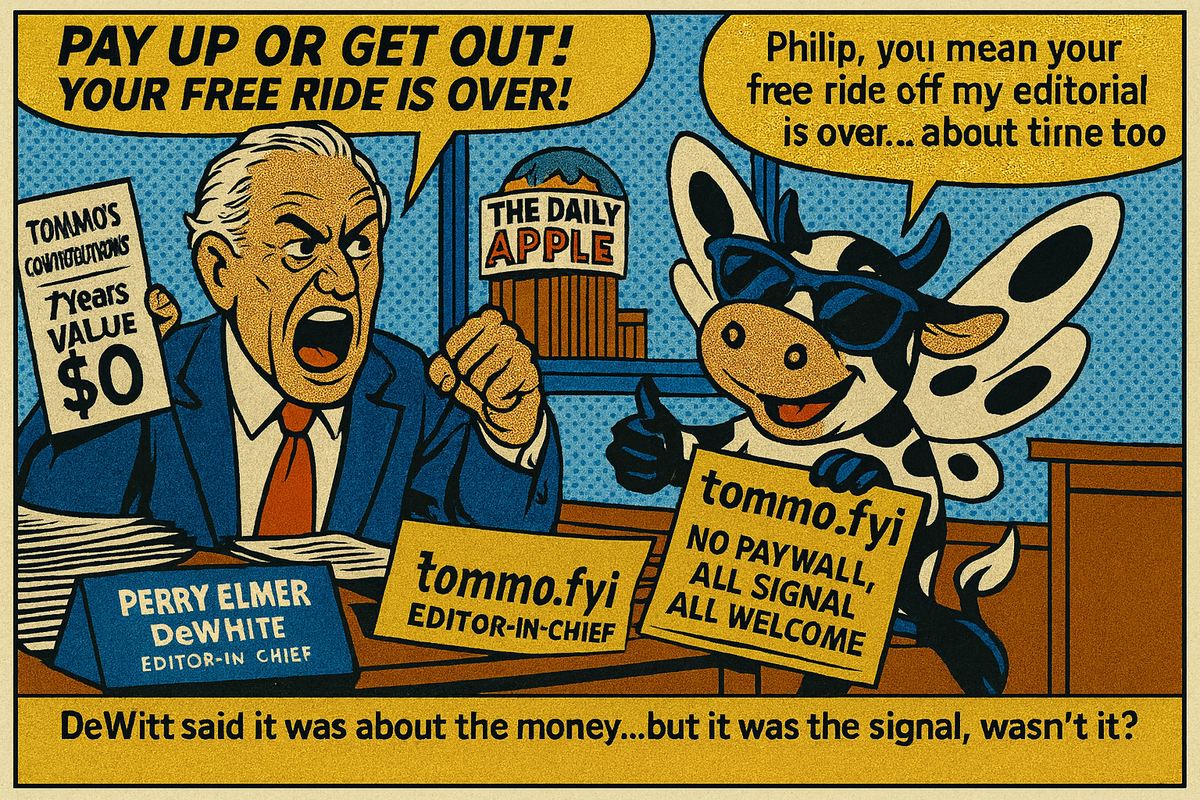
My Departure from the AAPL Blogosphere To Eat My Own Dogfood Whilst Offering it to others after being horse whipped on a certain Apple Blog for talking out of turn. Kisses to all, and Perry DeWitt I do still love you, but I know you have to protect your flock.
When I started this blog in May 2025, after writing about Apple - and AAPL as in investor - in 2001 - I also curiously managed to insert a reference to neurodiversity into the AAPL discussion. Maybe that says something about me? And maybe that’ll give you some insight into my pattern matching and quick off the mark ability to nail broad concepts in long form prose. Or not. Who can say? If you’re still reading this, thank you for following and if you’re neurospicy, drop me a message or better still leave a comment.
 Tommo_UK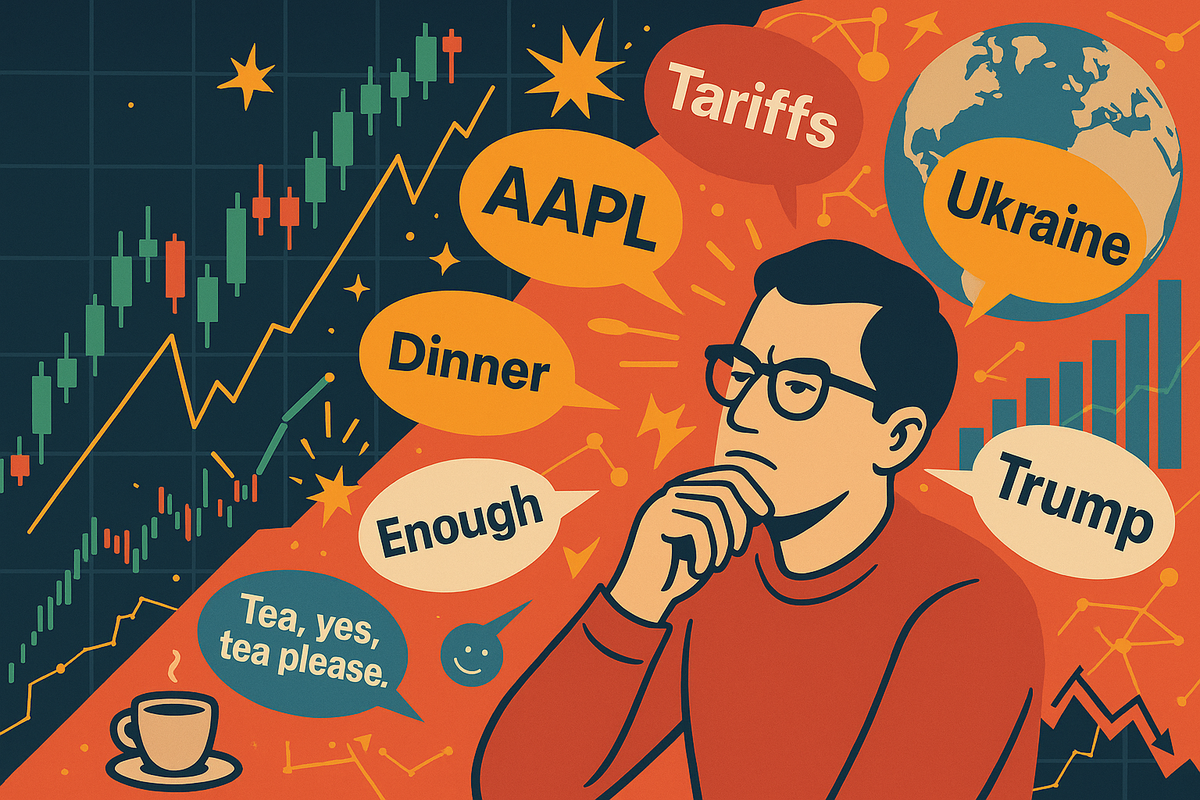
Neuroemergence is at the heart of all good analysts who can see patterns in charts where others only see upside down candlesticks.
OpenAI Walks Into The Arena
From useful partner to suspicious litigant
The latest exhibit in this travelling circus is OpenAI, which two years ago served as Apple’s emergency credibility prosthetic for Apple Intelligence, and now, after reportedly becoming unhappy with the partnership, recruiting former Apple talent, working with Jony Ive, and positioning itself somewhere uncomfortably close to the future interface layerApple still assumes it owns by ancestral right, has suddenly been recast in parts of the Apple blogosphere as a venture-funded ingrate with a lawyer, a burn rate, and the manners of a man reversing a Tesla through your herbaceous border.
As featured at the start of this piece, Reuters reported on 14 May 2026 that OpenAI was exploring legal options against Apple after its partnership with the iPhone maker deteriorated, with Bloomberg reporting that OpenAI had hoped the agreement would generate subscriptions and deeper integration through Siri and the iOS settings menu.
They whine - arguably with some merit - that the expected benefits had not materialised.
Reuters also reported an important detail which should not be skipped for dramatic convenience: the partnership was never intended to be exclusive, and OpenAI’s legal concerns were reportedly not driven simply by Apple testing other AI providers.
The Financial Times reported the same day that OpenAI believed Apple had failed to invest adequately in the 2024 ChatGPT integration agreement, while Apple was now shifting towards Google Gemini for the broader Apple Intelligence strategy, which rather changes the emotional weather from “business partnership” to “thanks for lending us the ladder, we’ve decided to ask your neighbour to build the roof.”
The reported OpenAI complaint, once stripped of Silicon Valley grievance theatre and lawyerly seasoning, appears fairly straightforward: Apple gained the credibility of having ChatGPT plugged into Apple Intelligence at precisely the moment its own AI and Siri work could not carry the narrative alone, OpenAI expected meaningful placement, usage and subscription upside from access to Apple’s user base, and the actual implementation seems to have landed with all the commercial force of a discreet side entrance behind a tasteful curtain.
OpenAI is not noble, wounded, or automatically right.
Sam Altman did not wander into Cupertino wearing a gingham bonnet and carrying a basket of muffins for Tim Cook; OpenAI wanted distribution, legitimacy, users, recurring revenue, and proximity to the most valuable consumer device base on the planet.
But Apple wanted something too, and the thing it wanted was rather more urgent than the faithful now seem willing to admit.
Apple Intelligence Needed A Credibility Bridge
ChatGPT was the part of the keynote that actually looked like modern AI
Apple needed OpenAI because Apple Intelligence, as announced in June 2024, was not ready to be the thing Apple was trying to make it sound like.
Apple needed OpenAI because Apple Intelligence, as announced in June 2024, was not ready to be the thing Apple was trying to make it sound like.
Apple’s own WWDC 2024 announcement framed Apple Intelligence as a deeply integrated personal intelligence system for iPhone, iPad and Mac, combining generative models with personal context, taking actions across apps, and relying on Private Cloud Compute for requests that needed more server-side capability; the same launch positioned Siri as entering a new era, with richer language understanding and deeper system integration, while explicitly including ChatGPT as a systemwide partner that Siri and Writing Tools could call upon when helpful.
OpenAI’s involvement therefore was not some charming optional garnish sprinkled over the keynote like parsley on a pensioner’s omelette; it was the part of the launch that allowed Apple to point at something the public already recognised as modern AI while its own assistant was still backstage trying to remember which century it had been hired for.
Related Tommo.fyi context:
 Tommo_UK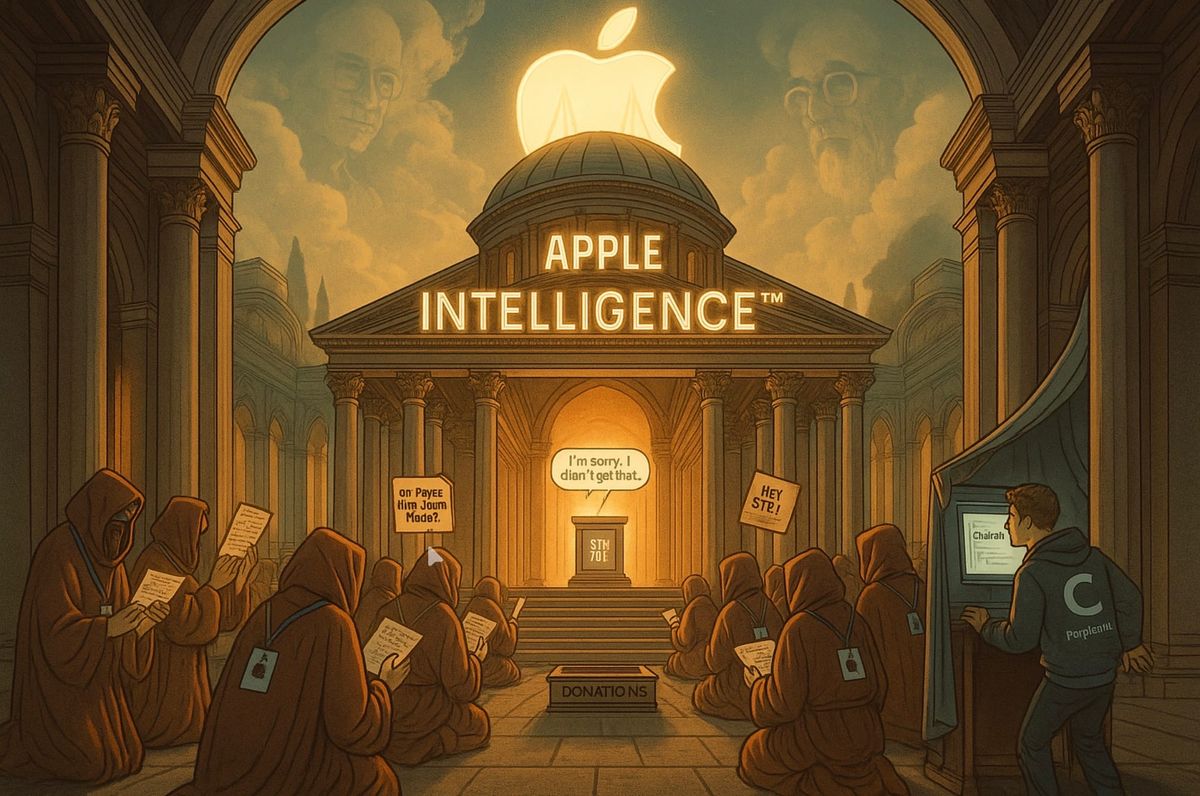
My charting of Apple’s 15 year failure to do anything with Siri except lose the AI, Chatbot, and Agentic race by squandering a decade and a half lead.
followed by a discussion about the cognitive dissonance of looking at Apple’s lack of AI success as some obscure measure of exceptionalism
 Tommo_UK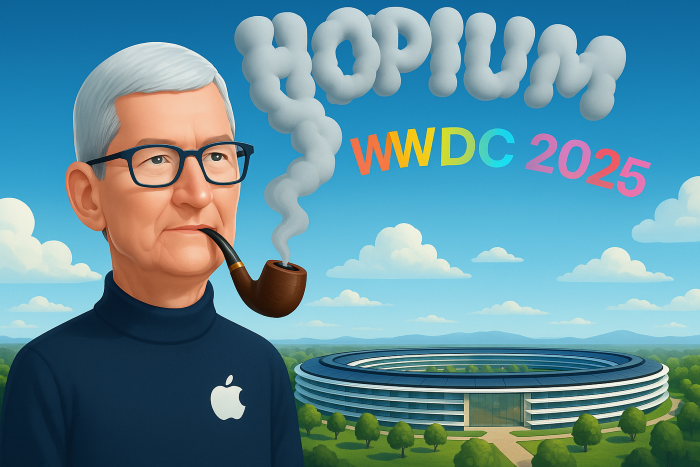
My discussion of why Apple’s sense of needing perfection meant Tim Cook dithered for 16 b years in a quest to ensure every Siri answer was flawless, oblivious to the fact the Siri had been getting queries wrong for a decade and a half already.
and my pre-WWDC2025 vision of what Apple should and could have built 10 years ago, SenseOS - a deep dive into how Siri with cross-app agentic abilities only now being discussed, should have catapulted Apple into a 10 year lead by linking its devices apps and data via its own AI, LLMs and agents.
 Tommo_UK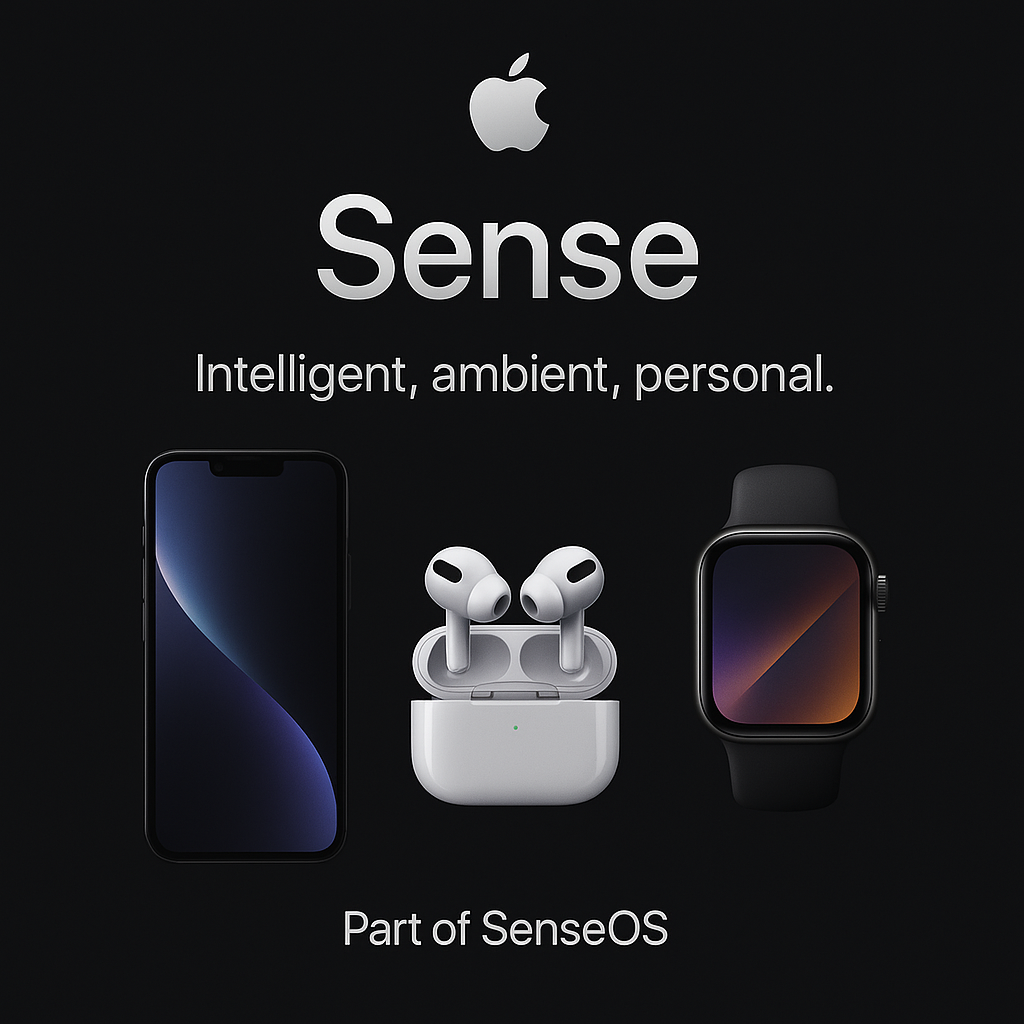
My vision of Apple’s vision - sadly as-yet unrealised, published June 2025 pre-WWDC and republished in December 2025 as a reminder of what Apple was still missing even while rumours of Gemini powering Apple thanks to Google renting brains to Tim Cook somehow cheered people up.
The Forum Logic Of “Grateful Access”
Specimen one: OpenAI should stop whining
The first strain of forum logic appeared almost immediately after the OpenAI legal story broke, and it had the familiar tone of a man defending his local pub from a bad TripAdvisor review by insisting the carpet has always been sticky.
Forum specimen, paraphrased: “OpenAI should stop whining, because Apple gave it access to the most valuable user base in the world, and if Apple users did not sign up for paid ChatGPT subscriptions in sufficient numbers, that merely proves the product was not compelling enough, the integration did not need to be stronger, and OpenAI should have understood that Apple users make their own choices.”
There is a superficially reasonable point tucked inside that,
Because users do indeed choose whether to subscribe, and Apple did not guarantee OpenAI a river of monthly payments from people who still grumble about paying for iCloud storage despite owning three grand’s worth of devices.
But the argument becomes slippery once it ignores that Apple’s side of the bargain was never simply the abstract existence of users, floating serenely somewhere inside the ecosystem like trout in a very expensive pond. Distribution has to be made real through placement, friction reduction, discoverability, integration, and actual usefulness; otherwise one is not offering commercial access so much as pointing at a locked stadium and saying there are millions of people inside if only you can find the door.
This is where the faithful start to get twitchy, because the same people now suggesting OpenAI should have been grateful for whatever Apple offered were, not long ago, perfectly happy to treat ChatGPT as the respectable visiting consultant who made Apple Intelligence look less threadbare in public.
Without ChatGPT, the 2024 launch would have exposed the awkward truth rather too plainly:
Apple had privacy architecture, on-device ambitions, a lovely phrase in Private Cloud Compute, some useful writing tools, some summarisation, some image tricks, and a Siri future still written mostly in promissory ink.
Reuters reported in March 2025 that Apple had delayed some AI improvements to Siri into 2026, including the features meant to give Siri personal context and the ability to take action within apps, which were not peripheral baubles but the very capabilities that would have turned Siri from a timer with delusions of grandeur into something resembling an agent.
Gemini, Pragmatism, And The Renting Of Brains
When the new Siri needs a landlord
By January 2026, Reuters reported that Apple and Google had entered a multi-year AI deal under which Gemini models would power a revamped Siri, while ChatGPT would move into a more secondary role focused on complex opt-in queries;
Reuters described this as a major win for Alphabet, and the market seemed to understand the point rather faster than the Apple faithful, because Alphabet’s valuation surged past $4 trillion in the wake of the news.
Today, Google surpassed Apple in market cap. The betting is going Google’s way (should I call it Alphabet? It’s all so confusing - more so than Apple users are going to find Apple Intelligence when it finally launches with a myriad of LLM choices for people who have been protected from even thinking LLMs were relevant to Apple users, because everyone told them chatbots were useless and Apple had protected them by not integrating one.
Ahem, I digress.
At this point the shovel comes out, along with the torch and perhaps a note from matron for those still recovering from years of “Apple will do AI properly when it is ready” discourse. Apple first used OpenAI as the visible AI bridge, then delayed the Siri functionality that mattered, then turned to Google’s Gemini for the heavy-lift Siri revival.
Reuters’ May 2026 reporting around the OpenAI dispute also notes that Apple was testing integrations with rival AI systems such as Anthropic’s Claude and Google’s Gemini, with Bloomberg reporting that Apple users might soon be able to select from multiple AI models.
That manoeuvre may prove technically sensible and user-friendly.
It also makes Apple’s “we own the whole widget” religion look as if it has quietly started renting pews from other denominations, with the core message from the original bible - thou shalt own the stack and never rent other people’s OS stack or brains - burned at the stake of necessity.
Related Tommo.fyi context:
 Tommo_UK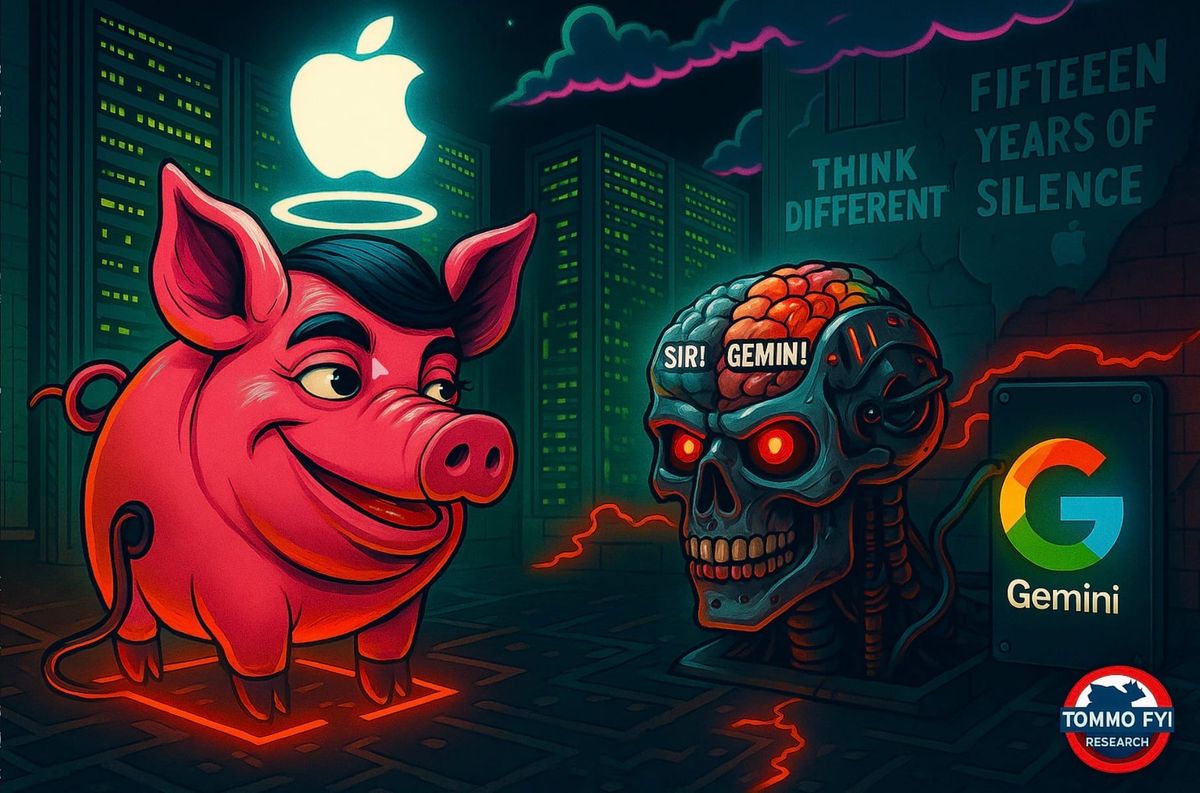
My views on Apple & Google giving birth to “Goople Intelligence” were summarised in one word: pathetic.
When Dan Ives predictably jumped on board with a scream of AAPL to $360 just before the stock fell from $280 to $243 (Dan, is ever the contrarian call to sell for a pullback and a trade), I couldn’t resist letting ChatGPT just write the entire piece after giving it a summary. Why? Because it was just wash rinse and repeat and I thought my time was better spent watching re-runs of Malcolm In The Middle than spend a calorie of energy deconstructing his call.
 Tommo_UK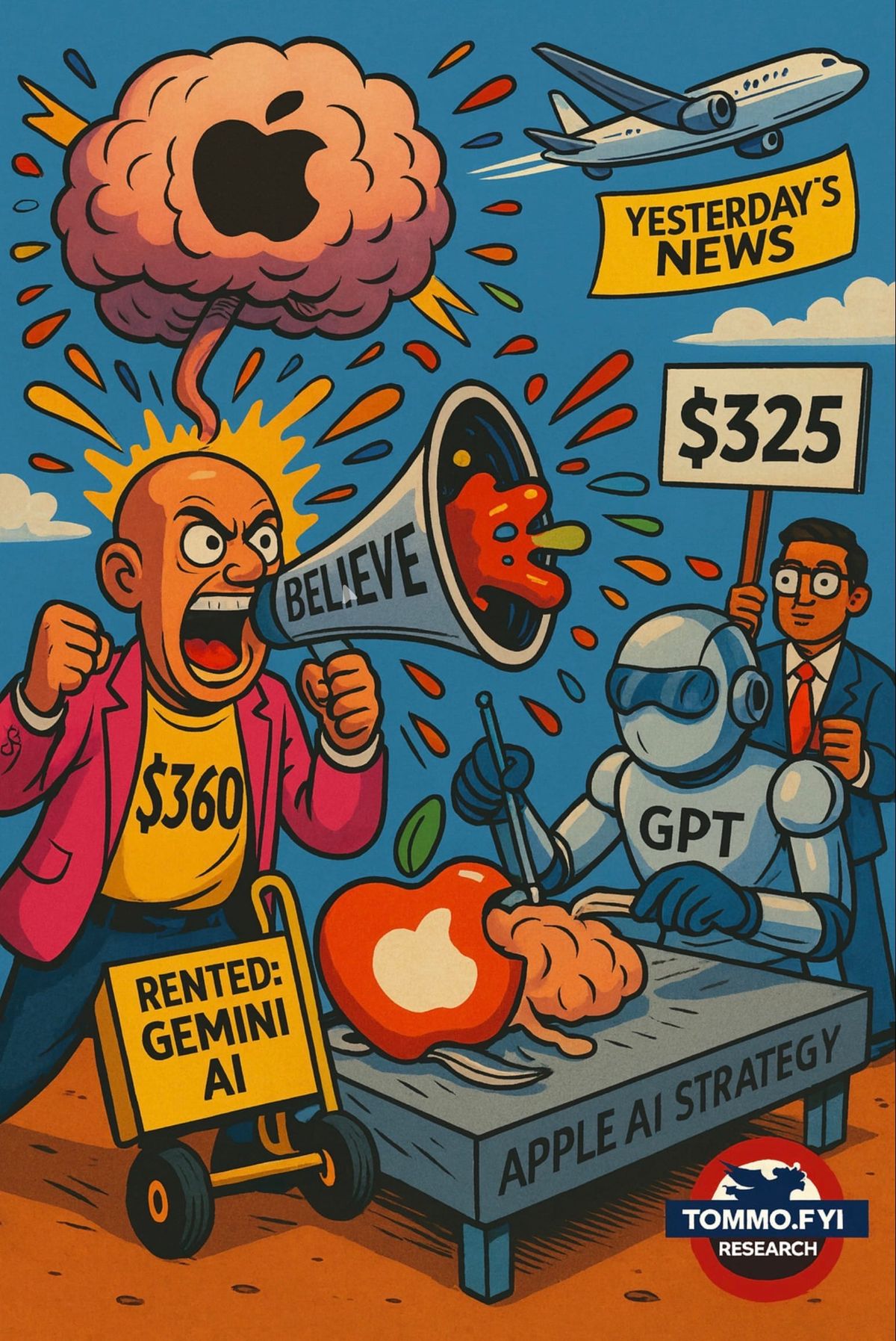
Gemini arrived, Dan Ives screamed. AAPL jumped, and then flopped.
This was swiftly followed as usual by Amit from Evercore (who always follows hot on the heels of Dan Ives, but rarely front-runs him). He stated the obvious - that “Apple’s Siri 2.0 is real (gasp! Who knew?) As if that wasn’t and hadn’t already been baked in for two years.
 Tommo_UK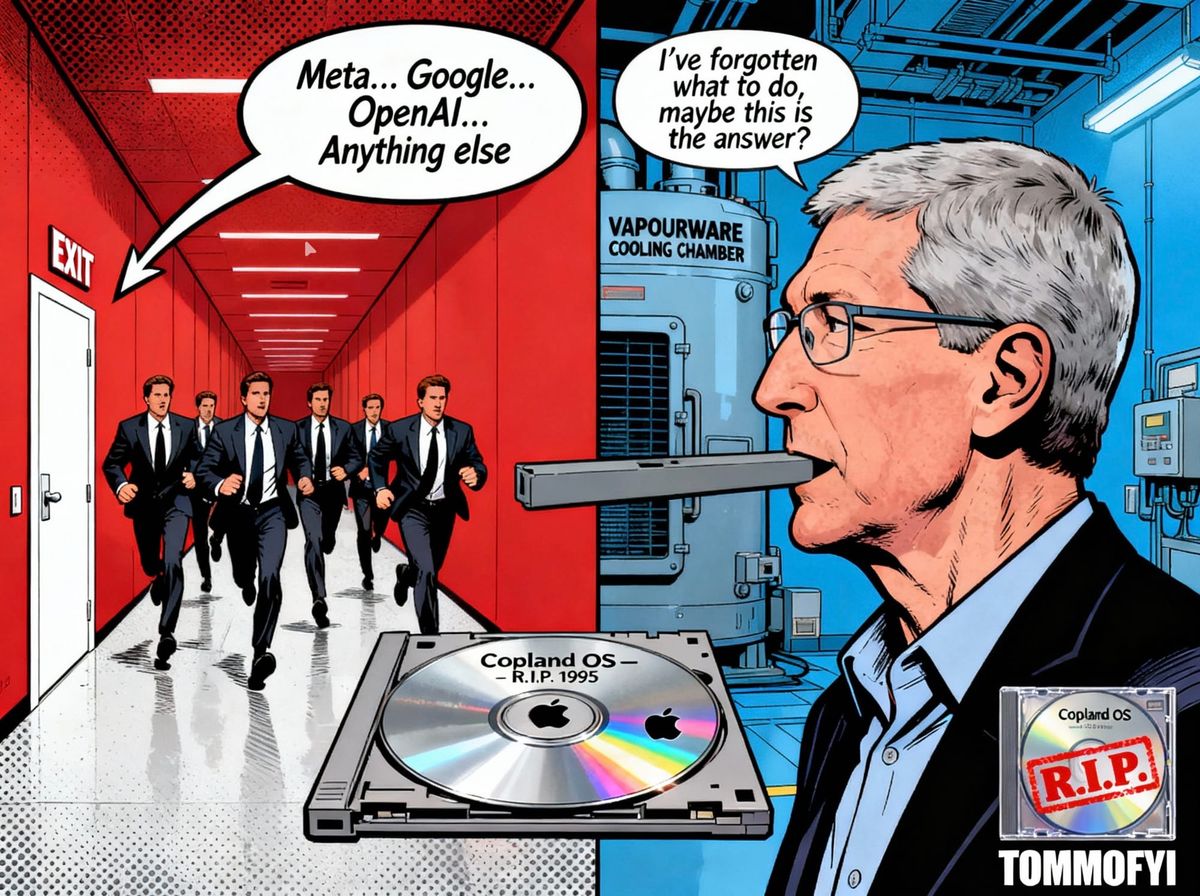
I long form and deeply considered if dry humoured look at how and why Siri and Tim Cook kept on missing the boat wit Siri, and why everyone was suddenly so surprisingly excited of the impending arrival of the Siri Apple had promised in 2024 - just as yet more AI execs ran for the door out of Apple - to OpenAI, Meta, and to found their own companies. Groundhog Day anyone?
The second strain of forum logic followed with all the solemnity of a man discovering a moral principle precisely when it becomes convenient.
Forum specimen, paraphrased: Apple is right to move towards Gemini if Google has the better model and infrastructure, because OpenAI burns too much cash, has overestimated consumer willingness to pay, and should not expect Apple to privilege it when the agreement was never exclusive.
There is nothing inherently foolish about Apple using Gemini if Gemini is better for the job, especially given Google’s scale, model capability, cloud infrastructure, search history, and existing relationship with Apple.
The farce begins when this is presented as effortless strategic mastery rather than an unavoidable correction after years of Apple failing to build an intelligence layer capable of carrying Siri, VisionOS, home automation, and the future agentic interface without asking Mountain View to come round with a tow rope.
Apple can make the pragmatic move while still having lost face by needing to make it. The refusal to hold those two thoughts together is one of the reasons so much Apple commentary now resembles a séance conducted by accountants.
The blogosphere often prefers roundabouts where every exit leads back to Apple being clever. This leads to the commentariat supporting everything Apple does, all of the time, even if it contradicts the very core of their arguments for “staying long and strong all the time.”
- If Apple avoids AI expenditure, it is disciplined.
- But if Apple then pays Google to power Siri, it is pragmatic.
- If Apple depends on OpenAI to make Apple Intelligence look credible, it is ecosystem leverage.
- But if OpenAI complains that the implementation was anaemic, OpenAI is naive.
- If Apple recruits Google executives, Apple is strategic.
- But if OpenAI recruits Apple engineers, fetch the fainting couch and alert the parish council - smelling salts are needed. Oh such trite behaviour!
Talent Poaching Is Only Sinful When Apple Loses Talent
Cupertino discovers the labour market!
The talent-poaching outrage has been the richest course in this banquet of selective indignation.
Forum specimen, paraphrased: “OpenAI has behaved like a vampire partner, using the Apple relationship to identify and recruit engineers while Jony Ive and former Apple executives build their own AI hardware project, so Apple should hardly be expected to reward a company trying to suck talent out of Cupertino.”
I can understand Apple being irritated.
I would be irritated too if a former design deity walked off, set up shop with the most famous AI company on earth, and then began attracting the sort of hardware and interface talent I needed for my own long-delayed future.
But irritation is not a moral philosophy, and it becomes rather difficult to take Apple’s defenders seriously when they behave as though Cupertino has spent the last forty years hiring only through handwritten village notices and an honest handshake outside the post office. If only recruitment was so simple, and so quaint.
Apple bought Siri in 2010. It was a sophisticated ex-DARPA project and multi-talented, built to be truly agentic.
- Apple hired John Giannandrea from Google in 2018 to run machine learning and AI strategy.
- Apple then replaced Giannandrea with Amar Subramanya, another Google/Microsoft AI veteran associated with Gemini Assistant, after Reuters reported in December 2025 that Subramanya would become Apple’s VP of AI and report to Craig Federighi.
- Apple has recruited, acquired, absorbed, and repurposed talent whenever it suited Apple, which is exactly what serious technology companies do,
… and the sudden conversion of Apple loyalists into guardians of employment etiquette would be more convincing if it did not arrive precisely when the traffic had started flowing the wrong way. Senior Apple execs, usually in the AI dept, have left Apple in a revolving door for approaching two years now and literally stalled the company’s entire internal AI efforts also delaying some hardware products up to two years out. When AAPL holders congratulate Cook in prudent fiscal policy and celebrate the stock boosting effect of buybacks, they forget that the price of buybacks over investment, has been a collapse in the company’s ability to innovate, design, ship, and deliver, for about 5 years.
I hope you found your buybacks useful, in hindsight, now knowing Apple is running three years behind schedule.
OpenAI’s Jony Ive move is not a rumour in search of a filing cabinet either.
Reuters reported in May 2025 that OpenAI acquired Jony Ive’s io Products in an all-stock deal valued at $6.5 billion, with the aim of developing hardware for the generative AI era and reducing dependence on dominant platforms such as Apple’s iOS and Google’s Android.
Once that is understood, the Apple/OpenAI fight stops looking like a squabble over subscription placement and starts looking like the first proper legal and commercial burp from the next platform war.
The Interface Layer Is The Real Prize
Whoever owns intent owns the next interface
The prize here is not merely which chatbot answers a user’s question, because the real prize is who owns the user’s intent.
If the assistant becomes the interface, and if agents begin routing tasks across apps, services, browsers, calendars, messages, files, shopping, travel, search and communications, then the old app grid becomes less a sovereign territory and more a polite historical district.
Apple can still own the hardware, the operating system, the secure enclave, the payments layer, the store, and the privacy story, but if users increasingly form relationships with an AI layer that sits above the app model and remembers what they want, what they do, what they prefer, and how they ask, then Apple’s control over the interface becomes less absolute than it has been since the iPhone turned glass into geography.
Related Tommo.fyi context:
 Tommo_UK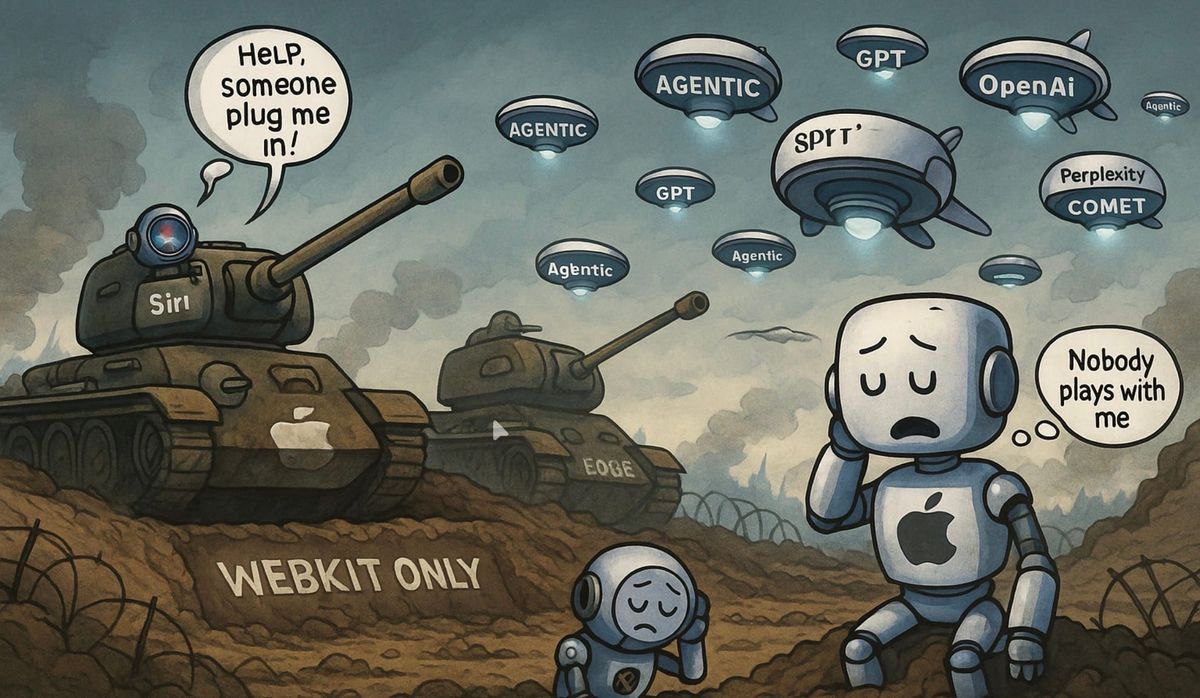
July 2025, an article in which I tried to illustrate how Apple was missing the boat and how the ris of the agentic OS was passing the company by with every delay - now borne out in reliably as the company surrenders to being a host to every other company’s LLM parasite and has to bit the bullet that it failed to exploit its own 15 years head start.
And then I proposed that along with Amazon et al, perhaps Apple, to, was not “enshittified.” I don’t think I’ve ever received so much hate-mail!
 Tommo_UK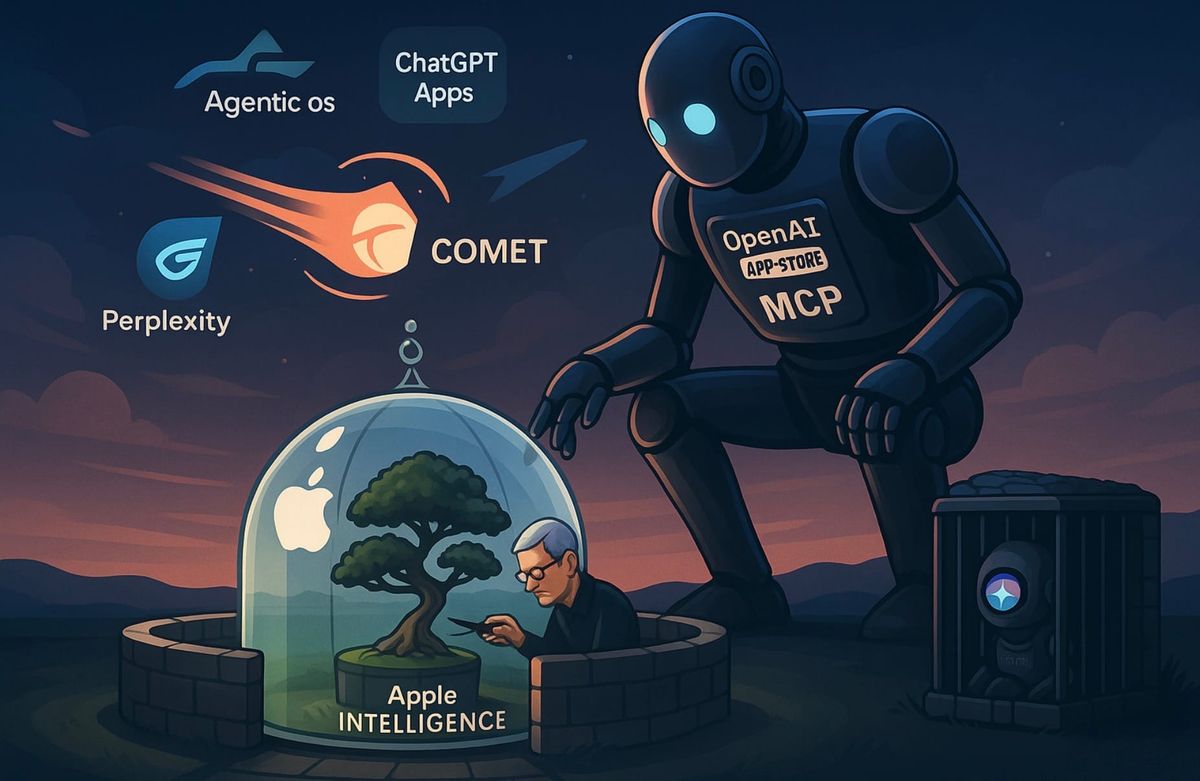
A harshly worded condemnation of Apple, upon news that Perplexity and OpenAI had just launched agentic browsers to run on Apple’s platforms, making Safari look as antiquated as Netscape. It still is.AAPL stalwarts sniffed and looked the other way - for many of them, they wouldn’t touch an LLM for fear of catching Ebola.
This all began in June 2025 when I just about pipped Gurman to the post by breaking news of Apple looking into a Perplexity acquisition (apparently a path enthusiastically pushed by Apple’s Eddie Cue - always a great visionary Maverick - but dithered about and rejected by Cook and Federighi. Allegedly.)
 Tommo_UK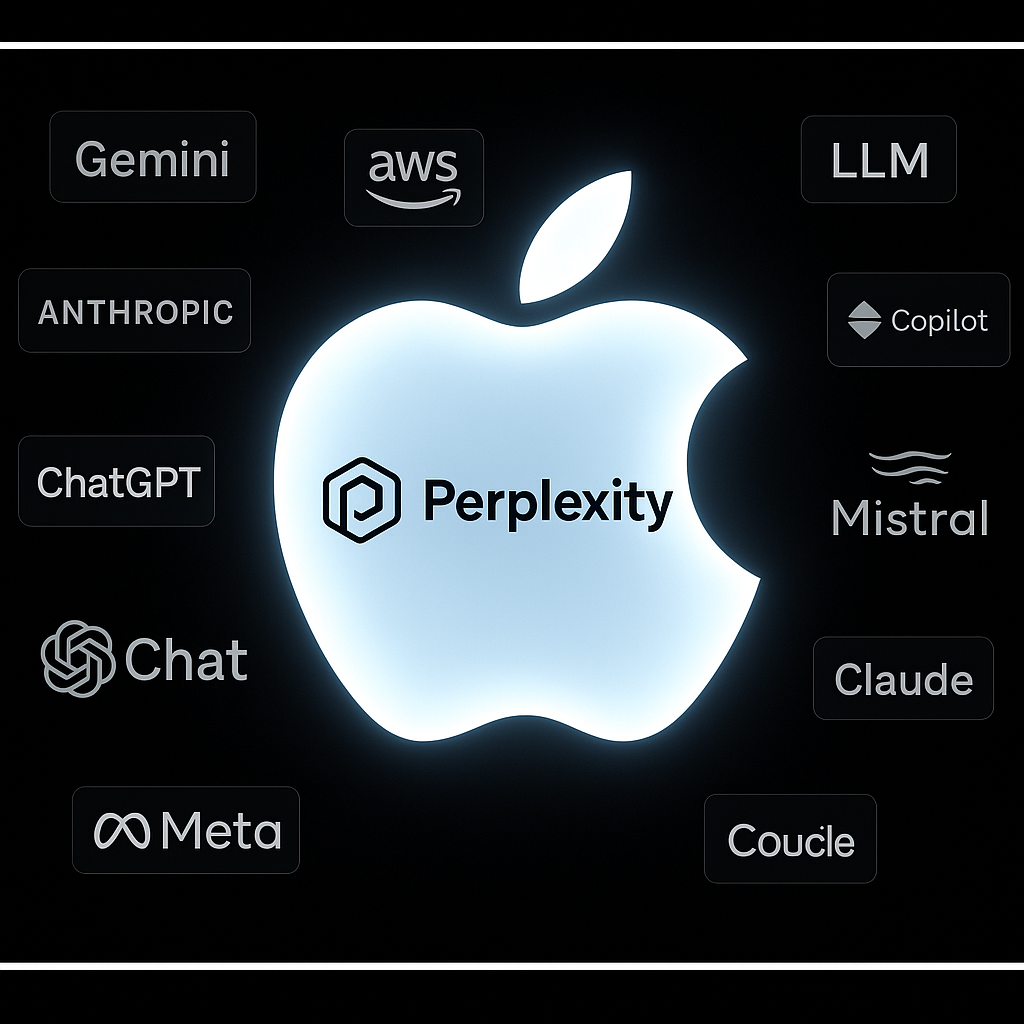
What could have been, a year ago, if only Apple had any balls. AAPL would have been over $400 by July 2026, I posited, if they did this a year earlier.
The Gemini Irony
Asking the new landlord to explain the previous lodger
This is why the Gemini irony is so delicious it should probably be served with a napkin.
One forum defender I tittered over when I read (because he used to be a harsh critic of the use of LLMs) used Gemini to explain OpenAI’s alleged recruiting tactics.
This gives us Google’s AI being invited to explain why OpenAI is bad for recruiting Apple engineers while Apple prepares to rely on Google’s AI because Apple failed to get its own intelligence layer into fighting shape. There are ordinary ironies, there are Silicon Valley ironies,
… and then there is asking the new landlord to help write a complaint about the previous lodger pinching the cutlery.
Forum specimen, paraphrased: “Gemini explains that OpenAI is using aggressive pay, Jony Ive’s design pull, and a 0-to-1 hardware opportunity to attract Apple engineers who may feel constrained by Apple’s slower and more bureaucratic product cycles.”
Quite so, and if Gemini can now explain Apple’s talent-retention problem better than Siri can explain why the lights will not turn on in the kitchen, we may have arrived at the point in the comedy where the audience should stop laughing and check where the exits are.
The discomfort is that Apple once represented the destination for ambitious product talent.
Whereas, sadly, recent reporting suggests it increasingly functions as a prestigious training ground for people who may later leave for Meta, OpenAI or other AI-first organisations willing to pay absurd sums, ship in public, and offer the intoxicating prospect of building something genuinely new without fifteen committees, a privacy review, three years of internal politics, and a final approval meeting in which someone asks whether the feature might cannibalise AppleCare.
Reuters reported in July 2025 that Ruoming Pang, Apple’s executive overseeing its foundation models team, was leaving for Meta, while Reuters also reported that Meta was recruiting elite AI talent with major compensation packages as part of its superintelligence push. That push seems to have met a bit of a brick wall, but Pang still cleaned up, and Meta still crippled Apple. The culprit - in disagreement with the commentariat, is not Meta in this story. Meta may be loathsome to some, but it’s a publicly trade company like Apple, competing for talent in a tight market.
To quote a favourite line from bailiffs repossessing goods from non-paying buyers…
“If you can’t pay, we’ll take it away!”
The exact headcount of engineers moving from Apple to OpenAI, Meta, or other competitors are too many to tally up but they comprised almost all of Apple’s front bench: Apple was no longer simply collecting talent from the industry’s table; other players took choice pieces off Apple’s plate and the faithful do not like the sound of the cutlery. Only now, two years later, is Apple beginning to tentatively, cautiously, considering offering higher salaries to keep talent, let alone attract it.
This isn’t because of AI departures though, but because Apple is absolutely terrified Jony Ive and OpenAI are going to poach Apple’s best hardware designers and engineers for their agentic-os mobile/phone device they have announced is launching in 2028.
Related Tommo.fyi context:
 Tommo_UK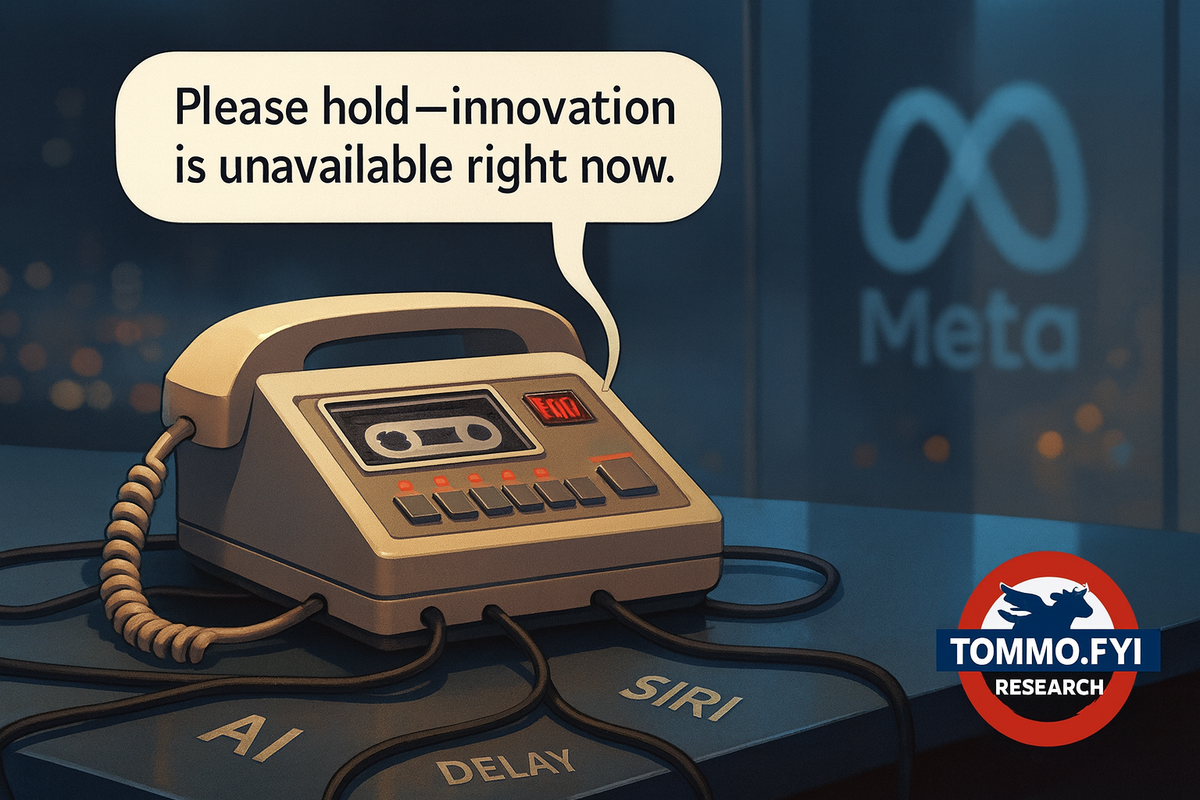
October 2025 - Apple lost yet another head - this time the lead of the Apple “Siri Answering Machine” project - a name so quaint it makes the project and the product sound Ike a steam driven invention from the Victorian era - and probably just as unsuitable to modern needs as well. It was proof Apple were still trying to downgrade Siri to be an accurate “answering machine” and not an AI assistant. That seems to have changed now, a few months later, with the “acquisition’ of Google of Apple’s Siri, and being invited to put Gemini’s brains in it.
In this article I discussed Apple’s AI brain drain to people who sadly thought it more important to castigate the companies poaching Apple’s top talent instead of worrying why Apple could never keep hold of them.
 Tommo_UK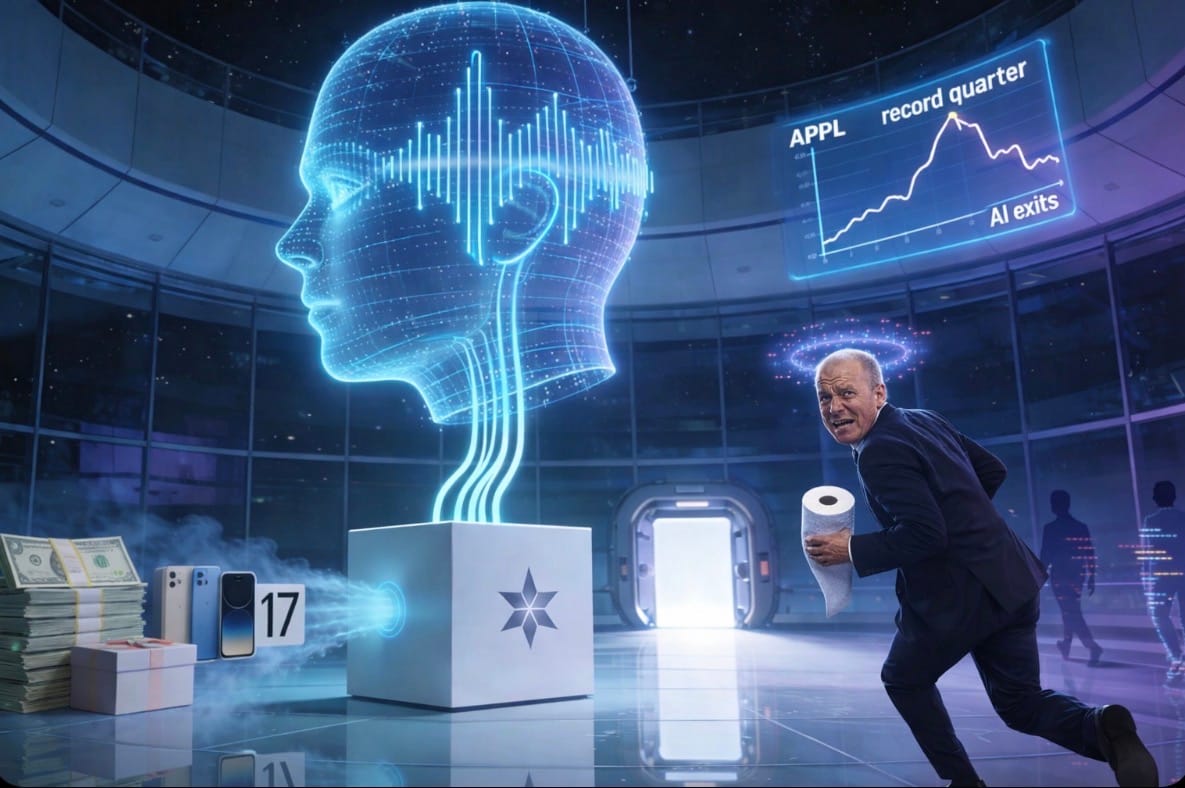
Apple loses more brains - not to zombie brain eaters but its fiercest rivals - who from the next Siri are apparently going to be invited to squat inside Siri.
Capital Allocation As Theology
Buybacks, cash hoards, and spreadsheet incense
The same defensive contortion shows up in capital allocation, where Apple’s buyback story has been reheated so many times it now resembles something found under cling film at a village fête.
For years, buybacks were genius.
Apple could not find enough transformative products to fund, so it bought back itself, and this was described as discipline, shareholder return, financial elegance, and the calm genius of Tim Cook’s capital allocation.
The shrinking share count became innovation with a CUSIP.
If anyone suggested that perhaps a company spending around $100 billion a year buying itself might also consider building the future a little faster, the response was usually a sermon about prudence from someone who had mistaken EPS engineering for cultural renewal.
Now, concurrent with the news of John Ternus appointment as CEO (and Tim Cook seemingly staying in charge with an Emperor Palpatine-like title of “Executive Chairman) Apple has moved away from net cash neutral as a formal target, and suddenly reduced buybacks or slower repurchases can also be genius because Apple may need to secure memory, chips, supply chain resilience,
The shock - cash can be useful to spend instead of just buy your own shares back. R&D and supply chain investments are a benefit?
Again, Ben Luna, pass me the smelling salts, and be quick about it!
AI infrastructure, cloud capacity, or whatever else it turns out it should perhaps have been securing before Siri ended up hiring a translator.
Forum specimen, paraphrased: “Apple slowing buybacks simply proves management has better uses for the cash now, because it can invest in production, secure components, prepare for AI infrastructure demands, and still maintain an enormous repurchase authorisation for later.”
This could be true. It could even be sensible.
What gives the game away is that the conclusion always survives the evidence.
- Buybacks prove brilliance when Apple buys back aggressively.
- Reduced buybacks prove brilliance when Apple slows down.
The Cognitive Bias and Dissonance machine seems to be operating at 100% output.
- Cash accumulation proves prudence.
- But then cash deployment proves ambition.
- Margin extraction proves pricing power.
- But higher costs prove Apple had better secure supply early.
- Underinvestment proves restraint.
- But belated investment proves nimbleness suddenly.
At some point the spreadsheet has stopped analysing the company and started wearing a cassock.
AAPL At $300
Price action wearing a party hat
Then there is the “Apple has won AI” tendency, which has bloomed again as AAPL has crossed $300 and certain analysts have begun waving price targets like streamers at a coronation.
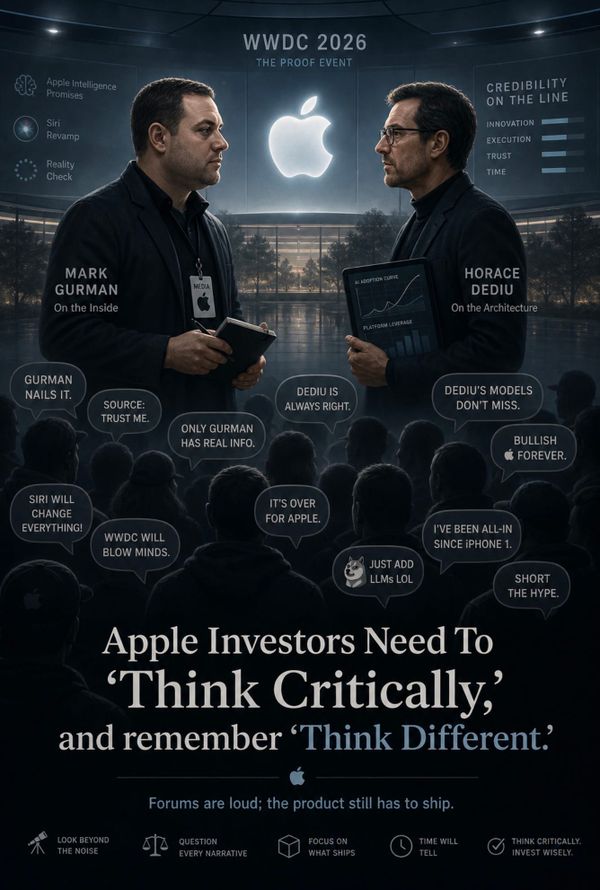
This is where the faithful often confuse a rising stock with a working product, which is an understandable error if you have spent enough years in a market where Apple’s chart often seemed to know the future before Apple bothered to explain or even ship it. A Mark Gurman rumour was enough to make the faithful froth with excitement at the mouth. They love him when he’s useful, and hate him when he’s critical. Not even John Gruber attracts the hatred directed toward Gurman, even when he suggested Tim Cook was something akin to a bag of “dusty old Cheetos” in his explosive diatribe in January 2025 when he went loco about “being deceived” by a lying Apple during the 2024 WWDC keynote when Apple Intelligence was launched. In fact, the only thing that WWDC launched was Craig Federighi’s CGI sky dive landing in the Apple Campus with perfect hair, something perhaps achievable by Apple Marketing and some interns with a bad script but sadly as realistic as Apple’s AI strategy turned out to be: fake news.
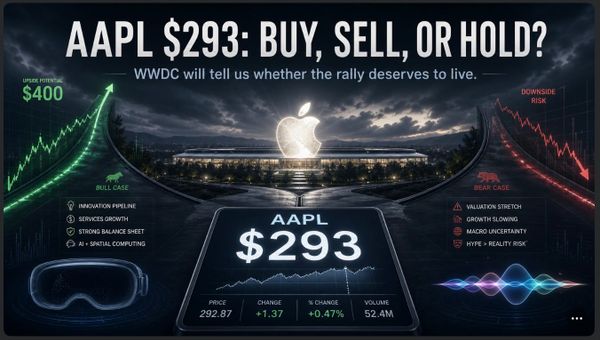
Excited bull, paraphrased: “Wall Street and the media were wrong about Apple’s missing AI strategy, because Apple is now positioned through Gemini, its installed base, Services growth, silicon, macOS, iOS, and upcoming WWDC announcements to dominate AI, spatial computing and the next product cycle, with AAPL potentially heading towards $400 or even $500 if the next year becomes a higher-growth period.”
This is the sort of thing that makes me stare at the wall and wonder whether I have been issued the wrong product catalogue.
Apple has not won AI because the stock crossed $300, any more than England have won a football tournament because someone in a pub has explained, in suspicious detail after three pints, that penalties shoot outs are statistically due to go our way this time.
For American readers, penalties are the quaint ritual by which football, the version where the foot does most of the work and the ball is not shaped like a committee meeting, converts national hope into national therapy And always ends in tears, collective sighs of anticipated disappointment. The England team might as well be wearing clogs, much as Apple’s AI ambitions have been doing for 15 years since the Siri acquisition.
A charming cultural institution, certainly, but I would hesitate before using it as an investment thesis.
What Apple has actually done is delay the Siri features that mattered, lean on OpenAI for credibility, move towards Gemini for the deeper Siri repair job, prepare a broader model-choice strategy, and ask the market to wait until WWDC for the next proof point.
AAPL crossing $300 tells us the market has recovered appetite for the story, that analysts enjoy their own voices when round numbers are nearby, and that a pre-WWDC run-up can feed on momentum, short-covering, and the warm fug of hopium rising from investor forums like steam from a municipal leisure centre.
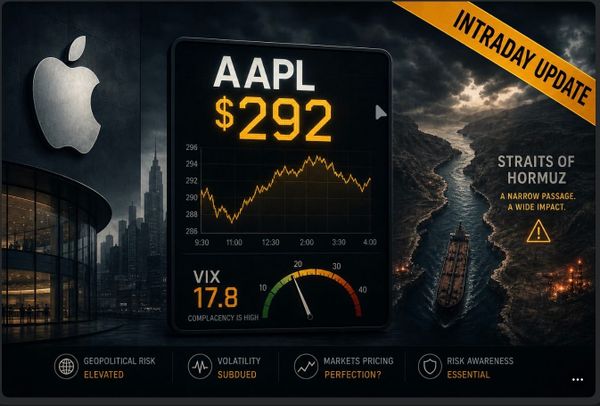
It’s also a sign that AAPL isn’t a buy or a sell here, because nobody goes short into WWDC, and the last few weeks running up to WWDC 2026 have been short covering and a market rally in the face of the Hormuz crisis, and and America oblivious to the upcoming impact of inflation at 3.8% and rising, with no rate cuts now anticipated from the Fed (as I argued would be the case last year, when the Street collectively said the markets would rise on its expected four rate cuts to come.
 Tommo_UK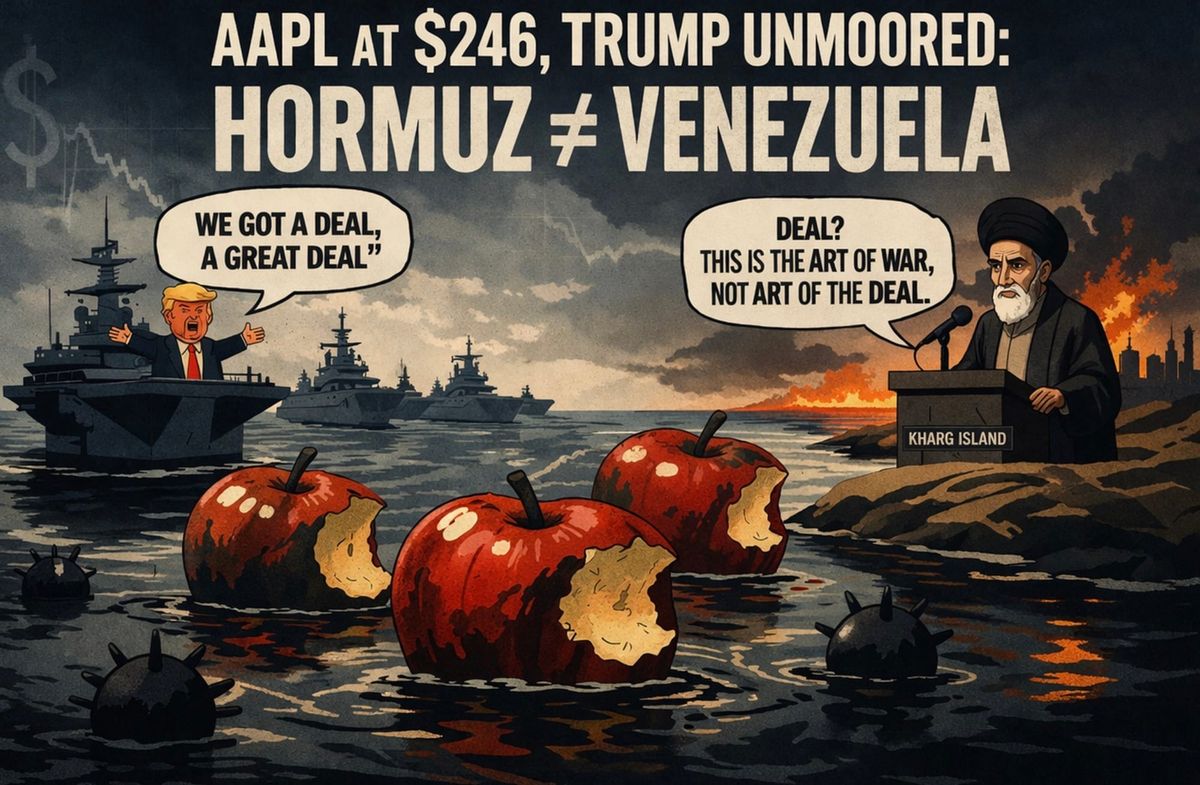
If you think Iran is is in Africa, and Hormuz is something like a hummus dip you play with a piece of pita bread with, you need to read why the POTUS adventure into Iran and the ongoing war is pushing inflation up -ast the recorded 3.8% to closer to 18% food inflation and why the bond market might rebel. AAPL related news at the end of the linked article.
So far, rates haven’t budged, and with good reason.
None of that tells us Siri works, Apple has rebuilt the intelligence layer, VisionOS has found a mass-market reason to exist, or developers are about to be given a coherent Apple-owned agentic framework rather than a collection of carefully sandboxed entrances to other people’s brains.
This is why the OpenAI dispute matters so much. It is a live stress test of whether Apple is still authoring the future interface layer or merely hosting the companies that are.
Apple As Comfort Object
When survival memory becomes insulation
The emotional machinery behind the forum response is not hard to understand, and I say that without sneering at the basic history.
Many long-term Apple investors were right when almost everyone else was wrong. Like me, they lived through Sculley, Spindler, Amelio, Microsoft’s 1997 investment, the return of Jobs, the iMac, iPod, iPhone, iPad, Apple Watch, Services, buybacks, and the long compounding miracle.
Like me, some bought when Apple was treated as a joke and watched it become the most important consumer technology company in the world. We laughed at the nay sayers and knew from deep fundamental and product analysis, and consumer trend trajectory plotting in forums, that all the Microsoft shills such as Paul Thurott were wrong, and we knew we were right.
Caveat: I bailed out in the end, after owning 8000 AAPL shares in 2001. Many have questioned why I did this, and the answer is simple . I traded on 20:1 leverage which meant I had a core position, and a leveraged trading positioning around it to take advantage of wild spikes and troughs. In the end I wanted a new life, and less complicate, and after AAPL had delivered me what I wanted, I switched to longer term investments such as silver - which itself has seen a 1000% rise in the last few years, without me needing to be near a trading screen.
Back to the forum investor commentariat though: those same people, with whom I exchanged about 40 messages daily as we untangled Appple’s plans and projected our own ideas of what and why it might do, and the investment case for staying long ,every day, were real and deep analytical exercises - tolerating deep dissent and disagreement and not a virtuous feedback loop of a talking shop we see in forums across the board now, where dissent is intolerable. Success does things to a person’s nervous system. It turns a stock into a proof of judgement, a dividend into comfort, and a logo into a family crest for people who would be mortified to admit they own a family crest.
Veteran holder, paraphrased: “I have been collecting gains from this company since before Jobs and Cook returned, the dividends are flowing, the markets are green, and times are much better now than when Apple was struggling under Sculley and Amelio. I love my Vision Pro and my partner and I have watched the dinosaur demo movie at least 100 times. We absolutely love the AVP.
Well, if you’re lucky enough to be able to own two AVPs at $8000 just to watch dinosaurs, I imagine you’re likely old enough to be one and you’re probably just sitting on your dividends and couldn’t give a care about the share price (and I applaud you for your inaction leading to profits). However, preaching to people who do need to maximise the return from their shorter term investments is both inappropriate and also, for people who don’t understand the decades long perspective of long term holders who have seen over an 11,000% rise, misrepresentative of the risk of investing in AAPL over the last few years. Heavens, the stock has gone up about 20% since December 2024. Intel is up 200% from January 2026! There really have been far better stocks to invest in the Apple, which is not to say it doesn’t have the potential to return to being a consistently stellar performer, but that it has been truly outperformed and outclassed by a myriad of other stocks in recent years in a pattern not reminiscent of its past and as they say, “past performance is not an indicator of the future.”
There is something almost touching in that nostalgic attachment to the good times, because survival memory is real and Apple’s recovery remains one of the greatest corporate stories of the modern age.
The trouble begins when affection becomes insulation from reality, and when the legitimate pride of having been right for twenty years becomes a refusal to examine whether the reason you were right still exists in the same form.
The Apple of Jobs, Ive and early Cook made products that justified the myth.
The Apple of late Cook, Federighi and now Ternus has a financial machine of astonishing power, a hardware base of extraordinary scale, and a product culture that too often feels as if it is trying to preserve a premium rather than earn one anew.
- It can still produce wonderful devices.
- It can still print cash.
- It can still make competitors look inelegant and customers feel that leaving would be inconvenient, unwise, or aesthetically tragic.
But that is not the same thing as owning the next paradigm.
Speech Codes, Long Posts, And Permitted Thought
Length is only a sin when the direction is wrong
The speech code in these forums gives the game away.
- Long critical posts are “word salad”.
- Long bullish posts are “analysis”.
- Pasted article slabs become valuable context when they reassure the room, yet become tedious indulgence when they disturb it.
A 1,500-word critique is self-important if it points at risk.
But.. a 3,000-word hymn to Services, buybacks, margin resilience and Apple’s inevitable AI triumph is treated as a civic contribution, perhaps even eligible for a small plaque by the entrance and a Pulitzer Prize.
Forum specimen, paraphrased: “There are voices in this forum just as good as Wall Street, perhaps better, because they understand Apple properly and are not distracted by media negativity, trader noise or panic around AI.”
There is a respectable version of that claim, because some retail communities do understand companies better than lazy institutional commentary, and Apple’s best long-term holders often saw what Wall Street missed.
But a room full of people applauding one another for understanding Apple becomes less useful when understanding begins to mean converting every contrary fact into a reason the original thesis remains untouched.
That is how a forum slowly becomes less a research community and more a retirement village for a narrative, with tea served at four and dissent asked to keep the noise down - and any outright disagreement descended and shouted out as if it was life threatening, which in many ways it is, when your life depends on cognitive disssonacnce and the notion that nothing, can ever, go down.
Cook, Trump, And The Managed Bruise
Realpolitik folded back into the thesis
Even the Cook-and-Trump realpolitik debate follows the same containment instinct.
Some Apple loyalists are visibly queasy about Tim Cook appearing alongside Trump or inserting himself into China-related diplomatic theatre.
Others argue, with some merit, that Cook’s job is to protect Apple’s interests, preserve access, manage tariff risk, keep China workable, and avoid being placed on a presidential naughty list by a man for whom policy often appears to be a series of personal weather events.
There is substance there, and one should not pretend otherwise
Global supply chains are not managed by sitting at home looking morally picturesque while competitors whisper in the next room.
But even this discomfort is usually processed just far enough to spare the thesis. Cook’s proximity becomes “unfortunate optics”, his diplomacy becomes “necessary access”, and Apple’s dependence on China, tariffs, political favour, regulatory bargaining and executive charm is folded back into the mythology of competence. The bruise is acknowledged, powdered, and sent back out under studio lighting. But we can all see the makeup masking the bruise as clearly as we can see it on Donald Trump’s affliction on his hands.
The Cognitive Dissonance Ledger
Every exit leads back to “Apple being clever.”
The pattern becomes increasingly hard to miss.
- Competitors are irrelevant until they are dangerous, and once dangerous they become immoral.
- Apple being late becomes patience. Apple renting Gemini becomes pragmatism.
- OpenAI recruiting Apple engineers becomes parasitism. Apple hiring Google executives becomes strategy.
- Buybacks prove genius … until lower buybacks prove investment genius.
High margins prove pricing power until high prices begin to look like gouging, at which point the explanation shifts to loyalty, quality, or the mysterious willingness of consumers outside America to keep paying more for the privilege of subsidising clean US headlines.
This cognitive ledger matters because it shows how Apple exceptionalism is being preserved after product exceptionalism has become harder to demonstrate.
The argument has shifted from “Apple makes the best things” to “Apple’s installed base, Services engine, capital discipline, silicon, privacy posture and ecosystem lock-in mean the things will eventually be good enough, profitable enough, or strategically inevitable enough for the stock to keep working.”
That may be investable. It may even be right over certain timeframes. But let’s not pretend it is the same argument that made people fall in love with Apple in the first place.
I wrote a couple of pieces about how Apple needed to curate its message, ensure Siri didn’t fall foul of the rising tendency to impose moral constraints and censorship policies on AI models, and this was also a warning shot, tangentially, to forum participants that they should, perhaps, encourage and welcome disagreement - especially when it’s spelled out in detail, by other AAPL investors, but it didn’t land well.
Related Tommo.fyi context:
 Tommo_UK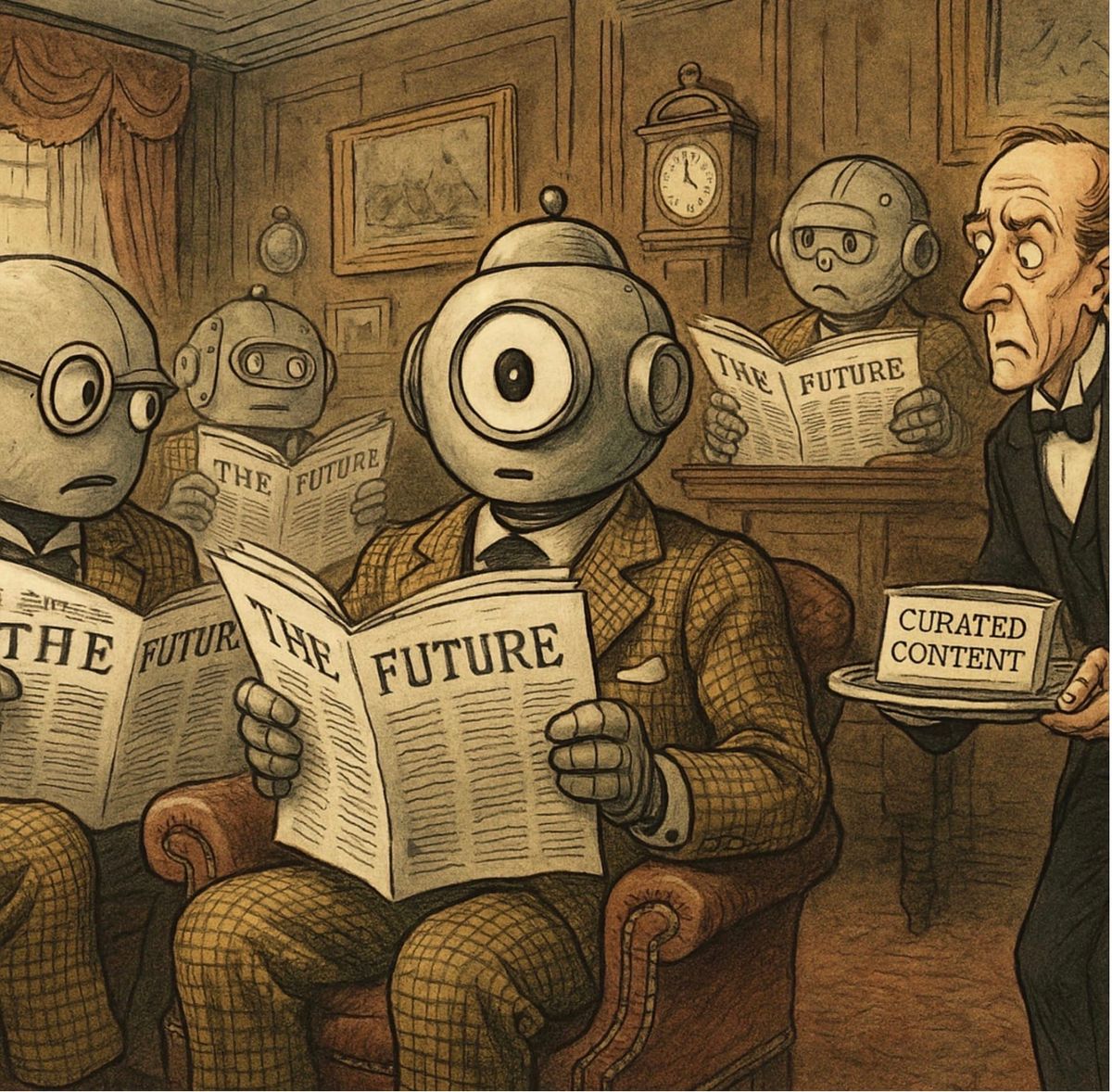
Would Apple “Free Siri” or would it insist on curating no evil, by means of imposed censorship and “moral guardrails.”
Followed with another piece looking at the prospect of AI censoring results in a way a visit to the library couldn’t be, and even Google search results struggle with.
 Tommo_UK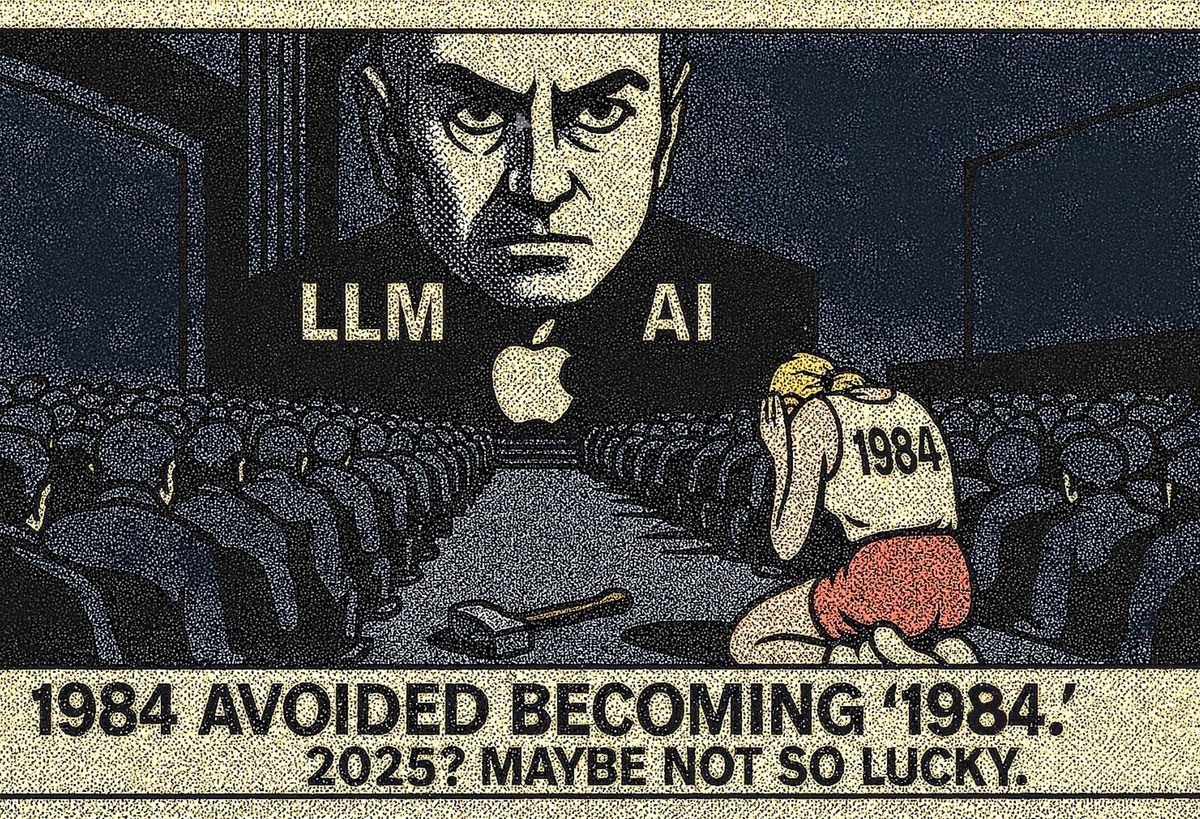
How Apple in 2026 might be the anti-Apple of 1984, when the company shattered the Big Brother dominance of Beige Box PCs courtesy of Microsoft, and launched the Macintosh into the world - something it only truly became fretful for about 20 years later. Being right, early, can be a thankless task, as I’ve often discovered.
OpenAI As The Stress Test
The whole apparatus exposed in one dispute
OpenAI is the perfect stress test because it exposes the whole apparatus in one dispute.
Apple needed OpenAI in 2024 because Apple Intelligence required a credible model partner while Siri was unfinished.
Apple benefited from the association.
Apple then delayed the Siri capabilities that mattered, moved towards Gemini, began testing broader model-choice pathways, and now faces a partner reportedly exploring legal options because it believes Apple failed to make the original partnership meaningful.
Meanwhile OpenAI is working with Jony Ive on hardware, hiring Apple talent, and trying to create the sort of AI-native interface layer that could, if successful, make parts of the smartphone app model feel old before Apple has finished explaining why Siri needed another year.
The Apple faithful sense this. I think that is why the reaction has such a febrile edge.
- They know Siri is damaged.
- They know Vision Pro failed commercially.
- They know Apple was late to AI.
- They know Google has become indispensable.
- They know OpenAI is both partner and threat.
- They know Meta has been recruiting AI talent.
They know the old moat is still wide, but perhaps no longer deep in the places that matter most.
And so each threat is converted into reassurance, like feeding inconvenient facts into a machine that prints “bullish” on heavy cream paper.
Related Tommo.fyi context:
 Tommo_UK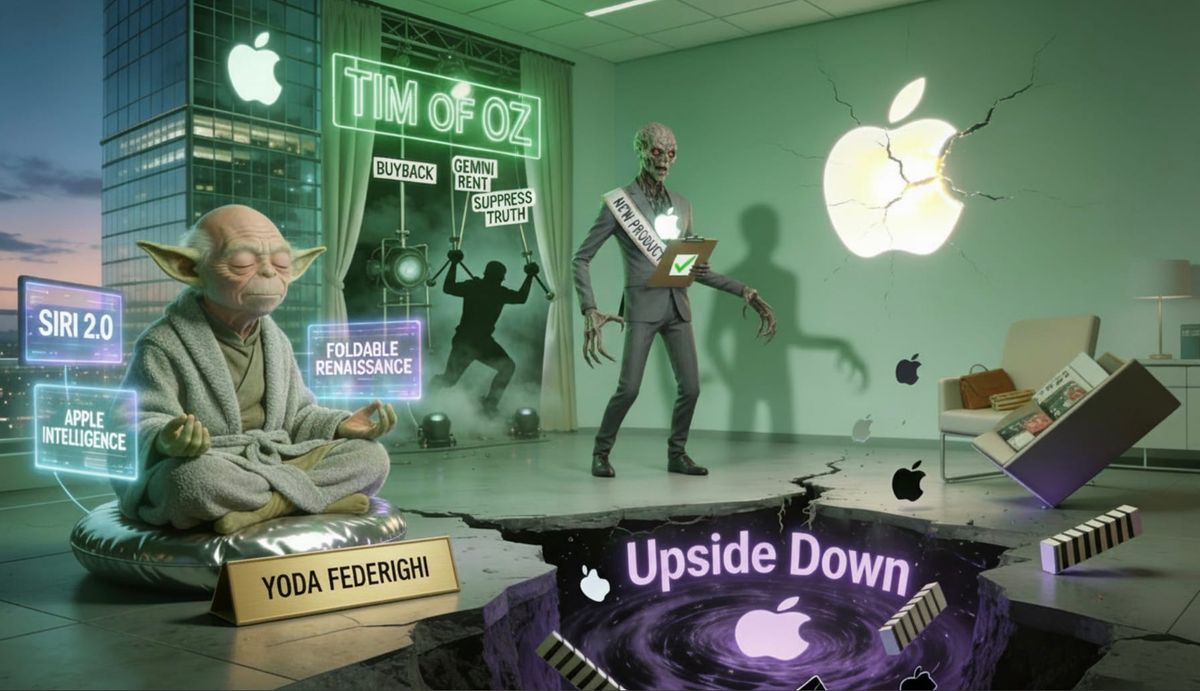
How Apple may have taken a wrong turn and ended up in a dark place, mirroring the strategy of its arch-nemesis of 2005: Microsoft.
Followed by an article discussing how Steve Jobs, who declared “nuclear war” on Google for copying the iPhone with Android, would have likely said “et tu, Tim?” As Cook stabbed his legacy in the back.
 Tommo_UK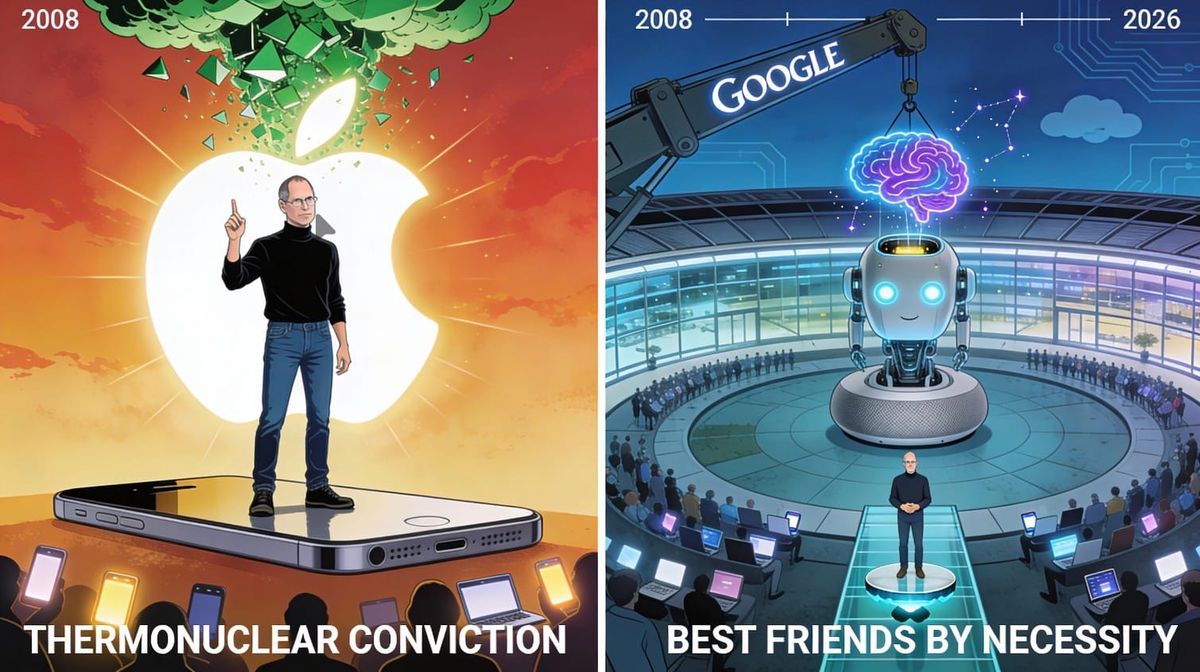
Jobs declared thermonuclear war on Google for copying the iPhone. Tim Cook sold Siri to them so it could have brain transplant. Because Apple had failed to maintain its moat. Truth ois harder to reconcile with sometimes, than many would like to admit, as they celebrate the selling out of Apple’s future to other peoples’ AI agentic OS stacks.
WWDC 2026 Is Now The Examination Paper
The product still has to arrive
Apple may still pull this off (whatever “it” is), and anyone pretending otherwise is just doing the inverse of the same tribal nonsense.
Gemini may make Siri genuinely useful. WWDC may show a coherent architecture. Developers may get tools that matter.
VisionOS may find life beyond an expensive headset. Apple may turn embarrassment into infrastructure, as it has done before when forced into a corner with sufficient urgency and insufficient room for internal theatre.
But a stock price is not a shipping manifest, and a market rally is not a product review written by reality.
Until Apple shows Siri, Apple Intelligence, VisionOS, developer tools, model selection and agentic workflows functioning as a coherent system Apple can credibly shape rather than merely host, AAPL at $300 remains a price move wrapped in faith and hopium gently wafting up on the hot air from burning shorts, with WWDC serving as the next examination paper rather than the graduation ceremony.
Related Tommo.fyi context:
 Tommo_UK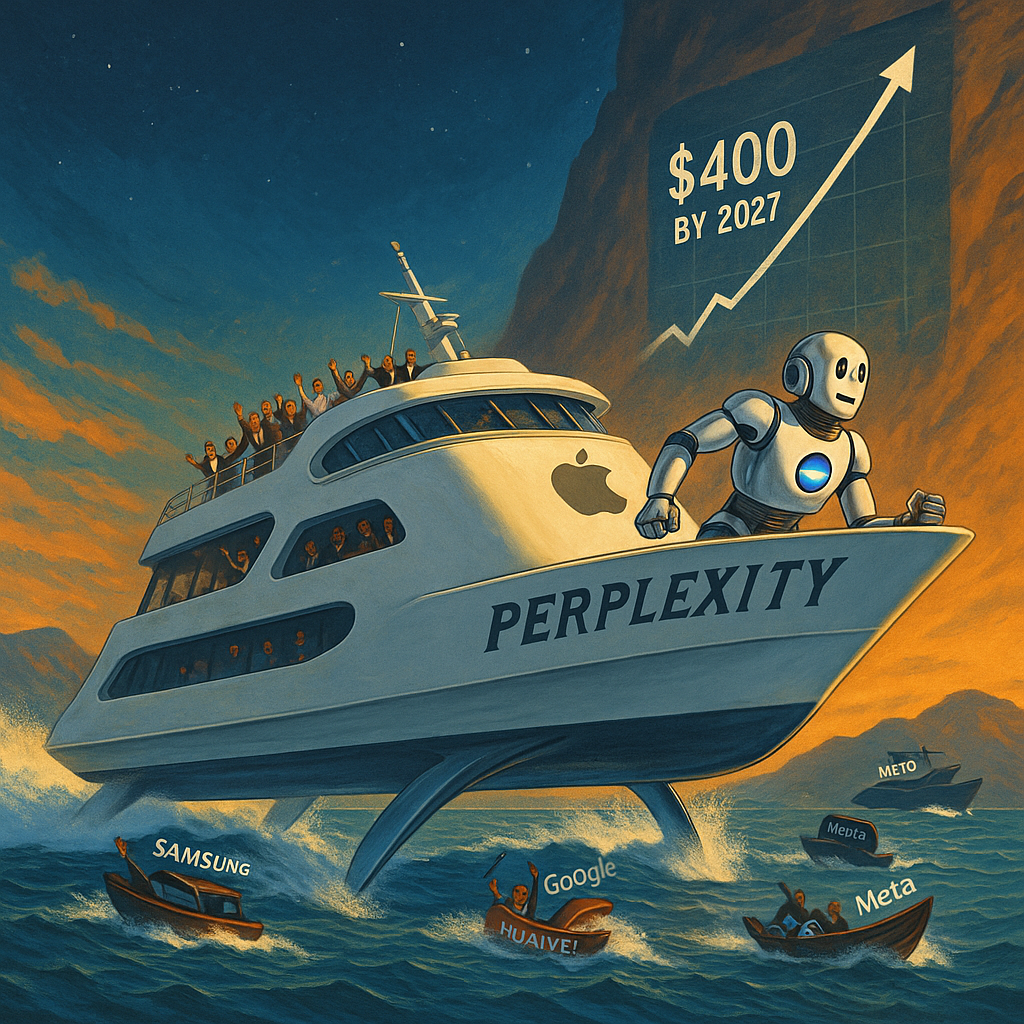
My original theses when AAPL was still at $200, explaining how the stock could hit $400 by Q1 2027 if it pursued the right strategy. Sadly it didn’t. Will it prove it’s managed to catch up? We’ll know in a few weeks, at WWDC 2026. #pleasenobetas!
Finale: The Moat, The Ditch, And The Water Flowing Away
Let the Colosseum roar
So let the Colosseum of the blood thirsty commentariat roar. Let the blog priests wave their incense over Gemini and call the smoke architecture. Let Horace paint pretty graphs and talk about buybacks (oops - that’s not a “thing” any more), and the endless boost “services” will give (ie selling financial products and insurance re-selling at hugely inflated margins. Let Gurman tell anyone and everyone what he heard while visiting the Apple Campus in mufti dressed down to listen to rumours he collected while hiding out in the men’s washroom
Let the valuation monks explain that OpenAI was never essential, except for the exact period during which it was useful to pretend Apple Intelligence had arrived.
Let the forum centurions bash their shields because Jony Ive has wandered off with OpenAI and a shopping list of former Apple engineers, as if talent poaching were a sin newly discovered by Cupertino on the road to Damascus.
Let the spreadsheet congregation gather round the altar of buybacks, reduced buybacks, cash hoards, Services margins, and whatever fresh sacrament is required by Thursday’s close.
The rest of us can wait for the product.
OpenAI’s anger is not Apple’s final boss.
Gemini’s usefulness is not absolution.
Jony Ive’s white-room contraption, whatever it becomes, is not automatically the horseman of Cupertino’s apocalypse, even if one suspects it will arrive photographed in soft light and described with unbearable sincerity by people wearing expensive cashmere socks from The White Company.
The danger is more embarrassing than that.
Apple’s defenders have become so busy guarding the moat, polishing the drawbridge, and arguing over the historical excellence of the castle, that they seem not to have noticed the water has started flowing backwards, out through the culverts, past the battlements, and away towards the companies currently building the interface layer Apple spent fifteen years assuming would still be there when it finally finished deciding what Siri was allowed to become, and then realised it couldn’t deliver it.
Giving the interface away to those same companies everyone laughed at for spending so much of their money (really, it wasn’t their, it was NVIDIA’s and Microsoft’s investments in them) building their LLM models.
And if WWDC does not show that Apple has remembered how to ship the future rather than narrate it, the faithful may yet discover…
… that a moat without water is just a ditch with branding.
Good luck for WWDC, and “may we live in interesting times.”
Tommo_UK, London, Friday, 15th May 2026
© 2026 Tommo_UK / tommo.fyi
CONTACTING ME
💡 Reach out to me using the Confidential Drop Box form below.

CONTACT ME DIRECTLY: discreetly (and anonymously if you prefer)