Hormuz May Be America’s Suez: Even Apple Is Not Insulated
Hormuz is not just a Middle East story. It is a test. Can American force still turn military action into durable order at a vital chokepoint, and whether markets, allies and consumers still believe it. If it cannot, the fallout will not stop at oil, tankers or diplomats. And Apple will feel it too.

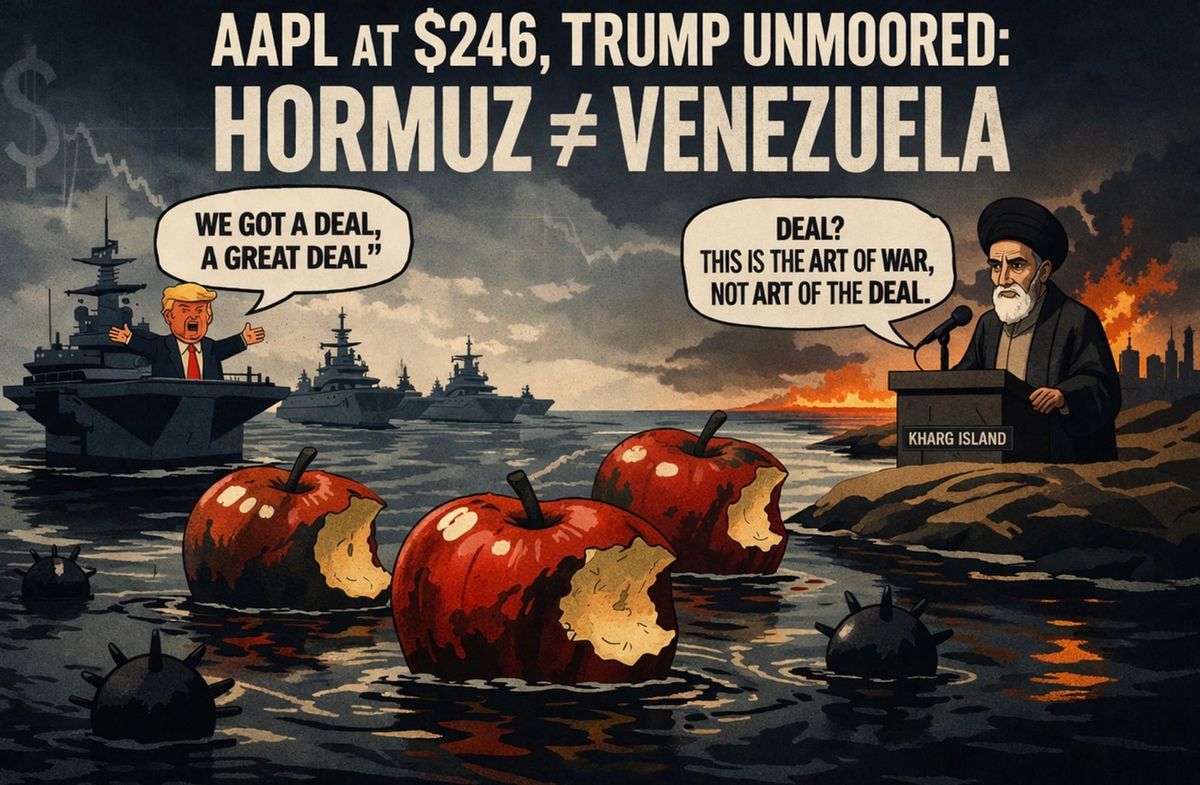
Hormuz Is America’s Suez. Here’s why
Publisher’s note: This is not an Apple article in the narrow sense.
It is an Apple article in the only sense that really matters when the world starts to wobble. Anyone who thinks geopolitics is something that happens to “other countries” has missed the point entirely. Foreigners buy iPhones. Foreigners pay for Services. Foreign consumers, foreign currencies, foreign shipping lanes and foreign energy prices all feed straight back into Apple’s growth, margins and multiple.
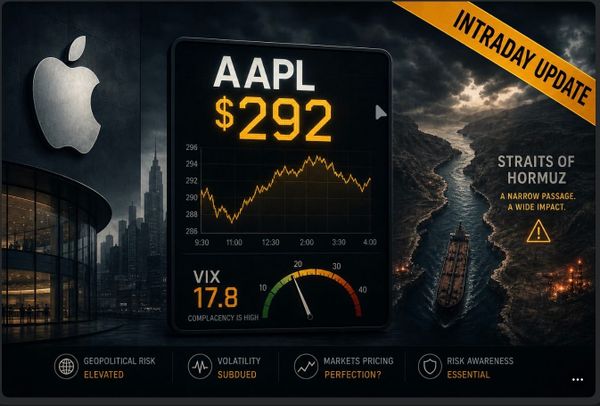
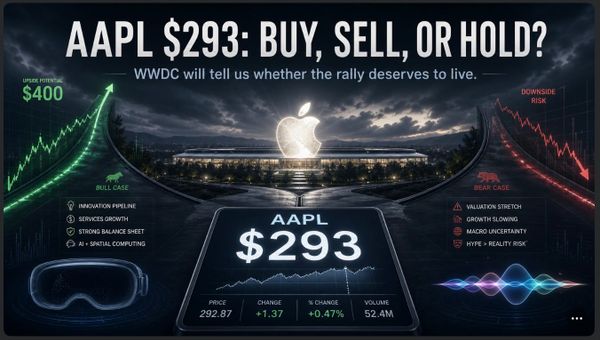
As a quick aside, at the end of this article is some commentary on today’s AAPL action and some thoughts on entry points, bottoming-out support and risk/reward.
As I argued in March 2025, you cannot spend years pretending Apple is a secular-growth island and then act surprised when geopolitics, energy prices and collapsing consumer confidence turn up in the numbers.
The same people who talk up AAPL as though geopolitics were background wallpaper, Dan Ives being a reliable example of the genre, are usually the first to discover, too late, that foreigners fund Apple’s growth story too, and foreigners in stressed economies stop buying expensive hardware and paying for high-margin services.
If the Strait of Hormuz hardens into the economic choke point it now threatens to become, the consequences will not stop at tankers and diplomats. They will hit sentiment, inflation, rates, consumer spending and global equity markets, and that means AAPL as surely as it means anything else. In other words, right where Apple bulls prefer not to look until after the downgrade. Macro does not sit outside Apple. It eventually walks straight through the front door.
What follows is an attempt to explain why this crisis may prove to be less a regional war than a historic test of whether American force can still be converted into durable order. Historians will already hear the echo of Suez. Some will also hear something darker in the background.
If the Strait is not restored to genuinely free and commercially normal passage, then the operation will not have succeeded in the only sense that markets, allies and shipowners will ultimately care about.
That is why this matters, and why the comparison is not rhetorical flourish but structural warning. If you’re intrigued, read on to find out why with regime change already achieved (for the worse) this conflict could be about to escalate into a world-changing geopolitical shift of tectonic proportions.
It’s not so much “all or nothing” now as, “how can this be a win,” without total capitulation by Iran? If the Straits of Hormuz are not free flowing but controlled by a foreign power, then America’s adventure will have failed, and instead empowered Iran, not deconstructed its regime, leaving the global economy on the brink of collapse, and closer to war than the Cold War ever managed.
AAPL commentary and price levels, observations and whether AAPL is a buy or not, at the end of the article.

If you’d like to read the rest of this article, free of charge but for providing your email, just press the button and select the free tier option. You’ll receive articles direct to your inbox. Don’t worry, you can turn off this feature later, if you don’t want notification.
Note: If you are already a member, but de-subscribed from the newsletter, you will need to re-subscribe to it to access this article. Just go Account settings and re-enable the Newsletter!